
18.09.2026
Reflect Orbital satellites could make the darkest skies look like nighttime in the suburbs
Since 1989, astrophysicist Jonathan McDowell has tracked every human-made object in space. McDowell’s meticulously maintained catalog, updated every few weeks, is more comprehensive and detailed than that of most governments.
From his front-row seat, he has watched with growing alarm as private companies launched dozens, then hundreds, then thousands of satellites over the last decade. So when McDowell heard that a space company called Reflect Orbital plans to launch a satellite to reflect the sun’s light onto the night side of Earth, he heaved a deep sigh.
“It’s an insane project,” says McDowell, who retired from Harvard this year and is now an honorary professor at Durham University in England. “There’s a failure to understand that darkness is a good thing.”
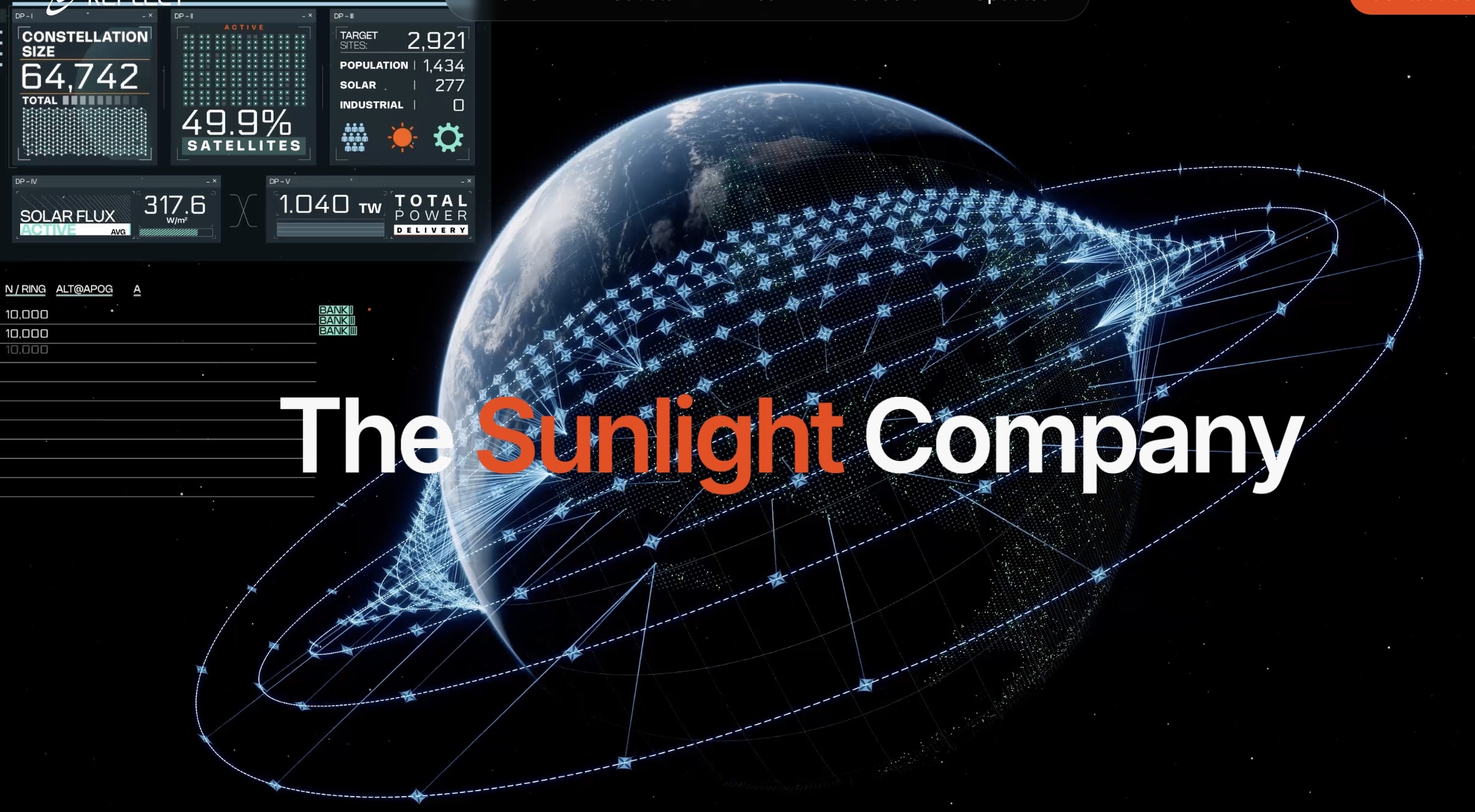
Reflect Orbital, based near Los Angeles, hopes its satellite and others like it some day offer “sunlight on demand,” illuminating disaster areas for search and rescue efforts, lighting up nighttime events and festivals and allowing solar farms to run all hours of the day.
“We believe that exploring how new technologies can help the world forgo fossil fuels is a responsible application of the scientific process,” Christopher Buscombe, a spokesperson for Reflect Orbital, wrote in an email to Science News. “We will continue to work closely with scientific partners who share this belief.”
But many space observers and dark sky enthusiasts are in an uproar. The consequences to astronomy could be catastrophic, they say, and the reflected light could threaten human health and safety and disrupt wildlife. In March, the American Astronomical Society petitioned the Federal Communications Commission to deny Reflect Orbital’s request to operate the test satellite. When the FCC granted approval in July, nonprofit organizations including DarkSky International asked the agency to reverse its decision.
The response to Reflect Orbital reflects growing concerns about the crowding of space more generally. The number of active satellites orbiting Earth has ballooned from 2,000 in 2018 to over 16,000 today, McDowell says. Many more are expected to launch in the years ahead.
This traffic jam, along with the proliferation of space junk from dead satellites and discarded rocket stages, has space scientists worried about collisions that could wipe out GPS navigation and other essential tools. The satellites are also a problem for astronomers, interrupting observations by leaving streaks on telescope images.
But there’s not much scientists can do to appeal the launches, says international environmental lawyer Dana Zartner of the University of San Francisco. Space satellite deployments are governed (sometimes loosely) by a patchwork of domestic regulations and international treaties. “The law has not caught up to the reality of what is happening,” Zartner says.
The Reflect Orbital launch, expected this year, could change that. The satellite’s unique brightness and the risks it may bring could mark an inflection point in the way we regulate the night sky. The project “amplifies the issue to the point where it’s impossible to ignore,” says astronomer Stephen Hummel of the McDonald Observatory in West Texas.
Who’s in charge?
Space law’s roots are planted in the Cold War. Some of the earliest international treaties about activities in outer space grew from agreements banning nuclear tests high in the atmosphere.
“People [were] saying, ‘Let’s not nuke the sky, please,’” says Cristian van Eijk, an expert in international space law at Newcastle University in England.
Over 100 nations have signed the Outer Space Treaty of 1967, which declares space “the province of all mankind.” No nation can occupy or claim sovereignty over any portion of outer space, it says, and space must be used for peaceful purposes and be kept clear of harmful contamination. Four other international treaties have dealt with issues such as the registration of space objects and the liability they might cause.
But such treaties are voluntary, and it’s difficult to enforce compliance. “Nobody can make a state do any of these things,” Zartner says. “You cannot throw a state in jail.”
Individual countries have their own regulations about what goes into space and how. In the United States, the Federal Aviation Administration oversees rocket launches and reentries. But the FCC oversees licensing of commercial satellites that communicate with Earth, and it has become the de facto gatekeeper for satellite approval. The FCC has traditionally been required to consider whether applications serve the public interest, but it has not generally considered factors such as light pollution.
The explosion in satellites in low-Earth orbit, between about 100 and 2,000 kilometers in altitude, has exposed gaps in the system, says astronomer Samantha Lawler of the University of Regina in Saskatchewan, Canada. That’s because current approval processes look at launches one by one without addressing what thousands of satellites mean in aggregate. “There are some serious loopholes,” Lawler says.
Bugs on the windshield
To reduce the impact to science, companies like SpaceX have worked with astronomers to dim the appearance of their commercial satellites, by changing their orbits or painting the satellites black, for example. But there are still problems.
Astronomer Meredith Rawls likens existing satellites to “bugs on the windshield.” She and colleagues have spent years preparing the new Vera C. Rubin Observatory in Chile to cope with the light streaks left by overhead satellites.
Those streaks can mess with searches for transiting exoplanets, the mysterious sources of gravitational waves, objects in and beyond the distant Kuiper Belt and asteroids that could cross paths with Earth. Satellites in low-Earth orbit, including SpaceX’s Starlink constellations, are mainly visible just before sunrise and after sunset; that’s prime time for many types of astronomical observations.
“One of the most frustrating parts about it is you won’t know what you didn’t discover,” says Rawls, of the University of Washington in Seattle. “We can’t know what we didn’t see.”
The space community is also alarmed by the growing potential for orbiting objects to crash into each other, hurtling space junk toward Earth or creating an unnavigable debris field around the planet. Most commercial satellites have thrusters to avoid such collisions. But the proliferation of objects means those satellites are engaging thrusters frequently, sometimes weekly. Scientists wonder what will happen when they fail.
And there is a growing concern about the potentially hazardous residue such satellites could leave in the atmosphere when they de-orbit. “We are now using space as a species at an unprecedented level,” McDowell says. “A lot of effects that were previously trivial are now no longer trivial.”
Space scientists, amateur astronomers, Indigenous peoples and many others are mourning the night sky as it has existed for millennia — or soon will be. “This represents far more than mere loss of environment,” wrote astronomers Aparna Venkatesan of the University of San Francisco and John Barentine, cofounder of the Center for Space Environmentalism, in 2023 in Science. “We are witnessing loss of heritage, place-based language, identity, storytelling, millennia-old sky traditions and our ability to conduct traditional practices grounded in the ecological integrity of what we call home.” The pair proposed a term for “sky grief”: noctalgia.
That grief could grow as companies put ever more satellites into space. SpaceX alone plans to launch one million as part of orbiting data centers starting in late 2027. Other companies and countries, including China’s space agency, plan to launch hundreds of thousands more. Even if not all of them get off the ground, the number of fake stars in a dark night sky could rival the number of visible real ones by 2030, McDowell says.
Mirrors in the sky
Reflect Orbital’s satellite, named Eärendil-1, is an 18-by-18-meter sheet of reflective material that will fold up for launch and unfurl in space. Motors will maneuver it to bounce light in any direction the company desires. It will orbit 600 to 650 kilometers high, a popular altitude for commercial satellites. Eärendil-1 will be able to shine light on a spot about five kilometers wide, making it as bright as if a full moon were overhead. The mirror will move at about 7.5 kilometers per second, meaning it will illuminate the same spot on the ground for four minutes before disappearing over the horizon.
“Our first demonstration mission will enable Reflect Orbital to test the operation of a commercially built spacecraft and deployable reflector, including the built-in safeguards governing precisely how, where and when the service is delivered,” Buscombe told Science News. “The mission will provide real-world data that shapes the design of future satellites, the markets we serve, how we engage communities and the operational practices we put in place. We expect this to be the first of several test missions.”
This isn’t the first time such a scheme has been proposed or even attempted. In the 1960s, NASA and the U.S. Department of Defense ran a study called Project Able to determine the feasibility of putting a 600-meter-wide mirror into a geosynchronous orbit 36,000 kilometers above Earth. One of the motivations was to light the sky over Vietnam to aid combat.
“They say history doesn’t repeat itself, but it does rhyme,” says Lisa Ruth Rand, a California-based space historian who is writing a book about waste in Earth’s orbit.
Practicalities and cost meant the mirror never got off the ground. But in 1993, the Russian space agency deployed a 20-meter space mirror that swept a spot of light across Europe. The project sought to show the feasibility of lighting up Siberia during long winter nights. Though the beam was mostly blocked by clouds, astronauts aboard the Mir space station filmed the event.
Reflect Orbital says its spotlight will be fully controllable and can be turned off in an instant by tilting the mirror away from Earth. Outside the beam, the light will look like just another star, according to Buscombe. And it shouldn’t shine on places where no one ordered it.
Space scientists aren’t so sure. As light travels from space to the ground, it scatters off molecules in the atmosphere, says astrophysicist Gaspar Bakos of Princeton University. “That is why the sky is blue, why we see the clouds,” he says.
Bakos and colleagues ran computer simulations of the light from a Reflect Orbital satellite overhead under various conditions. Between scattering in the atmosphere and reflections from the ground, Eärendil-1’s beam could appear as a hazy chimney on the horizon from as far as 14 kilometers away, the team reported in a paper posted in August on arXiv.org.
Only one satellite is cleared for operations, Reflect Orbital and the FCC note. But critics worry that there’s nothing in the licensing logic that would stand in the way of more. If the test is successful, Reflect Orbital says it wants to launch 5,000 mirrors by 2030 and 50,000 by 2035. They would be larger, about 54 meters across. Light from such a mirror could brighten the night sky to as much as four full moons. Arranged in a chain, they would keep the lights on longer, because a new mirror would come into view just as an old one sets.
“Our first demonstration mission will enable Reflect Orbital to test the operation of a commercially built spacecraft and deployable reflector, including the built-in safeguards governing precisely how, where and when the service is delivered,” Buscombe told Science News. “The mission will provide real-world data that shapes the design of future satellites, the markets we serve, how we engage communities and the operational practices we put in place. We expect this to be the first of several test missions.”
This isn’t the first time such a scheme has been proposed or even attempted. In the 1960s, NASA and the U.S. Department of Defense ran a study called Project Able to determine the feasibility of putting a 600-meter-wide mirror into a geosynchronous orbit 36,000 kilometers above Earth. One of the motivations was to light the sky over Vietnam to aid combat.
“They say history doesn’t repeat itself, but it does rhyme,” says Lisa Ruth Rand, a California-based space historian who is writing a book about waste in Earth’s orbit.
Practicalities and cost meant the mirror never got off the ground. But in 1993, the Russian space agency deployed a 20-meter space mirror that swept a spot of light across Europe. The project sought to show the feasibility of lighting up Siberia during long winter nights. Though the beam was mostly blocked by clouds, astronauts aboard the Mir space station filmed the event.
Reflect Orbital says its spotlight will be fully controllable and can be turned off in an instant by tilting the mirror away from Earth. Outside the beam, the light will look like just another star, according to Buscombe. And it shouldn’t shine on places where no one ordered it.
Space scientists aren’t so sure. As light travels from space to the ground, it scatters off molecules in the atmosphere, says astrophysicist Gaspar Bakos of Princeton University. “That is why the sky is blue, why we see the clouds,” he says.
Bakos and colleagues ran computer simulations of the light from a Reflect Orbital satellite overhead under various conditions. Between scattering in the atmosphere and reflections from the ground, Eärendil-1’s beam could appear as a hazy chimney on the horizon from as far as 14 kilometers away, the team reported in a paper posted in August on arXiv.org.
Only one satellite is cleared for operations, Reflect Orbital and the FCC note. But critics worry that there’s nothing in the licensing logic that would stand in the way of more. If the test is successful, Reflect Orbital says it wants to launch 5,000 mirrors by 2030 and 50,000 by 2035. They would be larger, about 54 meters across. Light from such a mirror could brighten the night sky to as much as four full moons. Arranged in a chain, they would keep the lights on longer, because a new mirror would come into view just as an old one sets.
Quelle: Science News