
- Boeing Starliner costs top $2 billion amid propulsion issues
- Propulsion system issues may warrant additional Starliner test in space
- Starliner's first crew returned on SpaceX capsule on Tuesday
- Boeing plans key Starliner ground test this summer
- SpaceX's Crew Dragon dominates NASA missions with 11 flights
21.03.2025
NASA may require Boeing's Starliner to fly third uncrewed test
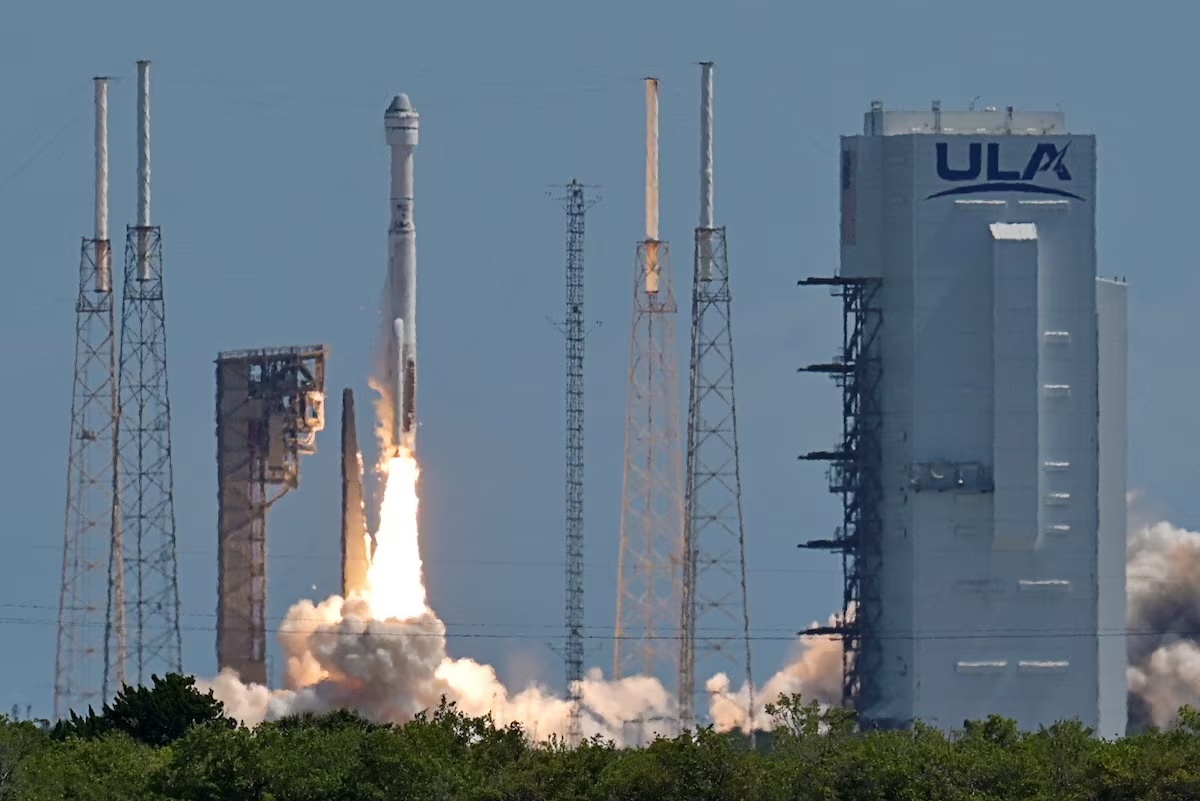
WASHINGTON, March 19 (Reuters) - Boeing's (BA.N), opens new tab troubled Starliner capsule that left two NASA astronauts on the International Space Station last year may need to fly a third uncrewed test flight before it carries astronauts again, agency officials said as the spacecraft's first crew had to return to Earth on a SpaceX capsule this week.
NASA astronauts Butch Wilmore and Suni Williams, who rode Boeing's crew capsule to the ISS last year, splashed down on Tuesday in SpaceX's Dragon capsule amidst a lengthy effort by Boeing to fix Starliner's faulty propulsion system, which had caused their eight-day test mission to stretch into a nine-month stay in space.
The technical issues on Starliner's debut crewed mission were the latest setback - and most visible so far - in Boeing's thorny development of a spacecraft that has cost the aerospace giant more than $2 billion. Starliner would compete with the dominant Crew Dragon capsule from Elon Musk's SpaceX and provide NASA a second U.S. ride to low-Earth orbit for its astronauts.
But before clinching a long-sought NASA certification for routine flights, the craft may need an extra uncrewed test mission that would be its fourth overall, after it flew two uncrewed tests in 2019 and 2022.
"We're ... looking at some options for Starliner, should we need to, of flying it uncrewed," Steve Stich, chief of NASA's Commercial Crew Program that oversees Starliner development, told reporters Tuesday night. "When we look forward, what we'd like to do is that one flight, and then get into a crew rotation flight."
"We'll kind of weigh all those things as we get the testing and analysis behind us," Stich said.
Boeing did not return requests for comment.
Stich said Starliner's crewed flight last year checked off some key testing milestones related to how astronauts command and fly the vehicle. The purpose of an extra uncrewed test, he said, would be to validate that its thrusters can perform as designed in space, an environment impossible to simulate in tests on Earth.
Starliner's first crewed mission was to be its final test before it could begin routine astronaut flights for NASA, which relies on SpaceX's Crew Dragon craft.
STARLINER'S COMPETITIVE FUTURE
Boeing is also eyeing Starliner as a taxi to and from privately built space stations that are in early development - the kind of non-government revenue that SpaceX has brought in with fully private Dragon missions.
But Starliner's future was thrown into uncertainty when it suffered five thruster failures during its flight to the ISS last year, as well as leaks of helium that is used to pressurize the thrusters. NASA made Starliner return to Earth without its crew in September, deeming it too risky for astronauts to ride.
A NASA safety advisory panel in January said the agency and Boeing were making "significant progress" in their post-flight technical investigations but that the propulsion system issues remain unresolved.
Stich said Boeing is planning a ground test this summer of propulsion system components aimed at validating the company's fixes.
On top of Boeing's $2 billion in Starliner charges since 2016, the ceiling of the company's fixed-price $4.2 billion NASA contract for Starliner development and missions has grown by $326 million since being awarded in 2014, according to a Reuters analysis of contract data. The company has received half of that so far during development, roughly $2.2 billion.
SpaceX's Crew Dragon meanwhile has flown 11 astronaut missions for NASA, including a crewed test flight in 2020.
The total value of SpaceX's initial $3 billion NASA contract, also awarded in 2014 and similar to Starliner, has grown to nearly $5 billion, largely due to extra missions NASA has added amid Starliner's development delays.
Quelle: Reuters
+++
NASA still mulling options for Boeing's troubled Starliner astronaut capsule
It's unclear when Starliner will fly again, and whether or not that mission will carry astronauts.
More than six months after its first crewed mission came to a disappointing end, the future is still murky for Boeing's Starliner astronaut capsule.
That mission, called Crew Flight Test (CFT), launched on June 5, sending NASA astronauts Butch Wilmore and Suni Williams to the International Space Station(ISS) for a roughly 10-day stay. Starliner made it to the orbiting lab safely, but it experienced propulsion-system helium leaks and thruster failures along the way, and NASA extended CFT repeatedly to study the issues.
Finally, on Aug. 24, the agency decided to bring Starliner home uncrewed, which occurred without incident on Sept. 6 in the New Mexico desert. Williams and Wilmore were reassigned to a long-duration ISS mission, which wrapped up yesterday (March 18) with the splashdown of SpaceX's Crew Dragon capsule "Freedom."
The dolphin-attended splashdown marked the end of Crew-9, SpaceX's ninth operational, long-duration astronaut mission to the ISS for NASA. (Crew-9 launched in late September with two instead of the usual four crewmembers on board, to save seats for Williams and Wilmore on the way back to Earth.)
SpaceX's Crew-10 arrived at the ISS on Sunday (March 16) to relieve the Crew-9 astronauts, and Crew-11 is scheduled to launch this summer, perhaps as early as July. Elon Musk's company may even send Crew-12 skyward before Starliner carries astronauts again, because NASA and Boeing are still mapping out the new capsule's next steps.
"We're certainly looking at Starliner very carefully," Steve Stich, manager of NASA's Commercial Crew Program, said on Tuesday during a press conference after Crew-9's splashdown.
"We're in the process of looking at that vehicle, looking at the helium system," he added. "We've got some candidate seals that we're going to replace. We'll get into some testing here over the summer timeframe with what we call an 'integrated doghouse' at White Sands [a NASA test facility in New Mexico]."
"Doghouse" is the term NASA and Boeing use for the thruster pods on Starliner's service module. The module sports four such pods, each of which houses 12 thrusters — five of the relatively powerful "orbital maneuvering and control" (OMAC) class and seven "reaction control system" (RCS) thrusters, which are used for finer adjustments, such as those needed during docking.
The thruster problems Starliner experienced during CFT concerned the RCS hardware: Five of the 28 RCS thrusters conked out during Starliner's approach to the ISS, though the mission team eventually brought four of the five affected ones back online.
Ground testing has linked the RCS thruster issue to overheating: Repeated thruster firings can apparently warm up the doghouses so much that some of their Teflon seals bulge, affecting propellant flow.
This theory is informing adjustments to Starliner's design and operations going forward, according to Stich.
"I think we have some changes we need to make to the way we heat those thrusters, the way we fire those thrusters, and then we can test that on the next flight," he said.
Indeed, testing will be a big part of the next Starliner flight, whenever it lifts off.
"We need to make sure we can eliminate the helium leaks; eliminate the service module thruster issues that we had on docking," Stich said.
NASA has not yet decided whether the coming Starliner flight will carry astronauts or not, he added. But even if the mission is uncrewed, the agency wants it to be crew-capable — "to have all the systems in place that we could fly a crew with," Stich said.
"As I think about it, it might be there for a contingency situation, as we prepare for whatever events could happen," he added. "One of the things that I've learned in my time at NASA is, always be prepared for the unexpected."
NASA plans to certify Starliner for operational, long-duration astronaut missions shortly after this next flight, if all goes well.
"We really need to get Boeing into a crewed rotation," Stich said. "Butch and Suni's return on Dragon, to me, shows how important it is to have two different crew transportation systems, the importance of Starliner and the redundancy that we're building into human spaceflight for our low Earth orbit economy."
Quelle: SC
----
Update: 29.03.2025
.
NASA, Boeing Prepare for Starliner Testing
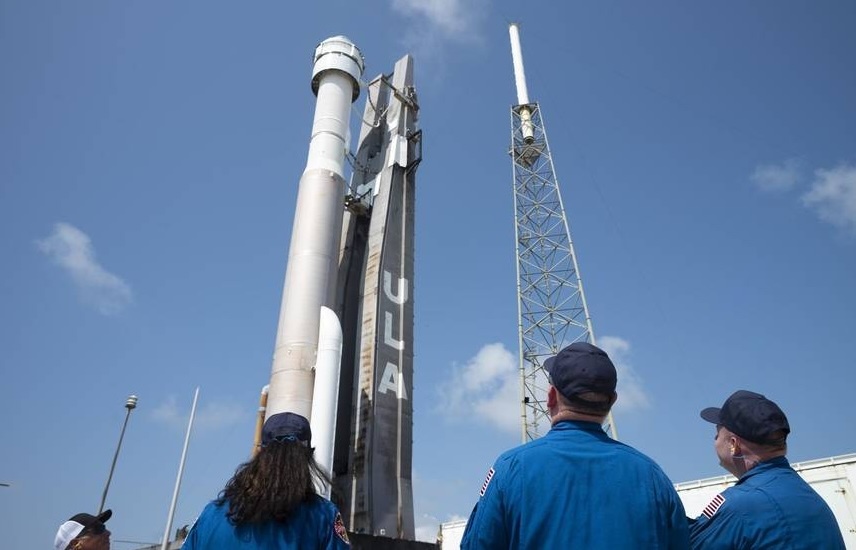
NASA and Boeing are making progress toward crew certification of the company’s CST-100 Starliner system following the Crew Flight Test to the International Space Station. Joint teams are working to resolve Starliner’s in-flight anomalies and preparing for propulsion system testing in the months ahead as NASA plans for Starliner’s next flight.
“NASA’s strategy for crew transportation is critical for assured access to space using American private industry,” said Ken Bowersox, associate administrator for Space Operations at NASA Headquarters in Washington. “Our investment in commercial crew transportation capabilities is providing the needed flexibility to operate in space as safely as possible and respond to changes quickly when they arise. NASA is seeing the commitment from Boeing to adding the Starliner system to the nation’s crew transportation base.”
In the months following the safe return of the uncrewed Starliner capsule from the International Space Station, NASA and Boeing have worked on postflight data analysis from its crewed flight test. There has been a significant amount of work completed, with more than 70% of flight observations and in-flight anomalies being closed at program-level control boards. The major in-flight propulsion system anomalies Starliner experienced in orbit are expected to remain open further into 2025, pending the outcome of various ground test campaigns and potential system upgrades.
NASA and Boeing are working to finalize the scope and timelines for various propulsion system test campaigns and analysis that is targeted throughout the spring and summer. Testing at White Sands Test Facility in New Mexico will include integrated firing of key Starliner thrusters within a single service module doghouse to validate detailed thermal models and inform potential propulsion and spacecraft thermal protection system upgrades, as well as operational solutions for future flights. These solutions include adding thermal barriers within the doghouse to better regulate temperatures and changing the thruster pulse profiles in flight to prevent overheating. Meanwhile, teams are continuing testing of new helium system seal options to mitigate the risk of future leaks.
“Once we get through these planned test campaigns, we will have a better idea of when we can go fly the next Boeing flight,” said Steve Stich, manager, NASA’s Commercial Crew Program at the agency’s Kennedy Space Center in Florida. “We’ll continue to work through certification toward the end of this year and then go figure out where Starliner fits best in the schedule for the International Space Station and its crew and cargo missions. It is likely to be in the timeframe of late this calendar year or early next year for the next Starliner flight.”
Mission managers are planning for the next Starliner flight to be a crew capable post-certification mission, and NASA also has the capability of flying only cargo depending on the needs of the agency.
The goal of NASA’s Commercial Crew Program is the development of two dissimilar human spaceflight systems to ensure crew safety and to meet the International Space Station’s need for continuous human presence aboard the space station.
Quelle: NASA
+++
Boeing's next Starliner launch for NASA could slip to early 2026 after fixes
"It is likely to be in the timeframe of late this calendar year or early next year for the next Starliner flight."
Boeing's Starliner capsule will remain ground-bound for a while longer yet.
Last June, Starliner launched on its first-ever crewed flight, which sent NASA astronauts Butch Wilmore and Suni Williams to the International Space Station(ISS) for a roughly weeklong stay.
That timeline soon changed, however, because Starliner suffered a few issues on its way to the orbiting lab — namely, helium leaks in its propulsion system and the failure of five of its 28 reaction control system (RCS) thrusters, which Starliner uses for fine adjustments such as the ones required during docking.
NASA extended Starliner's ISS stay multiple times to study the problems before deciding to bring the spacecraft back to Earth uncrewed, which happened in early September. Wilmore and Williams, meanwhile, were retasked to become long-term ISS crewmembers, staying aloft until March 18, when they returned to Earth with SpaceX's Crew-9 astronauts.
NASA and Boeing have made considerable progress in their analyses of data from Starliner's first crewed flight. For example, the mission team managed to bring four of the five failed RCS thrusters back online while Starliner was in orbit. And they later tied the issue to overheating in the capsule's engine pods, which likely restricted propellant flow.
However, technicians are still working on fixes for the thruster and helium-leak issues and will likely continue to do so for several more months, NASA officials said in an update on Thursday (March 27).
That work will include test-firings of Starliner RCS thrusters at NASA's White Sands Test Facility in New Mexico "to validate detailed thermal models and inform potential propulsion and spacecraft thermal protection system upgrades, as well as operational solutions for future flights," NASA officials wrote in an update on Thursday afternoon (March 27).
Teams will also continue to test new seal options for the helium system, in an effort to minimize the risks of leaks going forward.
“Once we get through these planned test campaigns, we will have a better idea of when we can go fly the next Boeing flight,” Steve Stich, manager of NASA’s Commercial Crew Program at Kennedy Space Center in Florida, said in the Thursday statement.
"We’ll continue to work through certification toward the end of this year and then go figure out where Starliner fits best in the schedule for the International Space Station and its crew and cargo missions," he added. "It is likely to be in the timeframe of late this calendar year or early next year for the next Starliner flight."
"Certification" refers to giving Starliner the green light to fly astronauts on long-duration, contracted missions to and from the ISS for NASA. But the agency still doesn't know if the next flight for the Boeing capsule will be crewed or not.
"Mission managers are planning for the next Starliner flight to be a crew capable post-certification mission, and NASA also has the capability of flying only cargo depending on the needs of the agency," NASA officials wrote in Thursday's statement.
NASA also holds a commercial crew contract with SpaceX. Elon Musk's company launched its 10th operational astronaut mission to the orbiting lab under this deal on March 14.
Quelle: SC
----
Update: 19.09.2026
.
After being sidelined, Boeing’s Starliner to get starring role in NASA’s spaceflight plans
“They should fly their capsule. The government paid a lot of money for that.”
NASA
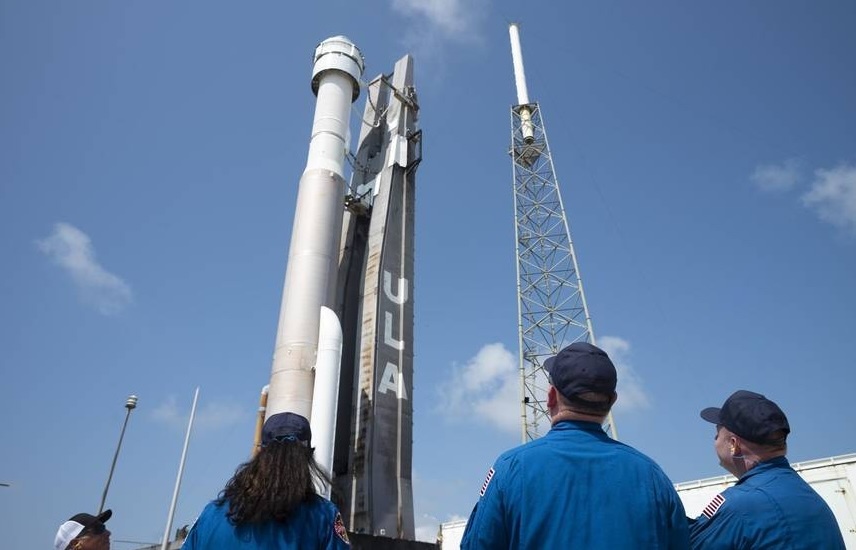
As it contemplates a future without access to SpaceX’s Crew Dragon spacecraft, NASA will make some key moves to ensure that Boeing’s Starliner spacecraft, which has a decidedly checkered record in spaceflight to date, is safer and can continue flying after its Atlas V rocket retires.
Multiple sources confirmed to Ars that as early as next week, NASA will announce that it will order two additional Starliner crewed missions from Boeing, pay some of the costs to fix the spacecraft’s thruster issues, and provide support to certify the spacecraft’s launch on a new rocket.
NASA is taking these steps after SpaceX made clear in discussions with space agency officials in recent months that it intends to retire the Crew Dragon vehicle by 2030, if not before. Crew Dragon is presently the only operational spacecraft NASA has available for routine astronaut missions to low-Earth orbit.
SpaceX would not commit to flying Dragon longer
After long signaling it privately, SpaceX has begun to publicly confirm its intentions to wind down the Dragon program, a remarkable move given that the vehicle began flying humans just six years ago. However, the company is seeking to pivot toward its much larger Starship rocket, with the intent of launching its more lucrative Starlink satellites and a new megaconstellation focused on orbital data centers.
This week, on the All-In Podcast, SpaceX President and Chief Operating Officer Gwynne Shotwell was asked if the company would respond to demand for Crew Dragon and keep flying the vehicle “for some time.”
Shotwell would not commit to that. “We’re not retiring it today, for sure,” she replied. Then Shotwell suggested that Boeing should really step up and deliver. “There is another provider,” she said. “Boeing has been paid, I think, probably more than we have been paid to develop their human capsule. So we’re just gonna let them have some business. They should fly their capsule. The government paid a lot of money for that.”
NASA did, indeed, pay a lot for the Commercial Crew program. Dating to 2010, for development and certification of their vehicles, NASA has paid SpaceX approximately $3.1 billion and Boeing $5.1 billion. SpaceX has been the critical provider. With Dragon, the company has launched 13 crewed missions to the International Space Station for NASA, with its next one set for October. All flights to date have been successful.
Starliner has really struggled
By contrast, Boeing has struggled mightily to bring the more expensive Starliner vehicle into service for NASA. Starliner experienced numerous issues on uncrewed test flights in 2019 and 2022; most seriously, thruster issues nearly led to the catastrophic loss of two astronauts during the spacecraft’s first crew test flight in June 2024. As a result, in February, NASA formally classified the 2024 flight of Starliner as a “Type A” mishap. The NASA astronauts on this flight, Butch Wilmore and Suni Williams, ultimately had to be returned safely to Earth on a Crew Dragon vehicle.
As part of this review, new NASA Administrator Jared Isaacman said the space agency also shared some of the blame for the near-disaster.
“Starliner has design and engineering deficiencies that must be corrected, but the most troubling failure revealed by this investigation is not hardware,” Isaacman wrote in a letter to the NASA workforce at the time. “It is decision-making and leadership that, if left unchecked, could create a culture incompatible with human spaceflight.”
NASA released a 311-page report detailing the findings of an investigative team that looked into the mistakes made by both Boeing and NASA. But despite all of this, half a year later, NASA is returning to Boeing to take a central role in its human spaceflight program.
The Commercial Crew program was developed as a fixed-price program, which means that after receiving an agreed-upon payment from NASA, the private companies are responsible for delivering crew-capable spacecraft through NASA’s rigorous certification process. Because of its ongoing challenges with Starliner, Boeing has already taken in excess of $2 billion in charges.
But Ars now understands the space agency will provide some funding—it’s not clear how much—to Boeing to resolve the propulsion system issues experienced by the spacecraft in its last two flights. Critically, NASA will also help pay to certify an additional launch vehicle for Starliner. The Atlas V rocket, assembled by United Launch Alliance but which inconveniently uses Russian engines, is near retirement. There are six rockets left—one of which will be used for the uncrewed Starliner 1 test flight, and then five subsequent crewed missions.
There will likely be a competition for a new launch vehicle, which will almost certainly come down to United Launch Alliance’s Vulcan and Blue Origin’s New Glenn vehicles.
NASA has limited options
Why would NASA go to these lengths to keep Starliner in the game? There have been questions about Boeing’s commitment to Starliner in recent years, given its financial losses. Boeing might well have thrown in the towel. So it’s possible that NASA is meeting Boeing halfway to keep a needed spaceflight capability going. (It also helps that Boeing has excellent lobbyists.)
But NASA had limited choices given that SpaceX has repeatedly indicated that its plans to retire Dragon by 2030 are more than aspirational. Although the Dragon development program was financially backed by NASA, SpaceX has contractually fulfilled its obligations with the Dragon missions to the space agency. SpaceX can therefore do as it pleases with Dragon.
So if NASA wants to maintain a presence in low-Earth orbit, it needs a crew vehicle beyond 2030. In July, Ars wrote about how panic was setting in among companies seeking to develop private space stations in low-Earth orbit, where NASA is expected to be an anchor tenant after the end of the International Space Station. As they finalized plans for their stations, the companies were finding that SpaceX would not give them bids for crew transportation, and Boeing was not committing to a price for the 2030s, either. So they were building private space stations with no way to get people there, or back.
With this action, NASA is providing some security to private space station operators that at least one provider will be available, although the lack of competition raises some pricing concerns. Will Boeing be a considerate monopolist?
Not all bad for Blue
NASA does potentially have one other option. Although it has said little publicly, Blue Origin has had a dedicated team working on a crewed “Space Vehicle” for several years that will launch on its New Glenn rocket. According to sources familiar with the program, design work on this vehicle is well advanced along with demonstration work such as cabin pressure-vessel manufacturing, extensive parachute testing, in-house thermal protection system testing, life support systems, and more.
The space agency could have opened a new competition to Boeing, Blue Origin, and possibly other wild cards, such as The Exploration Company, for crewed missions in the 2030s. It appears the agency had no appetite for this and its associated costs, though, so soon after the Commercial Crew competition a decade ago.
Nevertheless, the potential to fly Starliner on Blue Origin’s New Glenn is real—and potentially valuable to the company beyond launch contracts.
Were Boeing to decide to fly Starliner on New Glenn, it would essentially give Blue Origin a “free” certification of its rocket for human missions, which can be a costly and time-consuming process. Boeing and NASA would also need to build a crew launch arm and other facilities for human missions, which Blue Origin could also use for its Space Vehicle in the future.
As commercial space station providers look to control costs, the more powerful New Glenn rocket may also have another benefit. It could potentially launch both a crewed spacecraft and a cargo vehicle, such as Northrop’s Cygnus, into orbit at the same time, saving launch costs. It is not clear that Vulcan would have this dual-payload capability.
Quelle: arsTechnica
980 Views