
18.03.2026
Shenzhou-21 astronauts complete second series of extravehicular activities
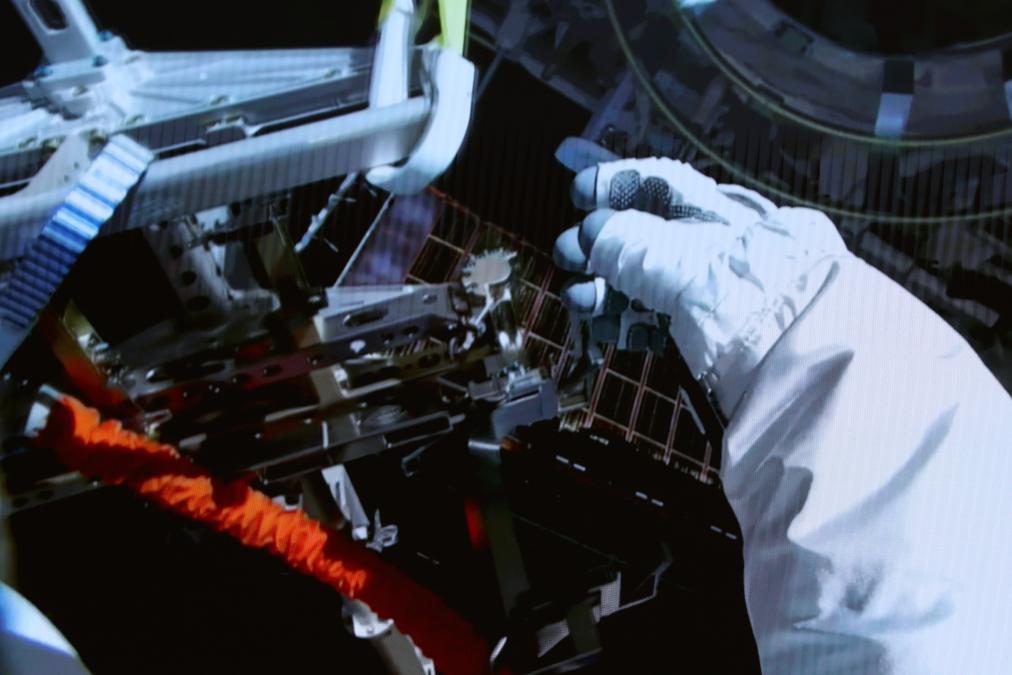
This screen image captured at Beijing Aerospace Control Center on March 16, 2026 shows Shenzhou-21 astronauts performing extravehicular activities (EVAs) outside China's orbiting space station. The Shenzhou-21 crew aboard China's orbiting space station completed their mission's second series of EVAs on Monday, according to the China Manned Space Agency (CMSA). The astronaut trio -- Zhang Lu, Wu Fei and Zhang Hongzhang -- worked for roughly seven hours and completed their tasks at 7:35 p.m. (Beijing Time), assisted by the space station's robotic arm and a team on Earth. The trio completed the installation of a space debris protection device for the space station along with other tasks. Zhang Lu and Wu Fei, who have conducted spacewalk operations, returned to the Wentian lab module safely, according to the CMSA. (Photo by Zhang Fan/Xinhua)
The Shenzhou-21 crew aboard China's orbiting space station completed their mission's second series of extravehicular activities (EVAs) on Monday, according to the China Manned Space Agency (CMSA).
The astronaut trio -- Zhang Lu, Wu Fei and Zhang Hongzhang -- worked for roughly seven hours and completed their tasks at 7:35 p.m. (Beijing Time), assisted by the space station's robotic arm and a team on Earth.
Zhang Lu has so far carried out six EVAs, making him one of the Chinese astronauts with the most spacewalks to date.
The trio completed the installation of a space debris protection device for the space station along with other tasks. Zhang Lu and Wu Fei, who have conducted spacewalk operations, returned to the Wentian lab module safely, according to the CMSA.
Since completing the first series of EVAs on Dec. 9, 2025, the Shenzhou-21 crew has carried out equipment inspection and maintenance, environmental monitoring, and health management aboard the space station. The crew members have also conducted in-orbit training exercises, including rendezvous and docking, medical rescue, and emergency lifesaving.
The scientific experiment and test projects they undertook, covering space life science and human research, microgravity physics, and new space technologies, have been progressing steadily. They also celebrated the Spring Festival in Year of the Horse while in orbit.
The CMSA said the three astronauts have been working in orbit for more than four months. According to the mission plan, additional EVAs will be carried out by the crew during the Shenzhou-21 mission, with relevant scientific experiments and technical tests continuing as scheduled.
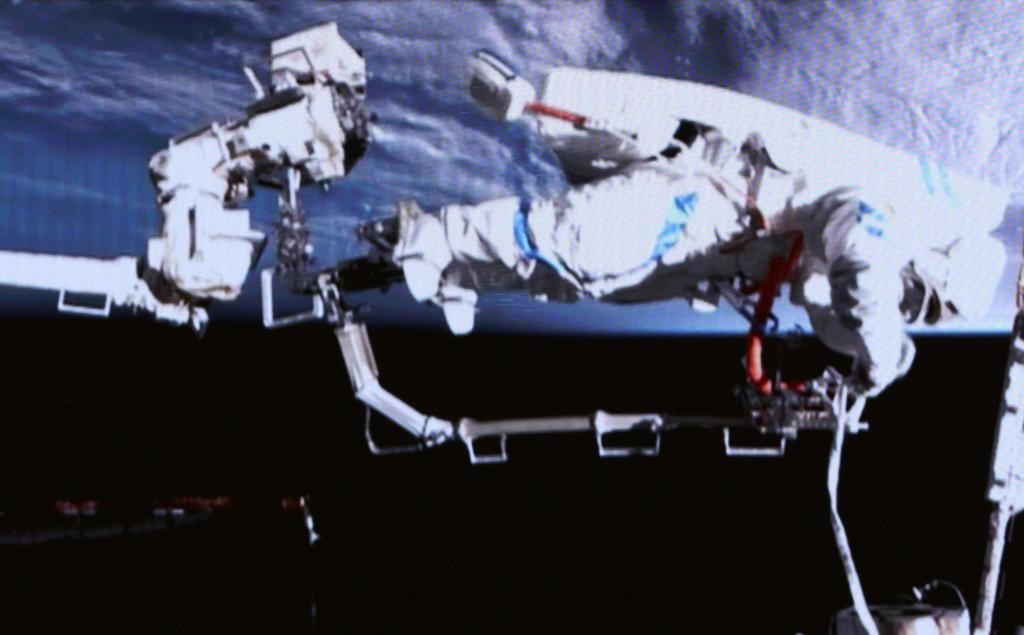
This screen image captured at Beijing Aerospace Control Center on March 16, 2026 shows Shenzhou-21 astronauts performing extravehicular activities (EVAs) outside China's orbiting space station. The Shenzhou-21 crew aboard China's orbiting space station completed their mission's second series of EVAs on Monday, according to the China Manned Space Agency (CMSA). The astronaut trio -- Zhang Lu, Wu Fei and Zhang Hongzhang -- worked for roughly seven hours and completed their tasks at 7:35 p.m. (Beijing Time), assisted by the space station's robotic arm and a team on Earth. The trio completed the installation of a space debris protection device for the space station along with other tasks. Zhang Lu and Wu Fei, who have conducted spacewalk operations, returned to the Wentian lab module safely, according to the CMSA. (Photo by Zhang Fan/Xinhua)
Quelle: Xinhua
----
Update: 18.04.2026
.
Shenzhou-21 astronauts complete third series of extravehicular activities
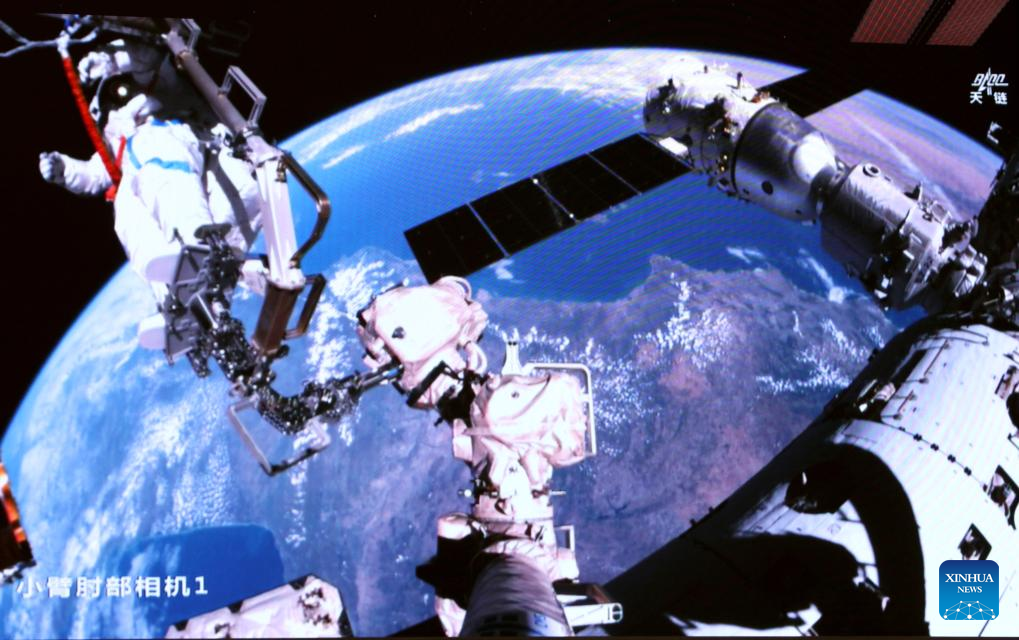
This screen image captured at Beijing Aerospace Control Center on April 16, 2026 shows Shenzhou-21 astronaut Wu Fei performing extravehicular activities (EVAs) outside China's orbiting space station. (Photo by Zhang Fan/Xinhua)
The Shenzhou-21 crew aboard China's orbiting space station completed their mission's third series of extravehicular activities (EVAs) on Friday, according to the China Manned Space Agency (CMSA).
The astronaut trio -- Zhang Lu, Wu Fei and Zhang Hongzhang -- worked for roughly 5.5 hours and completed their tasks at 1:36 a.m. (Beijing Time), assisted by the space station's robotic arm and a team on Earth. They completed the installation of space debris protection equipment and the inspection of extravehicular equipment.
Zhang Lu and Wu Fei, who conducted spacewalk operations, returned safely to the Wentian lab module.
To date, Zhang Lu has conducted 7 extravehicular activities, setting a new record for the most spacewalks by a Chinese astronaut.
The CMSA disclosed that since the second EVAs on March 16, the Shenzhou-21 astronauts have been steadily advancing their experimental missions in space life science, human body research, and microgravity physics.
They have continued to conduct station environmental monitoring, equipment inspection and maintenance, and supply organization. The crew has also completed full-system pressure emergency drills, in-orbit emergency rescue training, and EVAs preparations.
To date, the three astronauts have been in orbit for over five months, and are in good working and living conditions.
After a thorough analysis and evaluation, the CMSA plans to extend the in-orbit stay of the Shenzhou-21 crew by approximately one month, so as to further verify the technologies regarding the long-term stay of astronauts in orbit and fully use the supplies delivered by the Shenzhou-22 spacecraft in an emergency launch. ■
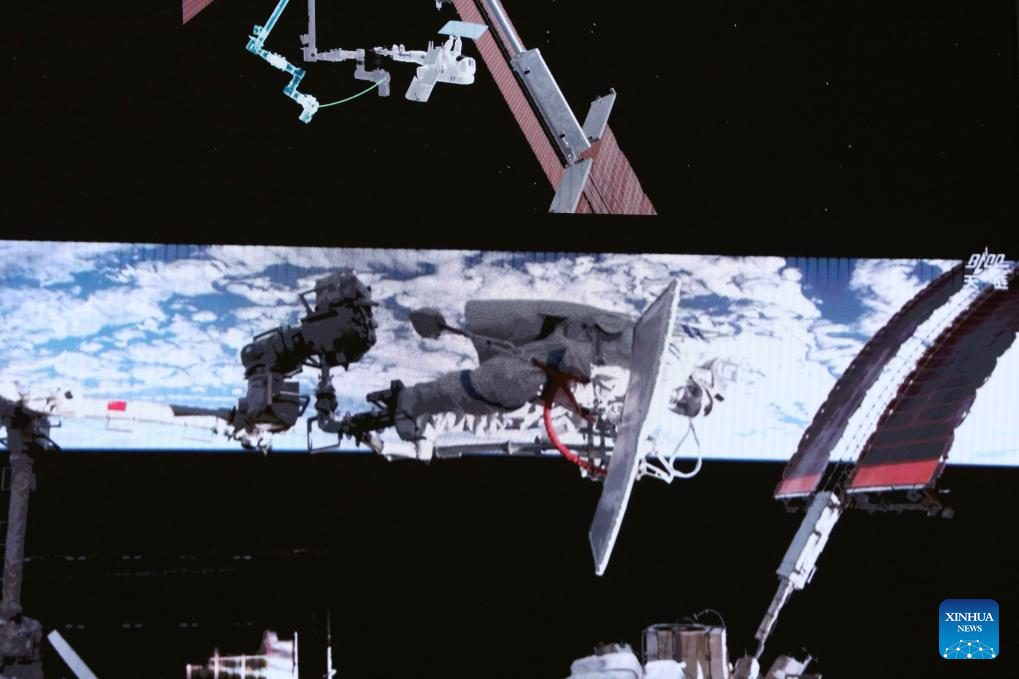
This screen image captured at Beijing Aerospace Control Center on April 16, 2026 shows Shenzhou-21 astronaut Wu Fei performing extravehicular activities (EVAs) outside China's orbiting space station. (Photo by Zhang Fan/Xinhua)
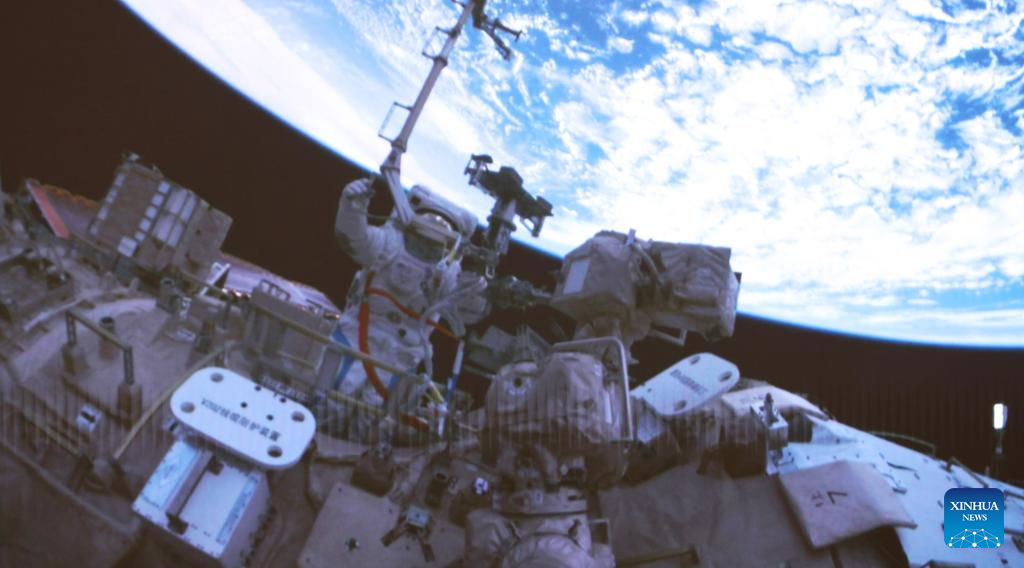
This screen image captured at Beijing Aerospace Control Center on April 16, 2026 shows Shenzhou-21 astronaut Wu Fei performing extravehicular activities (EVAs) outside China's orbiting space station. (Photo by Zhang Fan/Xinhua)
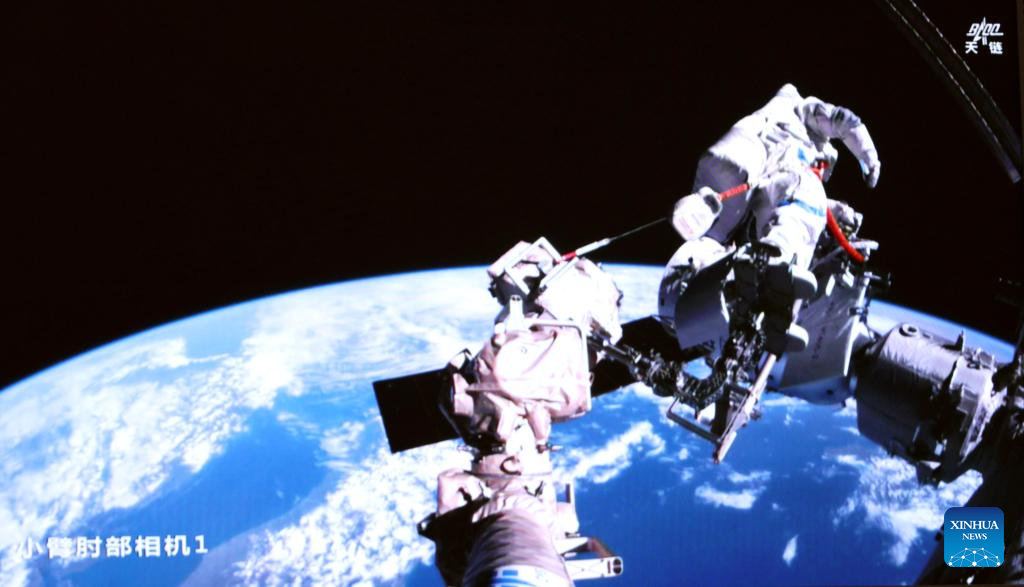
This screen image captured at Beijing Aerospace Control Center on April 16, 2026 shows Shenzhou-21 astronaut Wu Fei performing extravehicular activities (EVAs) outside China's orbiting space station. (Photo by Zhang Fan/Xinhua)
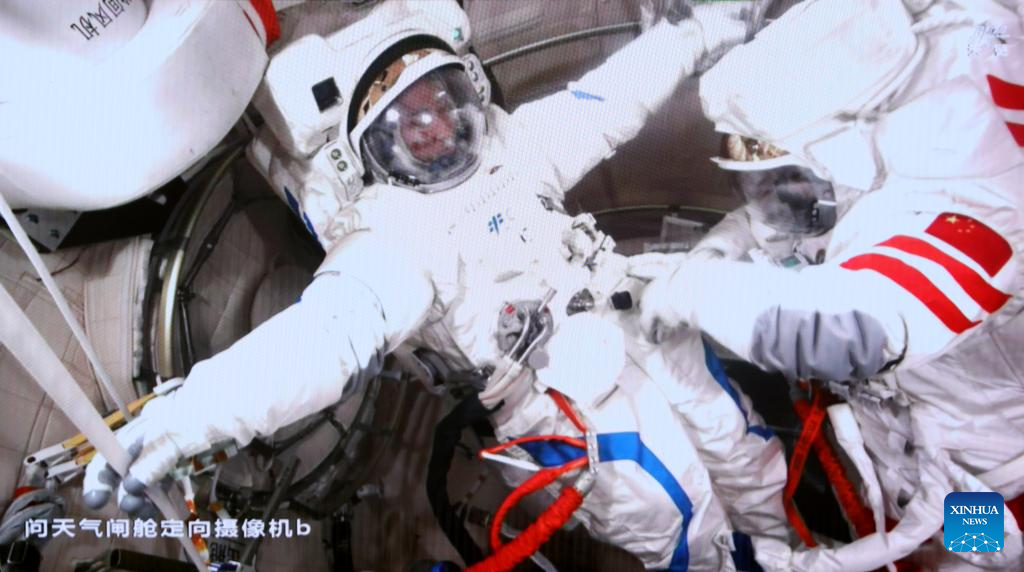
This screen image captured at Beijing Aerospace Control Center on April 16, 2026 shows Shenzhou-21 astronauts Wu Fei (L) and Zhang Lu preparing to perform extravehicular activities (EVAs) outside China's orbiting space station. (Photo by Zhang Fan/Xinhua)
Quelle: Xinhua
----
Update: 1.06.2026
.
China's space station lands new batch of samples for experiments
A total of approximately 41.14 kg of scientific samples from China's space station, spanning 23 experimental projects in life sciences, materials and combustion, successfully returned to Earth aboard the Shenzhou-22 spacecraft on Friday, according to the Chinese Academy of Sciences (CAS).
It marks the tenth transfer of materials from China's orbiting laboratory.
Life science experiment samples, such as artificial embryos and brain organoids, were transported to the Technology and Engineering Center for Space Utilization (CSU) under the CAS in Beijing on Saturday.
After initial status checks, these specimens will be handed over to research teams for further study. The remaining samples will be transported to Beijing along with the Shenzhou-22 return capsule.
In the field of life sciences, scientists will focus on the cutting-edge area of "artificial embryos" to reveal how life adapts to space, providing vital health insights for future long-term space habitation and deep-space exploration.
For the returned samples, including novel titanium alloys, high-strength and tough steels, and relaxor ferroelectric single crystals, scientists will conduct rigorous analyses of their microstructures, chemical compositions, and compositional distributions to understand how gravity influences material growth, segregation, defects, and overall performance.
The findings will guide the optimization of new alloys and the ground-based production of key materials, supporting their application in aerospace, high-end manufacturing, precision sensing, and medical ultrasound imaging.
Following the return of combustion experiment samples -- including burners, soot collection plates, and collection lids -- scientists will analyze flame-synthesized semiconductor nanomaterials, soot samples, and the characteristics of carbon nanoparticle formation.
The findings are expected to provide technical support for extraterrestrial flame synthesis of nanomaterials, the development of new energy systems, space fire prevention technology, and the preparation of advanced functional carbon nanomaterials.
Quelle: Xinhua
----
Update: 11.06.2026
.
Experiment on China's space station expected to provide new approach for fatty liver treatment
A study aboard China's space station Tiangong is expected to identify the regulatory mechanisms of a type of liver cell's metabolism and provide a new approach to treating fatty liver disease.
This seven-day on-orbit experiment, concluded last week, was designed to elucidate the effects of space-associated biological phase separation on lipid metabolism under microgravity conditions.
Space microgravity constitutes a unique mechanical environment, involving factors that strongly regulate the metabolic functions of hepatocytes -- a type of liver cell -- said Li Ning, an associate researcher at the Institute of Mechanics of Chinese Academy of Sciences.
The liver is an organ with a highly-complex mechanical micro-environment. "During the progression of diseases such as liver fibrosis or fatty liver disease, changes in the mechanical micro-environment occur, including increased stiffness and altered blood flow," said Li.
Based on extensive experimental findings, scientists believe that the most direct mechanical factor leading to abnormal lipid metabolism in the liver is fluid shear stress.
Under normal conditions, blood flow creates interstitial shear stress as it passes through the walls of hepatic blood vessels, "washing over" the hepatocytes and thereby maintaining metabolic homeostasis.
In a microgravity environment, however, the cephalad redistribution of body fluids leads to increased blood flow above the heart and reduced blood flow below the heart, resulting in a significant decrease in portal venous blood flow to the liver.
At the same time, the disappearance of hydrostatic pressure reduces the pressure load on the liver. "The mechanical effect of blood flow on the liver is reduced in space," said Li.
Consequently, the regulatory role of blood flow diminishes, and fat accumulates more.
To study how blood flow shear stress regulates liver metabolic functions, the experiments conducted during the Shenzhou-16 space flight mission have shown that the microgravity environment activated the SREBP protein, leading to an increase in intracellular lipid droplets. Blood flow, however, inhibits the SREBP and exerts a protective effect, reducing lipid droplets.
Given that previous studies have confirmed the protective effect of the blood flow environment on cells, the new experiment specifically designed a corresponding intervention group to enhance cellular responses to mechanical stimulation from blood flow.
The in-orbit experiment selected hepatocytes as the research subject and designed three experimental conditions that included static culture, simulated blood flow environment and "blood flow environment with drug stimulation," totaling six cell samples.
The entire experiment was initiated by ground-based researchers through remote commands.
"During the in-orbit culture period, we performed microscopic imaging of the cells everyday to observe their growth status in real time," Li said, noting that on the seventh day, the system automatically injected a fixative solution to preserve the cellular state. Afterwards, the samples were placed into a freezer at minus 80 degrees Celsius for storage.
The samples are scheduled to be brought back to Earth in the second half of this year. The collection and in-depth analysis of the vast majority of core data will officially begin afterwards.
Quelle: Xinhua
----
Update: 23.06.2026
.
Shenzhou-23 crew conducts first in-orbit medical rescue training
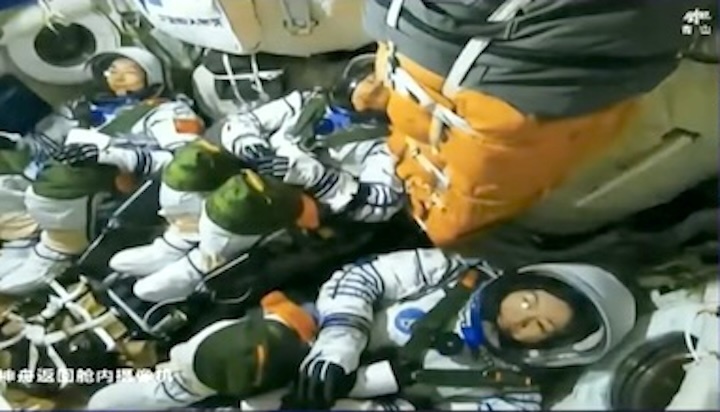
Shenzhou-23 spaceflight mission's three astronauts have conducted their first in-orbit medical rescue training since arriving at China's Tiangong space station, a video released by the China Manned Space Agency (CMSA) has shown.
The training aimed to help the astronauts, Zhu Yangzhu, Zhang Zhiyuan, and Li Jiaying, familiarize themselves with rescue operation techniques and force application characteristics under microgravity conditions, the CMSA said in the video Sunday.
In addition to the medical training, the crew has been engaged in a wide range of scientific experiments. They utilized a space Raman spectrometer to study the relationship between gut microbiota and nutritional metabolism under long-duration spaceflight conditions.
Behavioral experiments on visual motion processing and intuitive physics in microgravity were performed, exploring how gravity affects visual information processing and how long-term spaceflight impacts intuitive physics perception. The crew also conducted in-orbit emotion recognition and emergency decision-making capability assessments.
China launched the Shenzhou-23 crewed spaceship on May 24. The mission is notable for including a one-year in-orbit stay experiment, which will provide crucial data for future long-duration space exploration.
Quelle: Xinhua
----
Update: 25.06.2026
.
China's space station to be expanded to unlock broader future
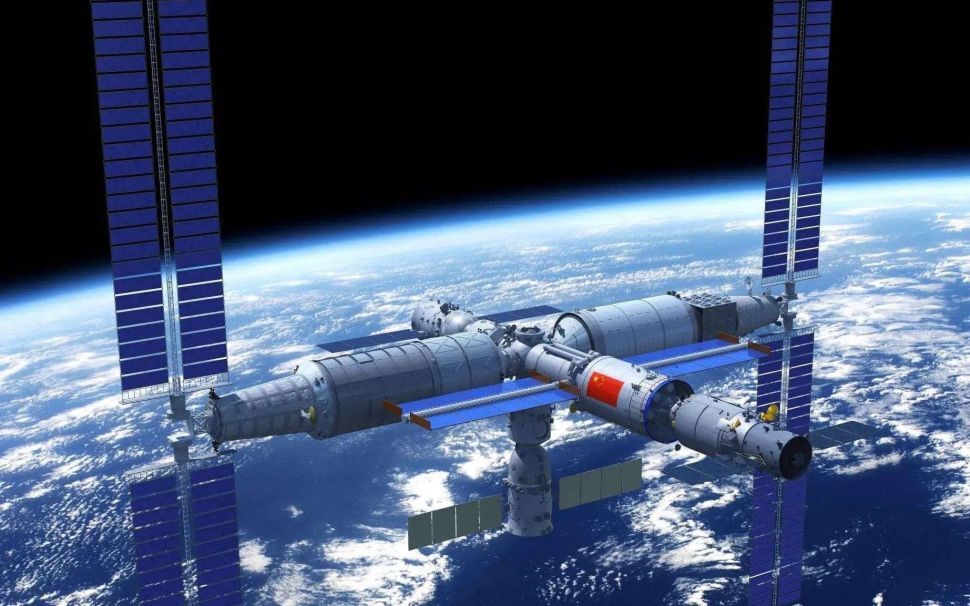
China's space station will get bigger. Tiangong, currently in a T-shaped configuration, will be upgraded to a cross shape with a new module.
The current station consists of the Tianhe core module, the Wentian lab module and the Mengtian lab module in a T configuration. The first phase of expansion will add a new 20-tonne-class multifunctional module, docking with the core module to form a cross shape, according to a report by China Media Group (CMG) on Monday.
"This expansion has always been part of the original plan," Qian Hang, a researcher at the China Academy of Launch Vehicle Technology (CALT), a subsidiary of the China Aerospace Science and Technology Corporation (CASC), was quoted as saying in the report.
The expansion will add more docking ports, allowing multiple spacecraft to dock simultaneously, an additional extravehicular activity hatch, and expanded storage and experiment capacity.
According to Qian, first, research demand is growing. The more experiments are run in orbit, the more equipment and lab space are becoming saturated, and so the space station must expand physically. Second, crew and cargo missions are expected to become more frequent.
"If the missions get more intensive, we risk 'queuing' for docking ports and lack sufficient emergency buffer space," Qian said.
Since its initial operation, the space station has become a bustling orbital laboratory. To date, 267 scientific and application projects have been deployed and implemented aboard Tiangong. In the past year alone, 86 new in-orbit experiments were added, with approximately 1,179 kilograms of science materials sent up and 105 kilograms of experimental samples returned, generating over 150 terabytes of scientific data, according to the CMG report.
The station is also preparing for the long haul. Currently, it can support three astronauts at a time, but future missions will involve larger crews and longer stays, requiring better living quarters, exercise equipment and emergency support systems.
"Beyond experiments, the station shall also handle spacecraft maintenance, equipment repairs and other in-orbit servicing tasks," Qian said, "The current layout has limitations in extravehicular operations and supplies storage, but expansion will move us toward a comprehensive space hub capable of handling a wider range of missions."
International cooperation is another critical driver. China has already opened its space station to the world. As more countries are likely to participate in crewed missions and joint research, the demand for upgrading the station is inevitable.
"By expanding the scale of our space station, we hope to further increase the scale of our space research, so that more research institutions can have opportunities to conduct scientific research in orbit," said Yang Yuguang, chairman of the Space Transportation Committee of the International Astronautical Federation (IAF).
LONGER-TERM EXPANSION
Qian describes the expansion as a "standardized design with unified interfaces across all modules, allowing new sections to integrate quickly without major modifications to existing facilities."
Looking further ahead, two additional laboratory modules can be docked with the new expansion module, thereby further increasing the space station's capacity, noted Pang Zhihao, a chief science communication expert on space exploration technology.
Yang Hong, chief designer of the space station system, said a longer-term plan would upgrade the station to a six-module configuration, increasing its total mass from the current 90 tonnes to up to 180 tonnes.
At that stage, different modules could be dedicated to specific research fields, and crew capacity would be significantly expanded, he said.
MORE THAN SIZE
Expansion is about more than size. It's about capability. A particularly exciting example is the Xuntian Space Telescope, scheduled for launch in 2027, will fly in co-orbit with the station and dock when maintenance is required.
The space telescope will not be installed on the space station so that it can maintain a safe separation to avoid interference from astronaut movements and equipment vibrations during normal operations, ensuring ultra-precise observations. When it needs maintenance, it can dock with the station for servicing.
This "co-orbital" design transforms the space station into a comprehensive orbital complex that integrates crew habitat, scientific research, technology verification and astronomical observation.
"With Tiangong's expansion, we'll have more research opportunities, and scientists will be able to work at a more comfortable pace. This is of great significance to China's entire space science endeavor," said Yang Yuguang.
Quelle: Xinhua
----
Update: 2.07.2026
.
China completes in-orbit test of muscle monitor for astronauts
An electromyography (EMG) monitor device developed by a Chinese research team recently completed its in-orbit experiment. The device can be used in space for real-time assessment of astronauts' muscle status and human-machine interaction, providing key technical support for astronaut health protection and space-based human-machine interaction technology.
The Qingzhou Cargo Spacecraft Test Vehicle released its latest batch of in-orbit test results on Monday, including the EMG monitor device developed by a team from the Shenzhen Institute of Advanced Technology (SIAT) under the Chinese Academy of Sciences, in collaboration with Shenzhen University of Advanced Technology (SUAT).
The Qingzhou Cargo Spacecraft Test Vehicle was launched into space on March 30, 2026. It carried five medical projects, which included the EMG monitor device, for the world's first future space hospital proposed by SUAT.
Astronauts who spend extended periods in microgravity experience significantly reduce muscle loading. This leads to less frequent muscle fiber contractions and accelerated protein breakdown, resulting in issues such as muscle atrophy. Accurately and continuously monitoring astronauts' muscle health in real time remains a key challenge in space life science and aerospace medicine.
Currently, the International Space Station mainly uses muscle strength testing and ultrasound imaging, while China's space station assesses muscle atrophy through operational force and optical measurements. However, existing methods generally suffer from high costs, insufficient real-time continuity, and an inability to directly document muscle status.
The team led by SIAT researcher Wang Yishan proposed an EMG monitoring solution based on nerve signal detection, enabling dynamic assessment of muscle status through real-time acquisition and analysis of EMG signals.
Building on a previously self-developed nerve signal detection chip, the team made the EMG detection device and completed aerospace adaptation modifications. To meet the requirements of the device in complex space environments, the team conducted ground experiments including vibration testing, thermal cycling testing, and payload-spacecraft interface matching to ensure the stability and reliability of the chip and device in space.
After the launch of the Qingzhou Cargo Spacecraft Test Vehicle, the team carried out the in-orbit test. Under remote control from the ground, the test completed simulated data acquisition, storage, and transmission tasks.
The data received on the ground showed that the test went smoothly. The results from the device matched the expected data, indicating that the chip and device can operate stably and reliably in microgravity and are suitable for space working conditions.
The success of this in-orbit test further promotes the space life support technology and could feed back into the development of ground-based medical health, human-machine interaction, and smart wearables.
The results released this time also include a handheld blood cell analyzer, which no longer depends on bulky medical equipment or instructions from the ground.
SUAT signed an agreement with the Innovation Academy for Microsatellites of the Chinese Academy of Sciences to jointly build the future space hospital in July 2025.
The initiative aims to enhance astronaut health protection and improve human health, and expand capabilities for in-orbit medical monitoring and life support systems, with focuses on advanced disease prevention and treatment.
Quelle: Xinhua
----
Update: 21.07.2026
.
China's space crew assesses emergency choices, emotions in long-stay study
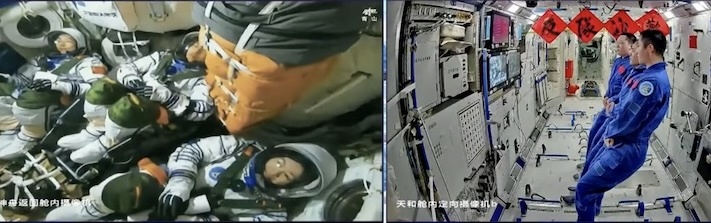
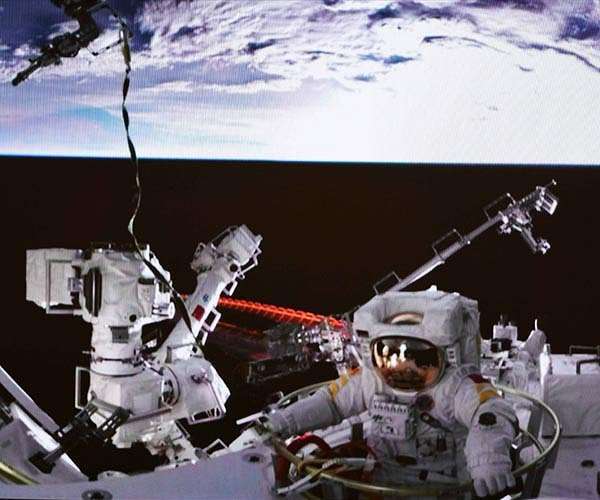
China's Shenzhou-23 space station crew has completed emergency decision-making assessments and tests on emotional states, as part of a broader effort to study how long-duration spaceflights affect behavior, the country's manned space agency said Monday.
The trio, including one female member from the Hong Kong Special Administrative Region, have been aboard the Tiangong space station for nearly two months. One of them will stay in orbit for one year to conduct China's first space human research program and collect data on the longer-term flight of astronauts.
In a recent weekly video released by the China Manned Space Agency on Sunday, the crew members were seen wearing sensors and VR headsets for brainwave monitoring.
The tests are among more than 100 science and application projects underway aboard the station. Besides space medicine, the crew has also installed a radiation biology exposure device and an external camera on one of the space station's lab modules, and has conducted cargo tests of measurement instruments. According to the agency, a new type of energy storage battery will be tested in orbit, with results expected to support future upgrades to the space station.
China launched the Shenzhou-23 crewed spaceship on May 24, with one of the mission's highlights being the one-year in-orbit stay for the crew member. Previous crewed missions to Tiangong have lasted around six months. As the country advances toward its goal of deep-space explorations, long-duration missions are expected to become more frequent, placing increasing demands on the physical and mental resilience of its spacefarers.
Quelle: Xinhua
----
Update: 30.08.2026
.
Shenzhou-23 astronauts complete first series of extravehicular activities
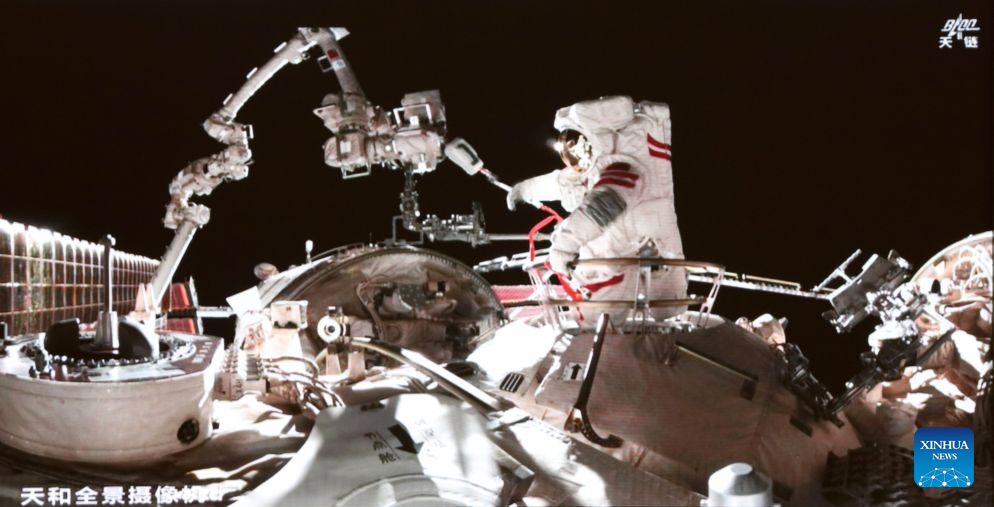
This screen image captured at Beijing Aerospace Control Center on Aug. 28, 2026 shows Shenzhou-23 astronaut Zhu Yangzhu performing extravehicular activities outside China's orbiting space station. The Shenzhou-23 crew aboard China's orbiting space station completed their mission's first series of extravehicular activities on Friday, according to the China Manned Space Agency. (Photo by Yu Liqiang/Xinhua)
The Shenzhou-23 crew aboard China's orbiting space station completed their mission's first series of extravehicular activities on Friday, according to the China Manned Space Agency (CMSA).
The astronaut trio -- Zhu Yangzhu, Zhang Zhiyuan and Li Jiaying -- worked for approximately 5.5 hours and completed their tasks at 1:59 p.m. (Beijing Time), assisted by the space station's robotic arm and ground support teams. Zhu, who previously spacewalked three years ago, made his second excursion, while Zhang ventured outside for the first time.
Zhu and Zhang installed debris shields and repaired the station's solar panels, ensuring the safety and stability of its power supply, according to the CMSA. This is the second time Chinese astronauts have performed such in-orbit maintenance tasks.
The three astronauts were launched aboard the Shenzhou-23 spacecraft on May 24.
Since arriving at the station, the crew has completed an in-orbit handover, deployed application payloads outside the station, and conducted rendezvous-and-docking drills, medical rescue exercises and full-system pressure emergency response drills, according to the agency.
Scientific experiments and technology tests in space life sciences, human research, microgravity physics and new space technologies are progressing steadily, the CMSA said.
In the coming months, they will carry out scientific experiments, technology tests, application payload deployments outside the station, and public outreach activities, the agency added. ■
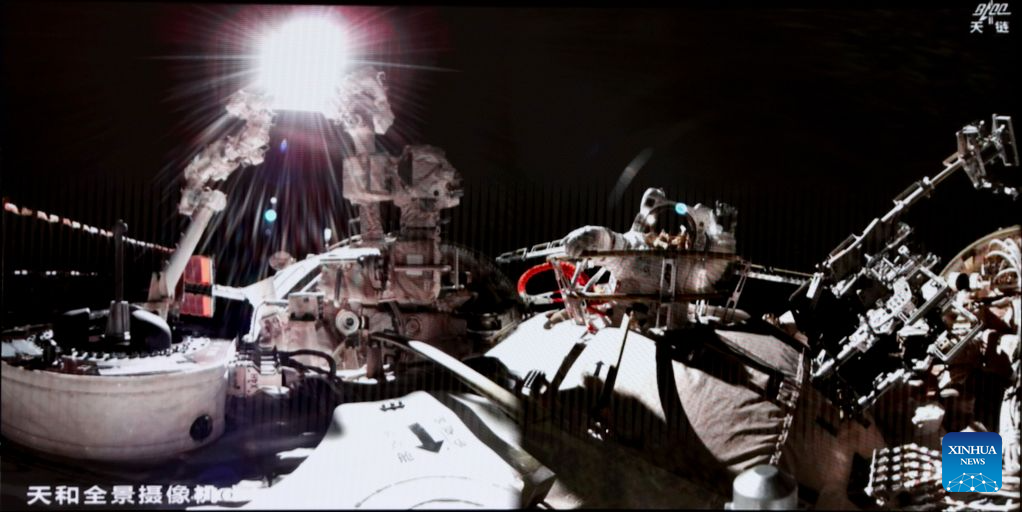
This screen image captured at Beijing Aerospace Control Center on Aug. 28, 2026 shows Shenzhou-23 astronaut Zhu Yangzhu performing extravehicular activities outside China's orbiting space station. The Shenzhou-23 crew aboard China's orbiting space station completed their mission's first series of extravehicular activities on Friday, according to the China Manned Space Agency (CMSA).
The astronaut trio -- Zhu Yangzhu, Zhang Zhiyuan and Li Jiaying -- worked for approximately 5.5 hours and completed their tasks at 1:59 p.m. (Beijing Time), assisted by the space station's robotic arm and ground support teams. Zhu, who previously spacewalked three years ago, made his second excursion, while Zhang ventured outside for the first time.
Zhu and Zhang installed debris shields and repaired the station's solar panels, ensuring the safety and stability of its power supply, according to the CMSA. This is the second time Chinese astronauts have performed such in-orbit maintenance tasks. (Photo by Yu Liqiang/Xinhua)
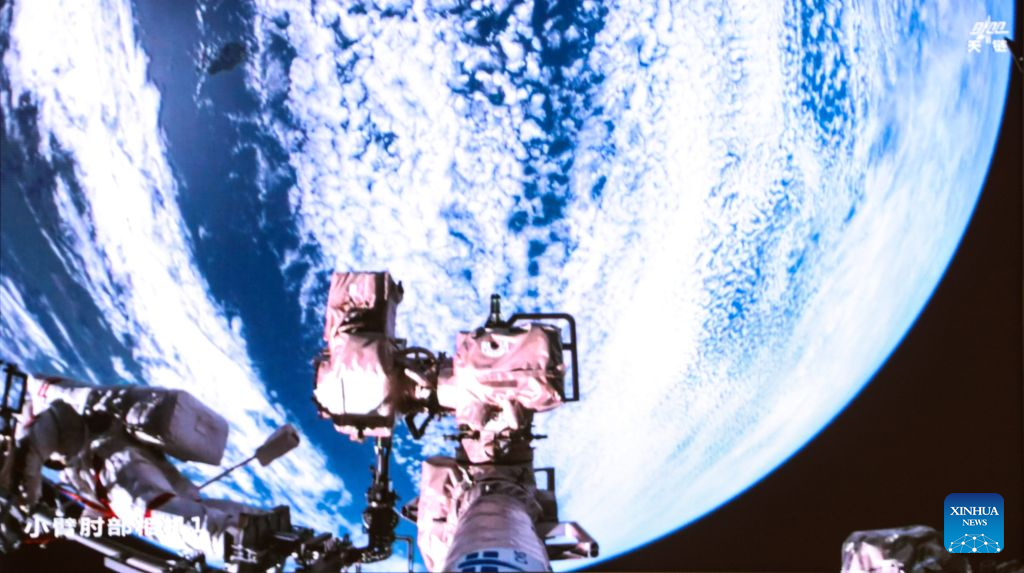
This screen image captured at Beijing Aerospace Control Center on Aug. 28, 2026 shows Shenzhou-23 astronaut Zhu Yangzhu performing extravehicular activities outside China's orbiting space station. The Shenzhou-23 crew aboard China's orbiting space station completed their mission's first series of extravehicular activities on Friday, according to the China Manned Space Agency (CMSA).
The astronaut trio -- Zhu Yangzhu, Zhang Zhiyuan and Li Jiaying -- worked for approximately 5.5 hours and completed their tasks at 1:59 p.m. (Beijing Time), assisted by the space station's robotic arm and ground support teams. Zhu, who previously spacewalked three years ago, made his second excursion, while Zhang ventured outside for the first time.
Zhu and Zhang installed debris shields and repaired the station's solar panels, ensuring the safety and stability of its power supply, according to the CMSA. This is the second time Chinese astronauts have performed such in-orbit maintenance tasks. (Photo by Yu Liqiang/Xinhua)
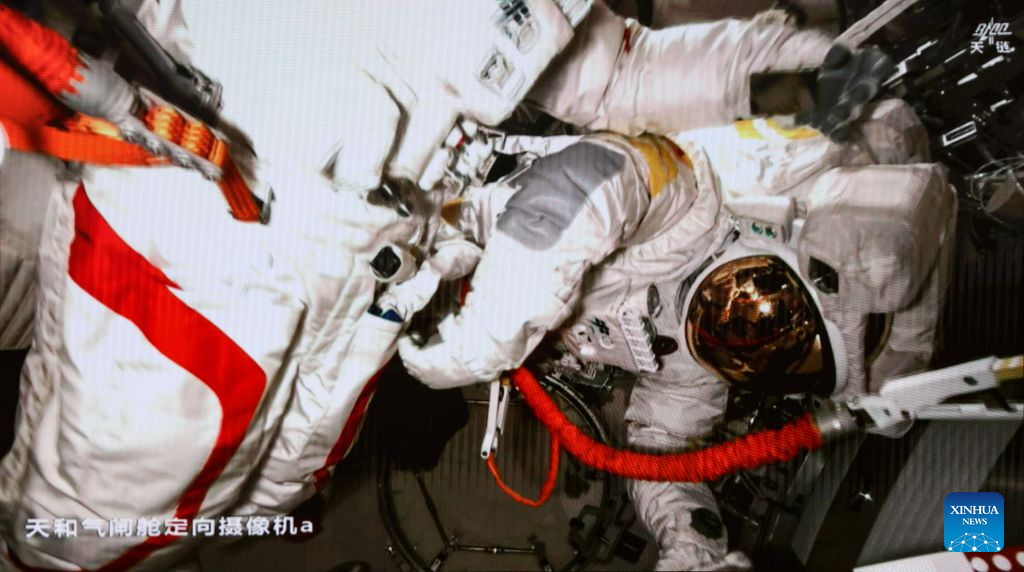
This screen image captured at Beijing Aerospace Control Center on Aug. 28, 2026 shows Shenzhou-23 astronaut Zhu Yangzhu (L) and Zhang Zhiyuan preparing for extravehicular activities. The Shenzhou-23 crew aboard China's orbiting space station completed their mission's first series of extravehicular activities on Friday, according to the China Manned Space Agency (CMSA).
The astronaut trio -- Zhu Yangzhu, Zhang Zhiyuan and Li Jiaying -- worked for approximately 5.5 hours and completed their tasks at 1:59 p.m. (Beijing Time), assisted by the space station's robotic arm and ground support teams. Zhu, who previously spacewalked three years ago, made his second excursion, while Zhang ventured outside for the first time.
Zhu and Zhang installed debris shields and repaired the station's solar panels, ensuring the safety and stability of its power supply, according to the CMSA. This is the second time Chinese astronauts have performed such in-orbit maintenance tasks. (Photo by Yu Liqiang/Xinhua)
Quelle: Xinhua
----
Update: 22.09.2026
.
China cultivates 14 plant species aboard space station
China has now cultivated more than 20 varieties spanning 14 plant species in orbit -- a milestone that lays the groundwork for large-scale crop production aboard the space station, according to the Astronaut Center of China.
The breakthrough was highlighted at an aerospace medical engineering conference in Tianjin Municipality in north China, where Zhang Hongzhang, an astronaut from the Shenzhou-21 crewed mission, shared photos and videos of a flourishing "space garden" aboard China's Tiangong space station, featuring crops such as lettuce, carrot, sunflower, potato and wheat.
China's era of long-term crewed spaceflight began in October 2021, when Shenzhou-13 crew members Zhai Zhigang, Wang Yaping and Ye Guangfu moved into China's space station core module Tianhe.
"Long-term stays in space require us to reduce the reliance on Earth resupply. Our controlled ecological life support experiments aim to build an ecosystem in space that can regenerate water, air and food in situ -- cutting dependence on Earth and eventually achieving self-sufficiency," said Bian Qiang, an expert at the Astronaut Center of China.
Controlled ecological life support technology uses an artificially built, closed and controlled ecosystem to efficiently recycle and regenerate the air, water and food astronauts in orbit need to survive, establishing a life-and-health support system suited to long-term human habitation.
According to Bian, right now, two types of plant-growing units aboard the space station -- one using substrate culture and the other aeroponics -- are running continuously. Together, they are giving researchers valuable experience in building a basic life support system that leans mainly on physical and chemical recycling, with biological regeneration playing a supporting role.
"A more efficient aeroponics unit was sent up in 2025. Wheat has since completed a full growing cycle in orbit, and a second round cultivation using seeds from that harvest is growing well and close to reaping," Bian said.
Looking further ahead, Bian said China intends to establish a "lunar vegetable garden" as its lunar exploration program advances.
China's space station, Tiangong, which means Heavenly Palace, has now entered an era of long-term human habitation. One member of the Shenzhou-23 crew will conduct a one-year in-orbit stay, while the country's 2030 crewed moon landing mission is advancing steadily.
Quelle: Xinhua
----
Update: 5.10.2026
.
A taste of home in orbit: How China keeps its astronauts well-fed
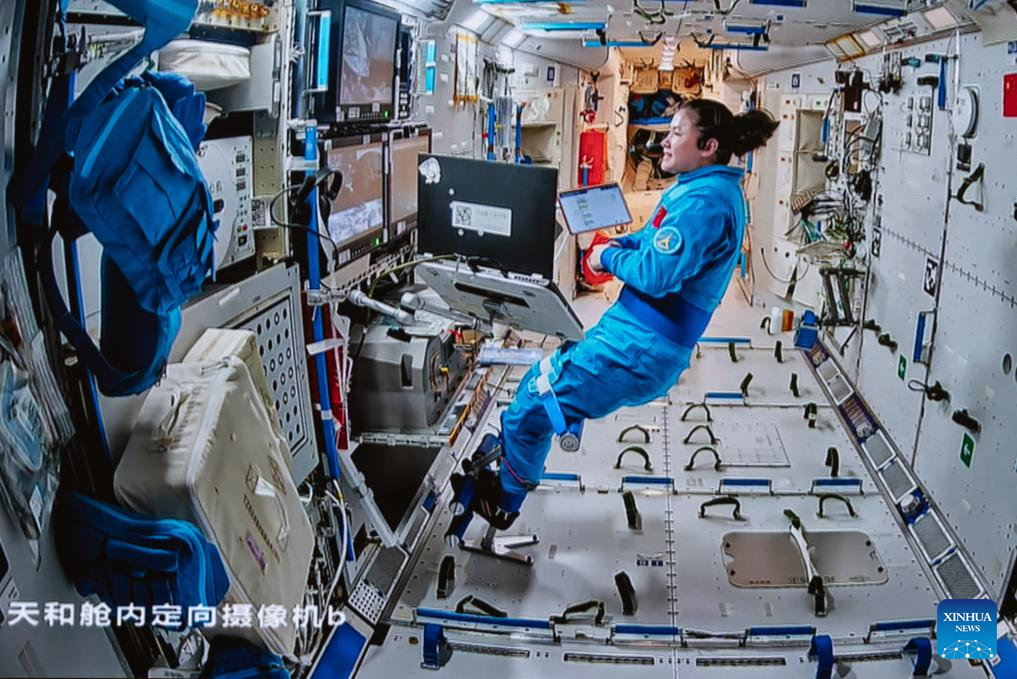
Although called Tiangong, or "Heavenly Palace," China's space station is becoming less distant and more like home, as astronauts bring the comforting tastes into orbit.
The Chinese space kitchen now serves nearly 200 food items. Alongside dumplings and mooncakes, home-style dishes such as Kung Pao chicken, mapo tofu and fried rice have made it onto the station's menu.
Videos showing astronauts savoring freshly cooked meat and cakes in orbit have gone viral. Their smiling faces and bright eyes make the aroma almost leap off the screen.
Yang Liwei, the country's first astronaut, joked at a recent press conference that he was envious. He said astronauts can now use air-frying equipment in space and enjoy baked chicken wings in orbit. During his Shenzhou-5 mission in 2003, which lasted less than one day, his diet was limited to packaged instant food that could not be heated.
Microgravity, cosmic radiation and the enclosed cabin environment impose strict requirements on space diets. Floating particles and droplets may drift into instruments and trigger malfunctions. Since Yuri Gagarin, the first human to travel into space, paste-like food and compressed energy bars had long served as the standard meals for astronauts.
In June 2013, Wang Yaping, together with two fellow male crewmates, carried out the 15-day Shenzhou-10 space mission. People remembered this female astronaut with a ponytail for her space lecture. At the same time, the image of her floating a "zongzi," a leaf-wrapped rice dumpling, by hand also left a deep impression on the public.
Zongzi is traditionally enjoyed during the Dragon Boat Festival, which happened to coincide with the Shenzhou-10 mission that year. To help the astronauts celebrate, this special snack was added to the spaceship pantry.
Eight years later, Wang spent Spring Festival aboard the Tiangong space station during the Shenzhou-13 mission. It is also China's first six-month-long space stay. Scientists customized the cuisine: for instance, they prepared dumplings with seafood fillings because Wang grew up by the sea, and plenty of spicy food for crew member Ye Guangfu, who was born in chili-obsessed Sichuan Province.
At that time, the core module Tianhe had several sections, including those for working, sleeping, dining and exercising. The videos of Shenzhou-13 crew practicing calligraphy and playing Taichi became social media hits.
China completed the construction of its space station in 2022, with one core module and two lab modules forming a 110-square-meter orbital structure. Oxygen can be fully regenerated, and water recovery exceeds 95 percent.
Since then, long-duration spaceflights have become routine, and the Chinese "space home" can host up to six astronauts in orbit at a time.
Space residency is also set to last even longer. One member of the Shenzhou-23 crew, currently aboard the Tiangong, will conduct a one-year in-orbit stay. Moreover, as China pushes further into deep-space exploration, these extended stays will become the norm, which means astronauts' diets will be more important than ever.
Because weightlessness causes bone calcium loss and muscle atrophy, space food must be high in calcium and protein, low in sodium and balanced in dietary fiber. According to the Astronaut Center of China, researchers have developed space food that counteracts oxidative damage, supports immunity, reduces fatigue and regulates the gut microbiome.
But taste is another problem. In microgravity, blood shifts upward, causing nasal congestion and cutting smell sensitivity by at least 30 percent. Since taste is closely tied to smell, astronauts often find food bland. The center's researchers have responded with adding more strong-flavored dishes, with liquid soy sauce and concentrated chili sauce.
New technology has also played a big role in keeping astronauts well-fed.
The astronaut center, in collaboration with private companies, has upgraded the "space kitchen" with a suite of intelligent appliances for drinking water, food reheating and baking. This allows astronauts in orbit to enjoy hot meals within 20 minutes, rather than waiting longer or eating cold food. Liu Weibo, an expert with the center, gave an example of the hot-air baking oven, which is a pioneering Chinese design for space use that can efficiently remove cooking fumes and allow astronauts to enjoy barbecue in orbit.
During a space lecture for Hong Kong and Macao students last month, Shenzhou-23 crew member Li Jiaying, or Lai Ka-ying in Cantonese, showed freshly baked cakes and said they reminded her of egg waffles, a popular snack from her hometown. She is a Hong Kong local.
Space food supplies have also become more diverse and nutritious, including more fruits and vegetables, as well as frozen steak and chicken wings. The next-generation cargo craft Qingzhou, designed for future in-orbit supply delivery, will have greater cold-chain transport capacity.
However, long-term space residency requires reducing dependence on Earth's supplies, said center expert Bian Qiang. "The controlled ecological life-support tests we are conducting are intended to build an ecosystem in space that regenerates water, air and food on site, to reduce extraterrestrial survival's dependence on Earth resupply and ultimately achieve self-sufficiency."
Since the Shenzhou-16 mission in 2023, China has been growing plants in orbit. It has tested more than 20 varieties from 14 plant species, including lettuce, carrots, potatoes and wheat.
The Shenzhou-18 crew in 2024 was tasked with raising fish in an "aquarium" to study how space affects their growth. Scientists said the work may one day allow astronauts to enjoy fish from their own in-orbit harvests.
China is targeting a crewed lunar landing by 2030. Living on the moon will make resupply much more challenging because of the increased distance from Earth.
"We plan to build a Chinese 'lunar vegetable garden' on the moon," Bian said.
From heating, baking to farming, feeding astronauts well in space is not a luxury. It is part of the mission, bringing a taste of home to the universe.
Quelle: Xinhua