
22.09.2026
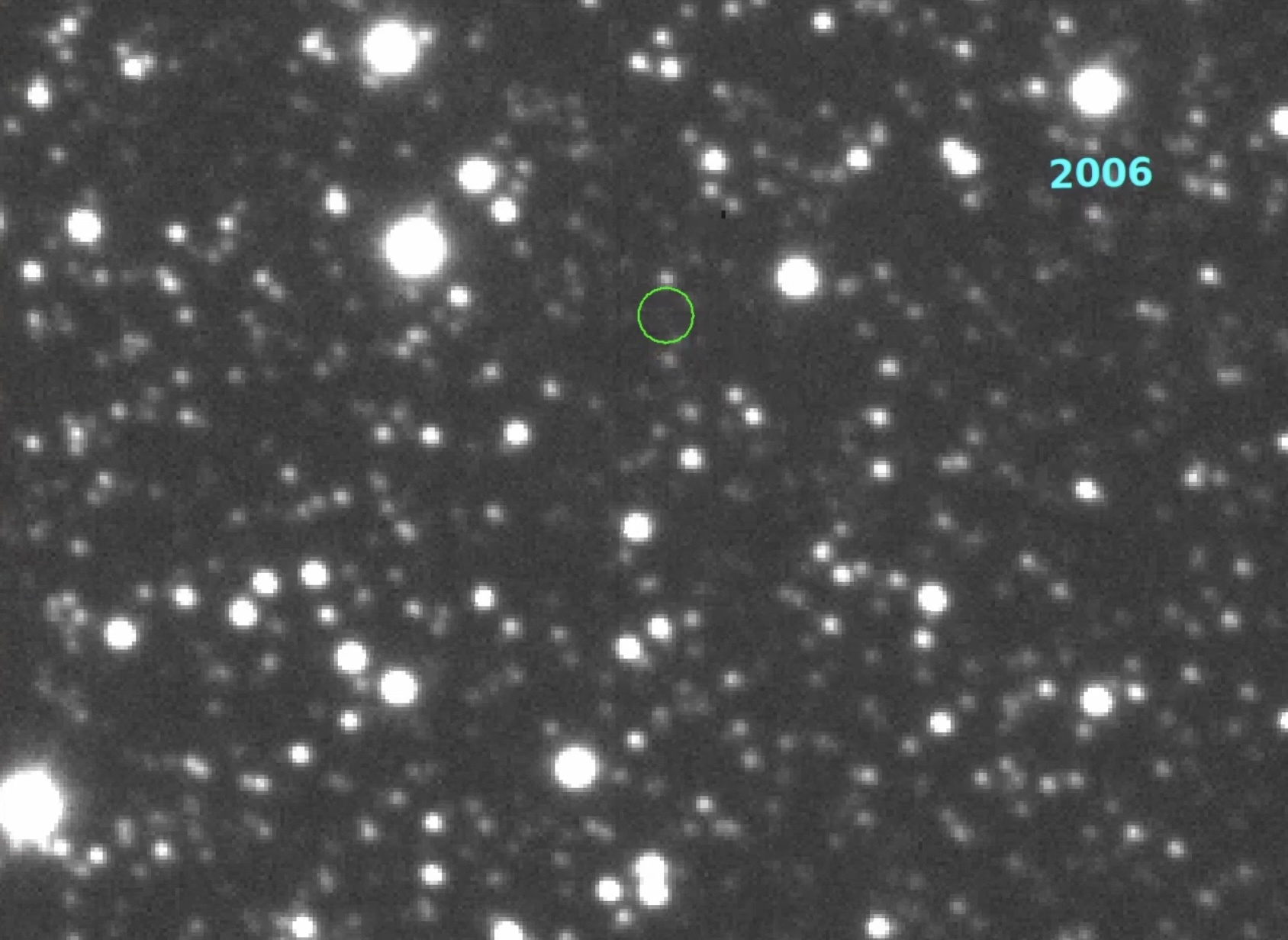
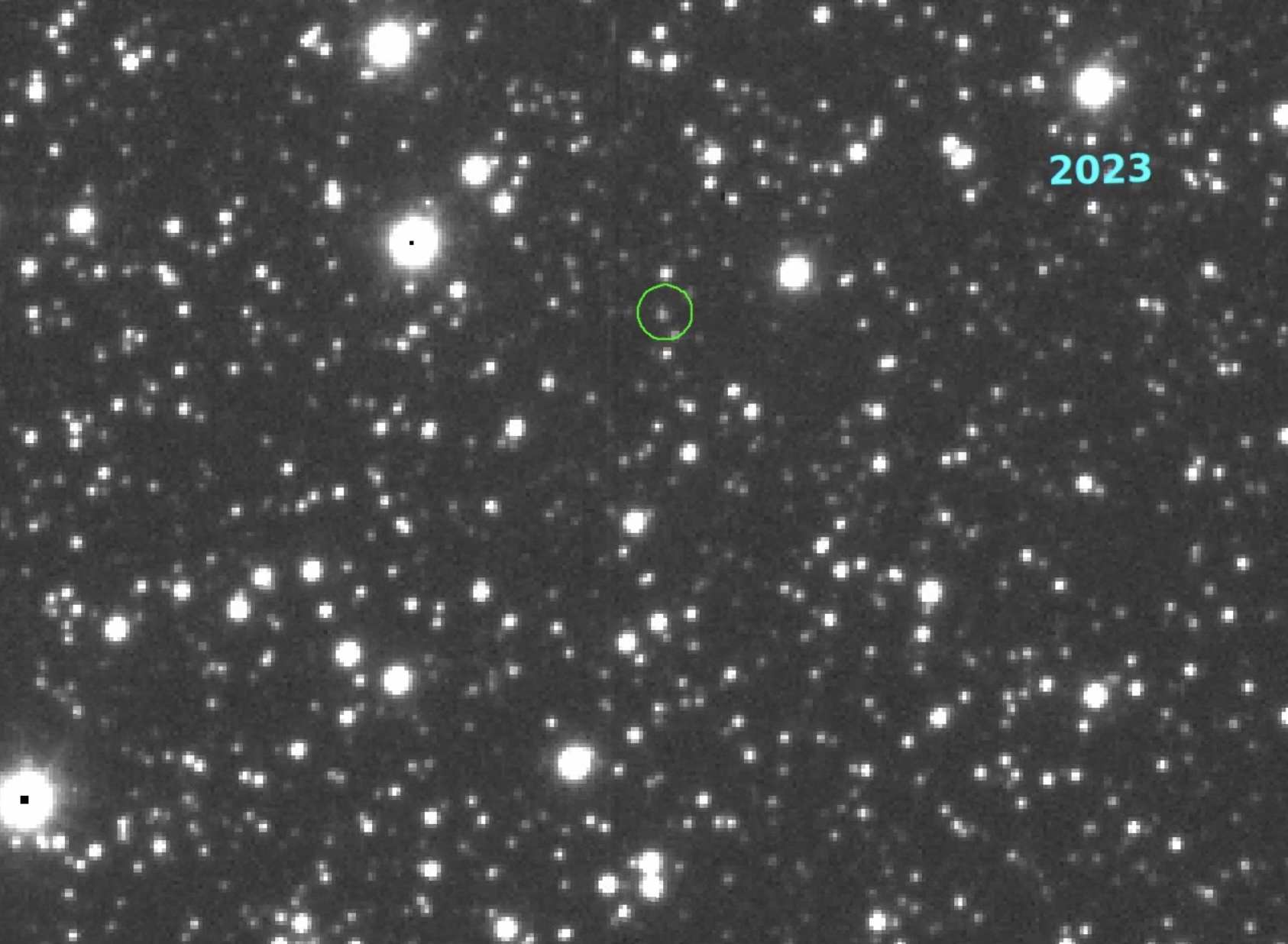
A team of astronomers led by the Royal Observatory of Belgium have found that a star called Sakurai’s Object has become 6 times hotter in the past 30 years, one of the fastest increases ever seen. Sakurai’s Object is a dead star which re-ignited in the 1990’s as a ‘born-again’ star. 30 years ago it was similar in temperature to our Sun. It has now entered a new stage of stellar evolution, representing a Wolf-Rayet star. New observations show the star is reheating more gradually than some of the most recent theories predicted, providing an important test of theories describing the final stages of a star’s life. The rapidly changing star offers astronomers a rare opportunity to watch stellar evolution unfold in real time.
Using the European Southern Observatory’s Very Large Telescope (VLT) in Chile, researchers, led by Peter van Hoof and Griet Van de Steene from the Royal Observatory of Belgium, studied Sakurai’s Object, a rare ‘born-again’ star that unexpectedly burst back to life in 1996 after reaching the final stages of its evolution.
Their findings, published today in Monthly Notices of the Royal Astronomical Society, show that the star has entered a new phase of its evolution, developing the powerful stellar wind characteristic of Wolf-Rayet stars.
The research provides new insight into the final stages of stellar evolution and helps astronomers test theories that would otherwise take thousands or millions of years to verify.
Dr Peter van Hoof of the Observatory said: “For most stars it is impossible to see them evolve on a human timescale. To understand their evolution, our only choice is to observe many different stars and piece together which of those are on different stages of the same path. Sakurai’s Object offers something far rarer. It is one of the very few stars known to have changed dramatically within just a few decades, giving us the opportunity to watch stellar evolution unfold in real time. With our observations, we can test theories of how stars evolve and gain new insights into one of the shortest and least understood phases in the life of a dying star.”
The scientists believe the star was similar to our Sun, but had already ended nuclear burning and begun its journey towards becoming a white dwarf – the hot, dense core left behind after an ordinary star dies. It underwent a rare event known as a “very late thermal pulse”, when a layer of helium deep inside the dead star suddenly reignites.
The event caused the star to rapidly expand, cool and eject large amounts of material into space, temporarily returning to an earlier stage of its life, leading astronomers to describe it as a “born-again” star.
Only two stars have ever been directly observed undergoing this type of dramatic rebirth: Sakurai’s Object and V605 Aquilae.
Following its outburst, Sakurai’s Object became hidden behind thick clouds of gas and dust released during the eruption, making it difficult to study directly.
To investigate its current state, the team analysed light collected by the Very Large Telescope and compared it with sophisticated computer models that simulate the atmospheres and powerful winds of Wolf-Rayet stars.
The observations revealed distinctive signatures of carbon and helium, allowing the researchers to find its temperature, chemical composition and the characteristics of its stellar wind.
Their analysis suggests the star’s surface temperature is currently between around 27,000 and 36,000 degrees Kelvin, showing that it is reheating following its dramatic eruption nearly three decades ago.
Dr Griet Van de Steene of the Observatory added: “Sakurai’s Object evolved much more quickly than pre-existing models for stellar evolution predicted. This led to a new generation of models that we now need to test. Our measurements show that the star is reheating more gradually than some of these new models predicted. That gives us an important way of testing which theories best describe what happens when a dying star briefly springs back to life. As we continue to monitor the star over the coming years, we expect to learn much more about this remarkable phase of stellar evolution.”
The findings also suggest that Sakurai’s Object is at an earlier stage of its evolution than V605 Aquilae, which experienced a similar event around 80 years ago.
The team will continue observing Sakurai’s Object as it continues reheating and resumes its journey towards becoming a white dwarf, learning more about one of the most rapid and unusual phases of stellar evolution ever observed.
Quelle: Royal Observatory of Belgium