
8.05.2026
NASA Sets Coverage for SpaceX 34th Station Resupply Launch, Arrival
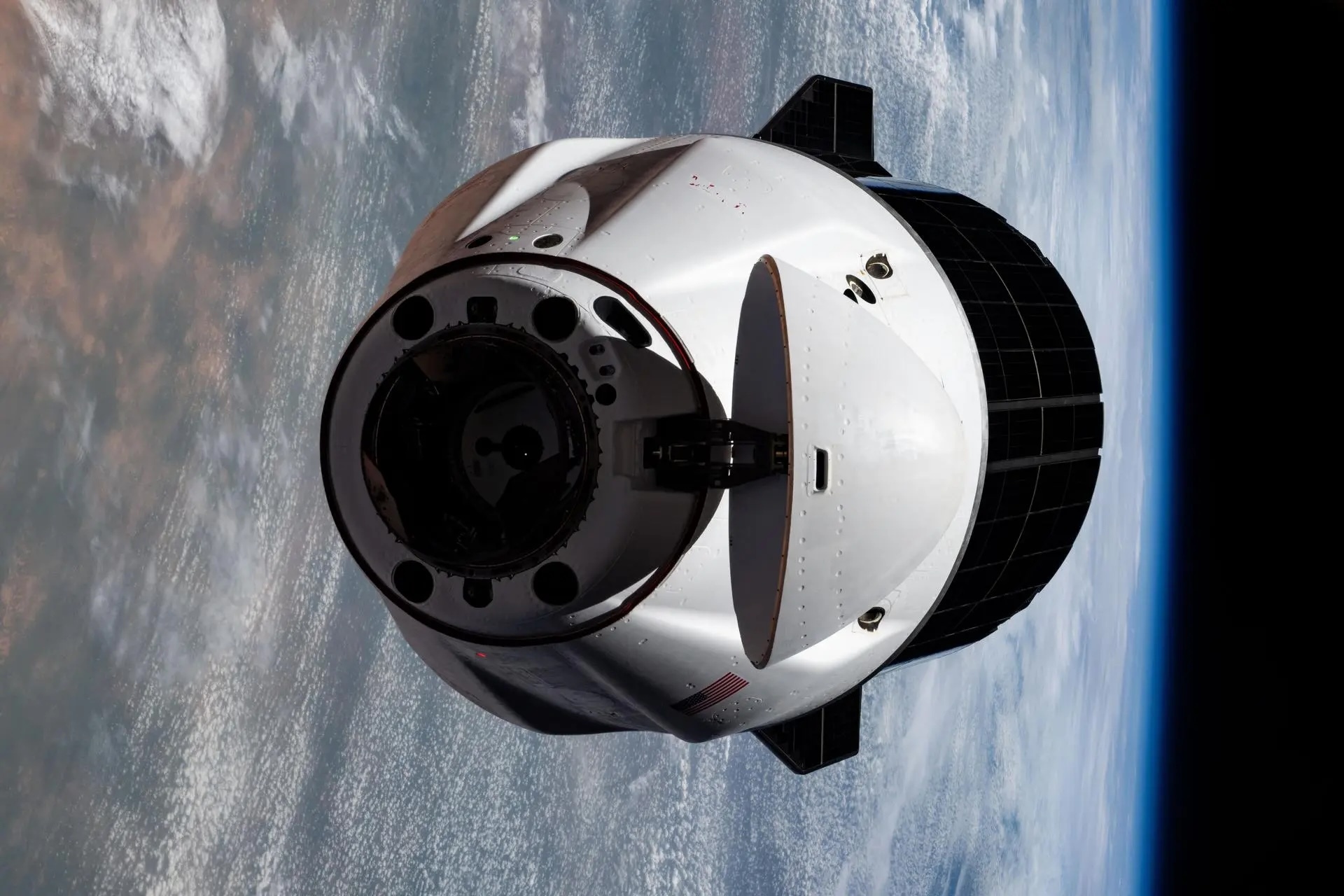
NASA and SpaceX are targeting 7:16 p.m. EDT Tuesday, May 12, for the next launch to deliver science, supplies, and equipment to the International Space Station. This will be the 34th SpaceX commercial resupply services mission to the orbital outpost for NASA.
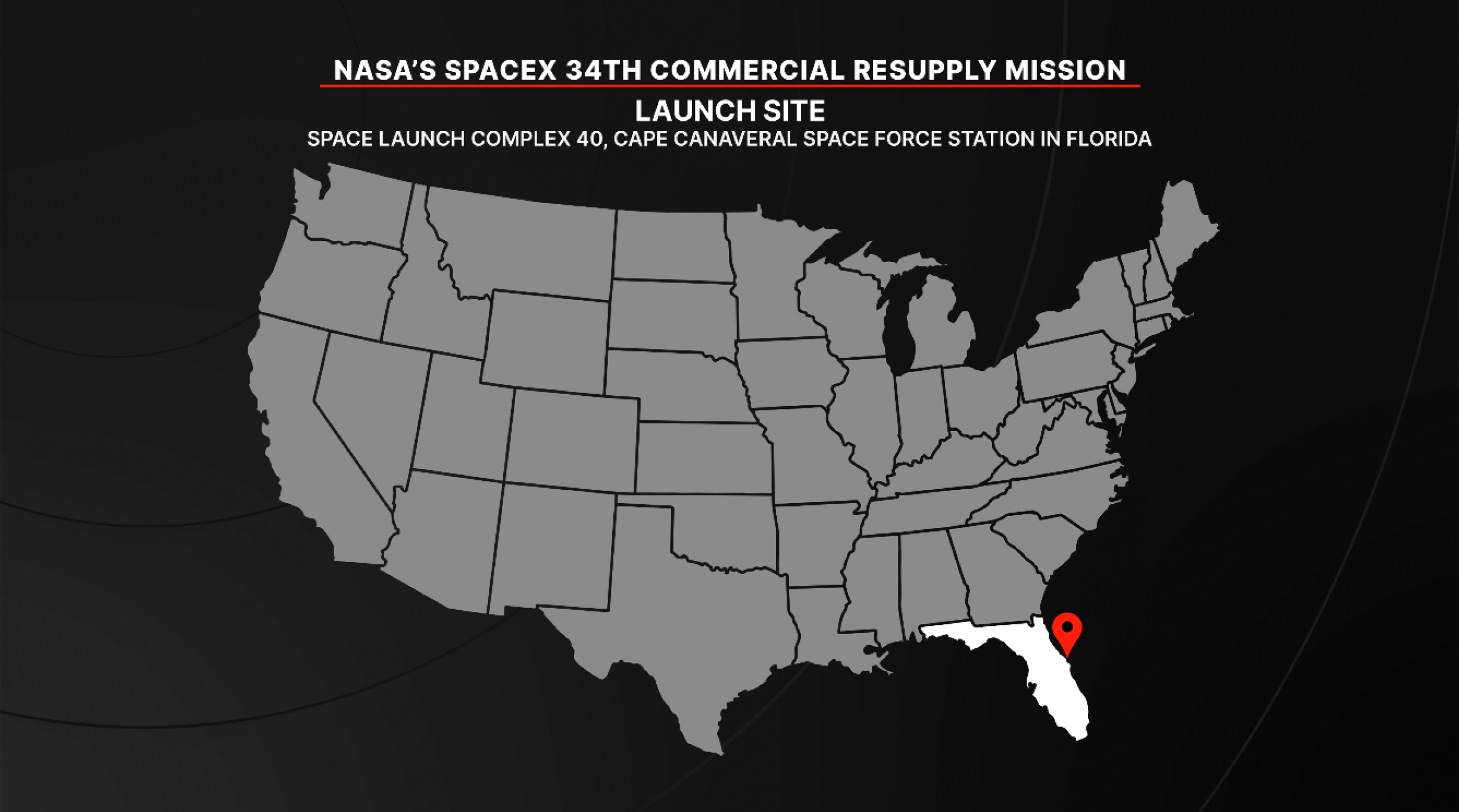
Carrying about 6,500 pounds of cargo, a SpaceX Dragon spacecraft will lift off aboard a Falcon 9 rocket from Space Launch Complex 40 at Cape Canaveral Space Force Station in Florida. Dragon is scheduled to dock autonomously at about 9:50 a.m. Thursday, May 14, to the forward port of the station’s Harmony module.
Watch NASA’s launch and arrival coverage on NASA+, Amazon Prime, and the agency’s YouTubechannel. Learn how to watch NASA content through a variety of online platforms, including social media.
In addition to cargo for the crew aboard the space station, Dragon will deliver several new experiments, including a project to determine how well Earth-based simulators mimic microgravity conditions, a bone scaffold made from wood that could produce new treatments for fragile bone conditions like osteoporosis, and equipment to evaluate how red blood cells and the spleen change in space to protect future astronauts. The Dragon spacecraft also will carry a new instrument to study charged particles around the Earth that can impact power grids and satellites, an investigation that could provide a fundamental understanding of how planets form, and an instrument designed to take highly accurate measurements of sunlight reflected by Earth and the Moon.
The Dragon spacecraft is scheduled to remain at the space station until mid-June when it will depart the orbiting laboratory and return to Earth with time-sensitive research and cargo, ahead of splashing down off the coast of California.
NASA’s mission coverage is as follows (all times Eastern and subject to change based on real-time operations):
Monday, May 11
11 a.m.: Prelaunch media teleconference with the following participants:
- Bill Spetch, operations and integration manager, NASA’s International Space Station Program
- Dr. Liz Warren, deputy chief scientist, NASA’s International Space Station Program
- Lee Echerd, senior mission manger, Government and Commercial Mission Management, SpaceX
- Brian Cizek, launch weather officer, Cape Canaveral Space Force Station’s 45th Weather Squadron
Media who wish to participate by phone must request dial-in information by 10 a.m. on May 11, by emailing the NASA Kennedy newsroom at: ksc-newsroom@mail.nasa.gov.
Audio of the media teleconference will stream live on the agency’s YouTube channel.
Tuesday, May 12
7 p.m.: Launch coverage begins on NASA+, Amazon Prime, and YouTube.
Launch coverage also will be available on the NASA website, and will include live streaming and blog updates beginning no earlier than 7 p.m., and proceed as countdown milestones occur.
On-demand streaming video on NASA+ and photos of the launch will be available shortly after liftoff. For questions about countdown coverage, contact the NASA Kennedy newsroom at 321-867-2468. Follow countdown coverage on NASA’s International Space Station blog for updates.
7:16 p.m.: Launch
Thursday, May 14
8:20 a.m.: Arrival coverage begins on NASA+, Amazon Prime, and YouTube.
9:50 a.m.: Docking
Quelle: NASA
+++
CRS-34 MISSION
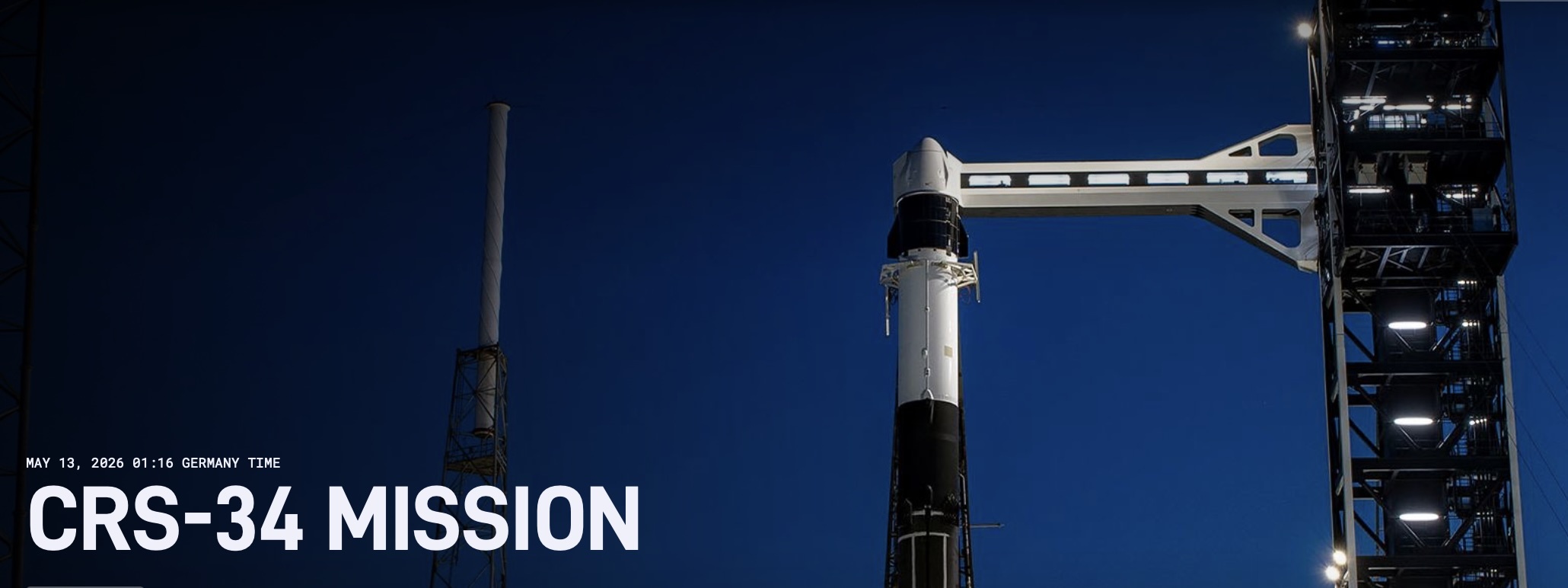
SpaceX is targeting Tuesday, May 12, for Falcon 9’s launch of Dragon’s 34th Commercial Resupply Services (CRS-34) mission for NASA to the International Space Station from Space Launch Complex 40 (SLC-40) at Cape Canaveral Space Force Station in Florida. Liftoff is targeted for 7:16 p.m. ET, with a backup launch opportunity available on Wednesday, May 13, at 6:50 p.m. ET.
A live webcast of this mission will begin about 20 minutes prior to liftoff, which you can watch here and on X @SpaceX. You can also watch the webcast on the new X TV app.
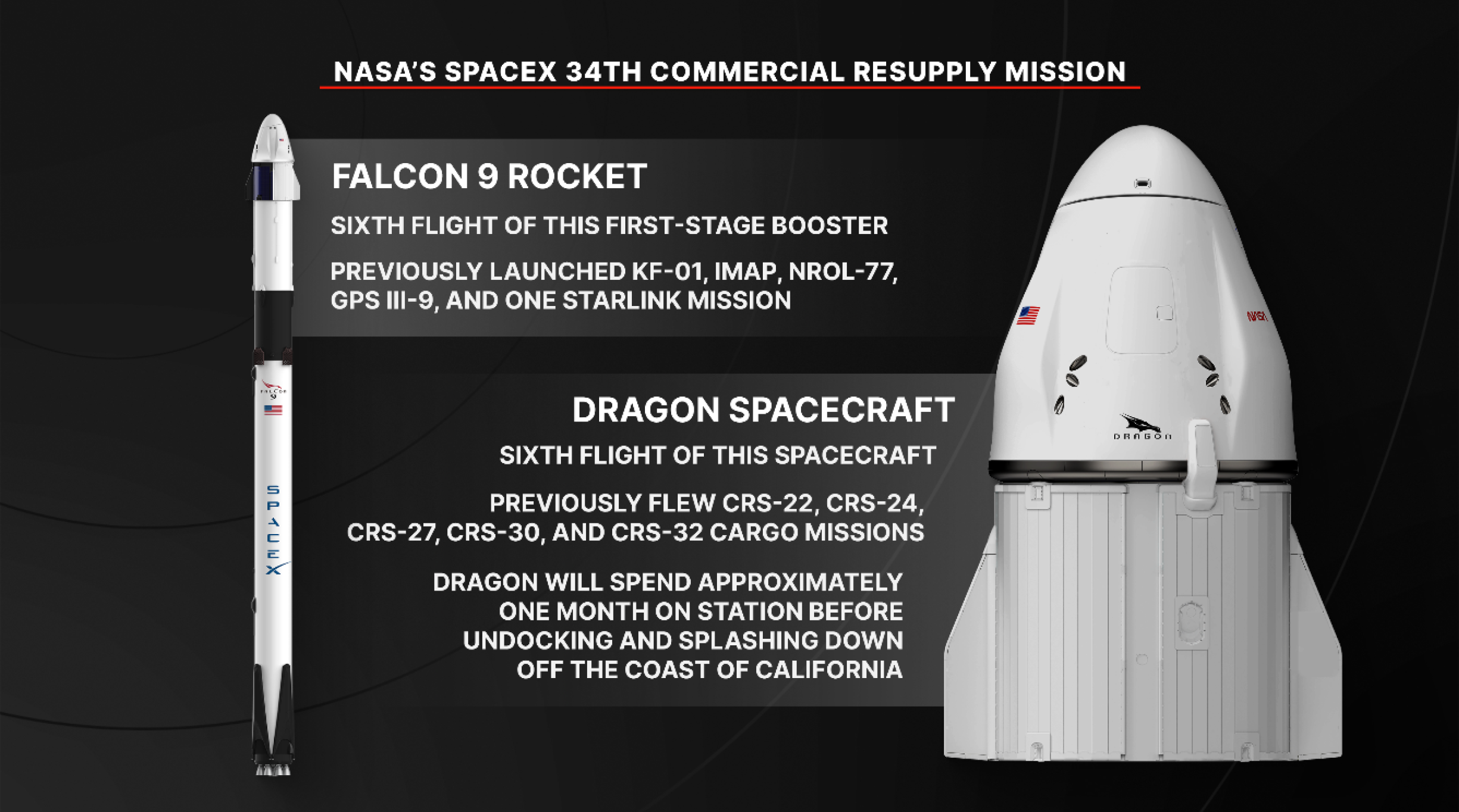
CRS-34 is the sixth flight for the Dragon spacecraft supporting this mission, which previously flew CRS-22, CRS-24, CRS-27, CRS-30, and CRS-32 to and from the space station. After an approximate 38-hour flight, Dragon will autonomously dock with the orbiting laboratory on Thursday, May 14, at around 9:50 a.m. ET.
This will be the sixth flight of the first stage booster supporting this mission, which previously launched KF-01, IMAP, NROL-77, GPS III-8, and one Starlink mission. Following stage separation, the first stage will land on Landing Zone 40 at Cape Canaveral Space Force Station in Florida.
Quelle: SpaceX
----
Update: 10.05.2026
.
NASA’s SpaceX 34th Commercial Resupply Mission Overview
NASA and SpaceX are targeting a mid-May launch to deliver scientific investigations, supplies, and equipment to the International Space Station.
Loaded with about 6,500 pounds of supplies, the SpaceX Dragon spacecraft will lift off aboard the company’s Falcon 9 rocket from Launch Complex 40 at Cape Canaveral Space Force Station in Florida. Following its arrival to the orbital complex, Dragon will dock autonomously to the forward port of the space station’s Harmony module.
Watch agency launch and arrival coverage on NASA+, Amazon Prime, and NASA’s YouTube channel. Learn how to watch NASA content through a variety of online platforms, including social media.
For more than 25 years, the International Space Station has provided research capabilities used by scientists from more than 110 countries to conduct more than 4,000 experiments in microgravity. Research conducted aboard the station helps advance long-duration missions to the Moon as part of the Artemis program and to Mars, while providing multiple benefits to humanity.
Science highlights:
In addition to cargo for the crew aboard the space station, Dragon will deliver several new science experiments, including:
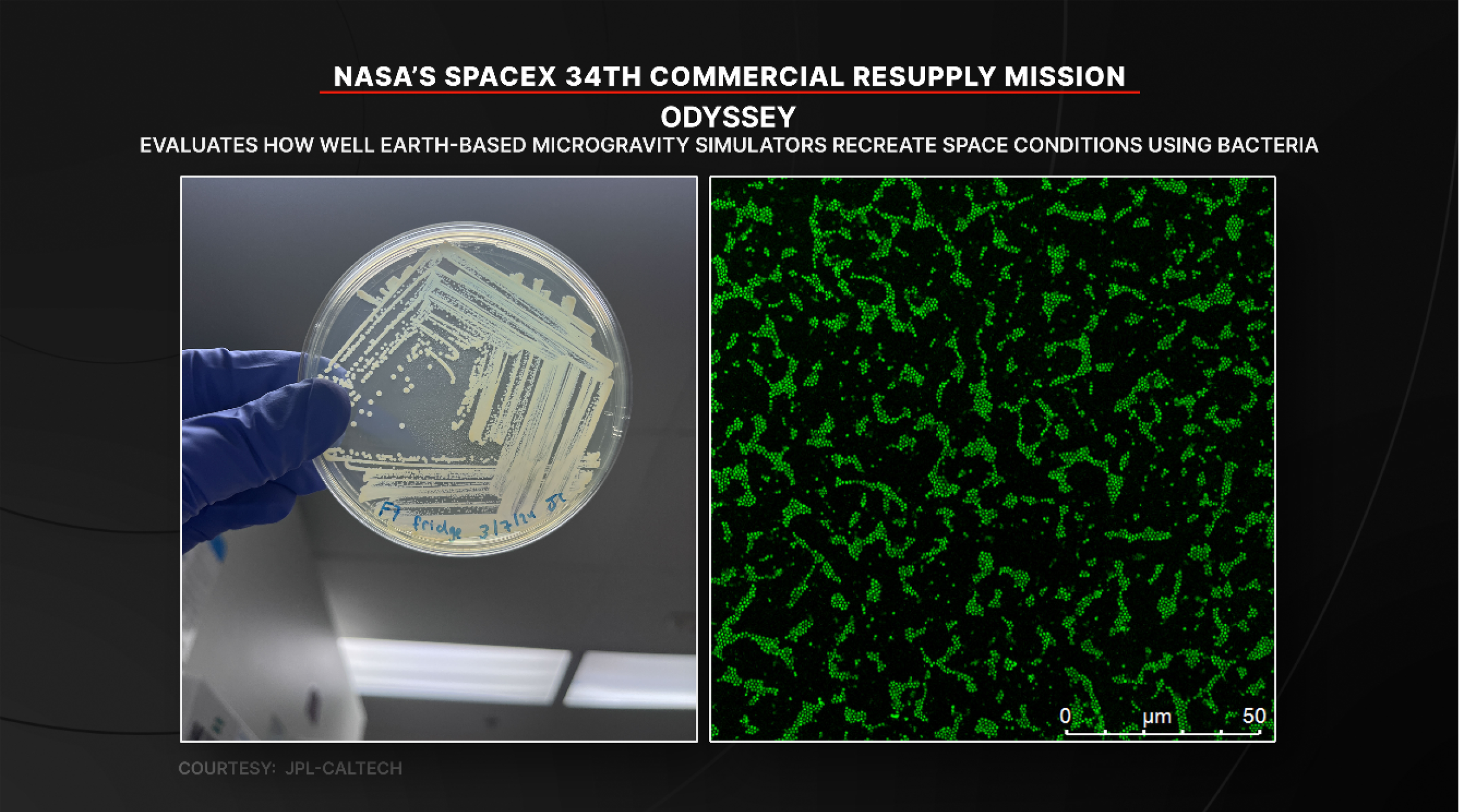
ODYSSEY will evaluate how well Earth-based microgravity simulators recreate space conditions. Researchers will examine bacterial behavior in space and compares the results to experiments conducted in microgravity simulators on Earth.
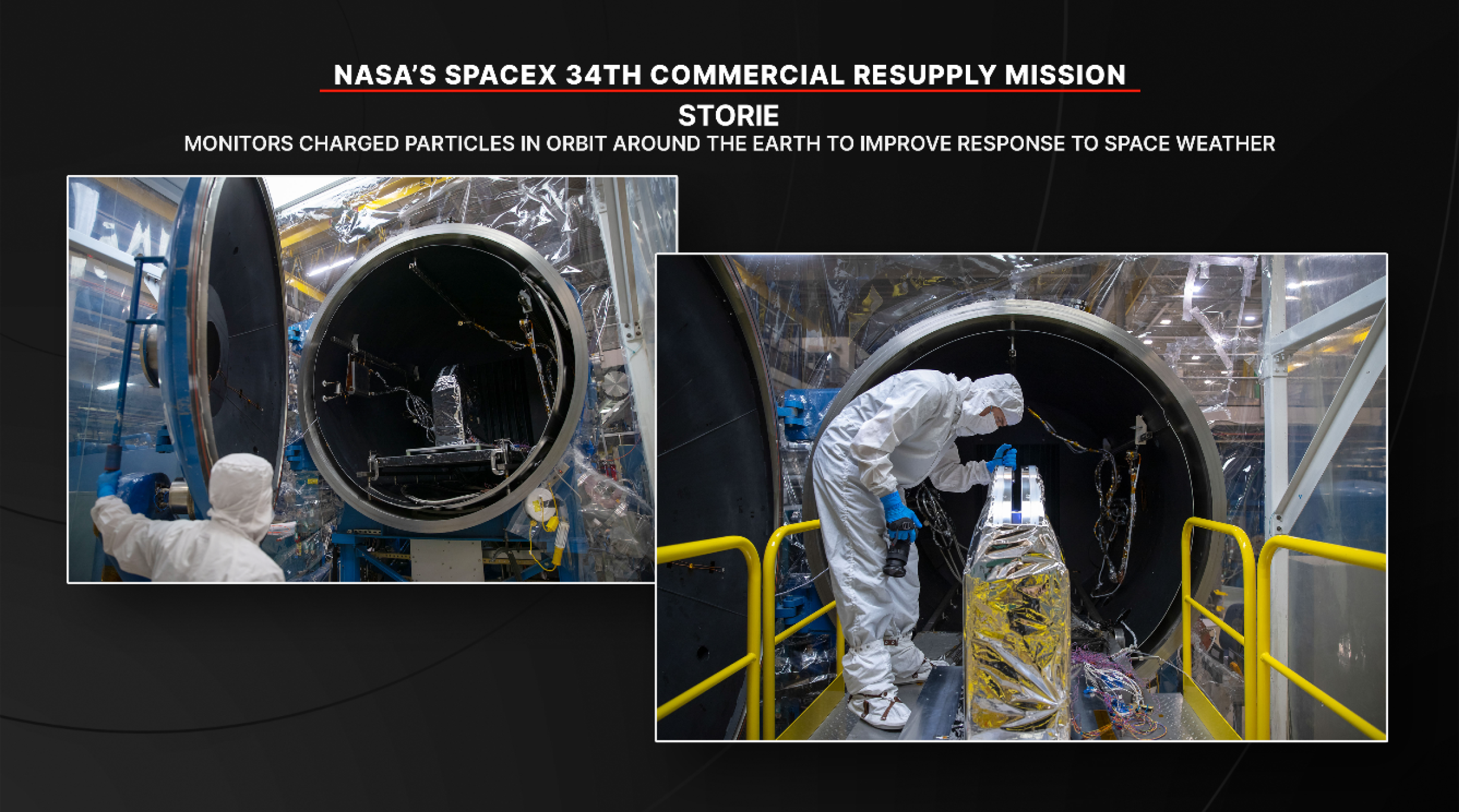
STORIE will monitor charged particles in orbit around the Earth, which respond to space weather and can affect assets like power grids and satellites. The instrument could help researchers gain knowledge to better predict and respond to these changes.
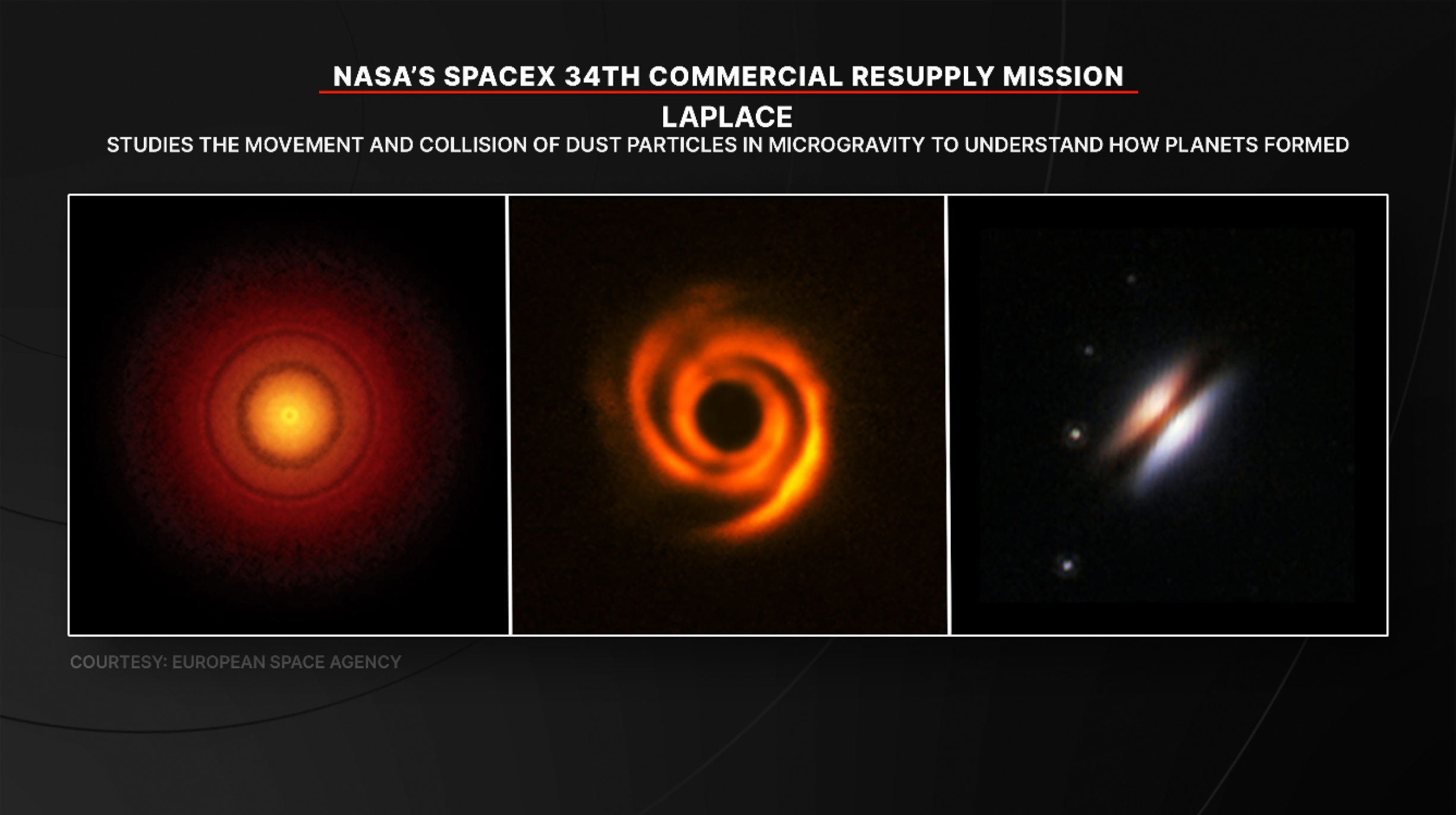
Laplace will study the movement and collision of dust particles in microgravity to understand particle motion in space. Researchers hope to learn more about Earth’s origins and provide fundamental understanding of how planets in our solar system and beyond came into existence.
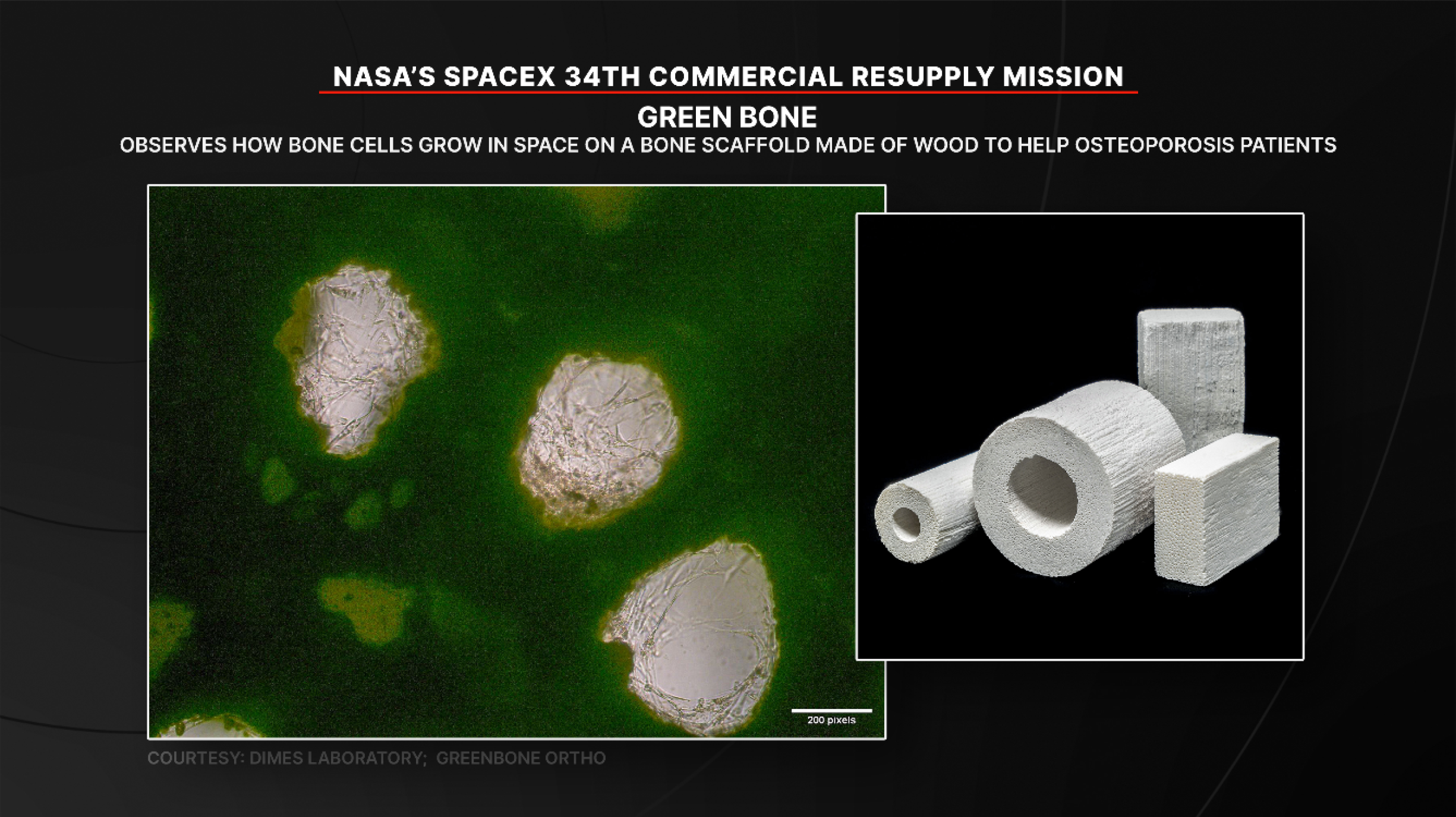
Green Bone will observe how bone cells grow and develop in space on a bone scaffold made from wood. Microgravity results could help researchers improve products that treat fragile bone conditions such as osteoporosis.
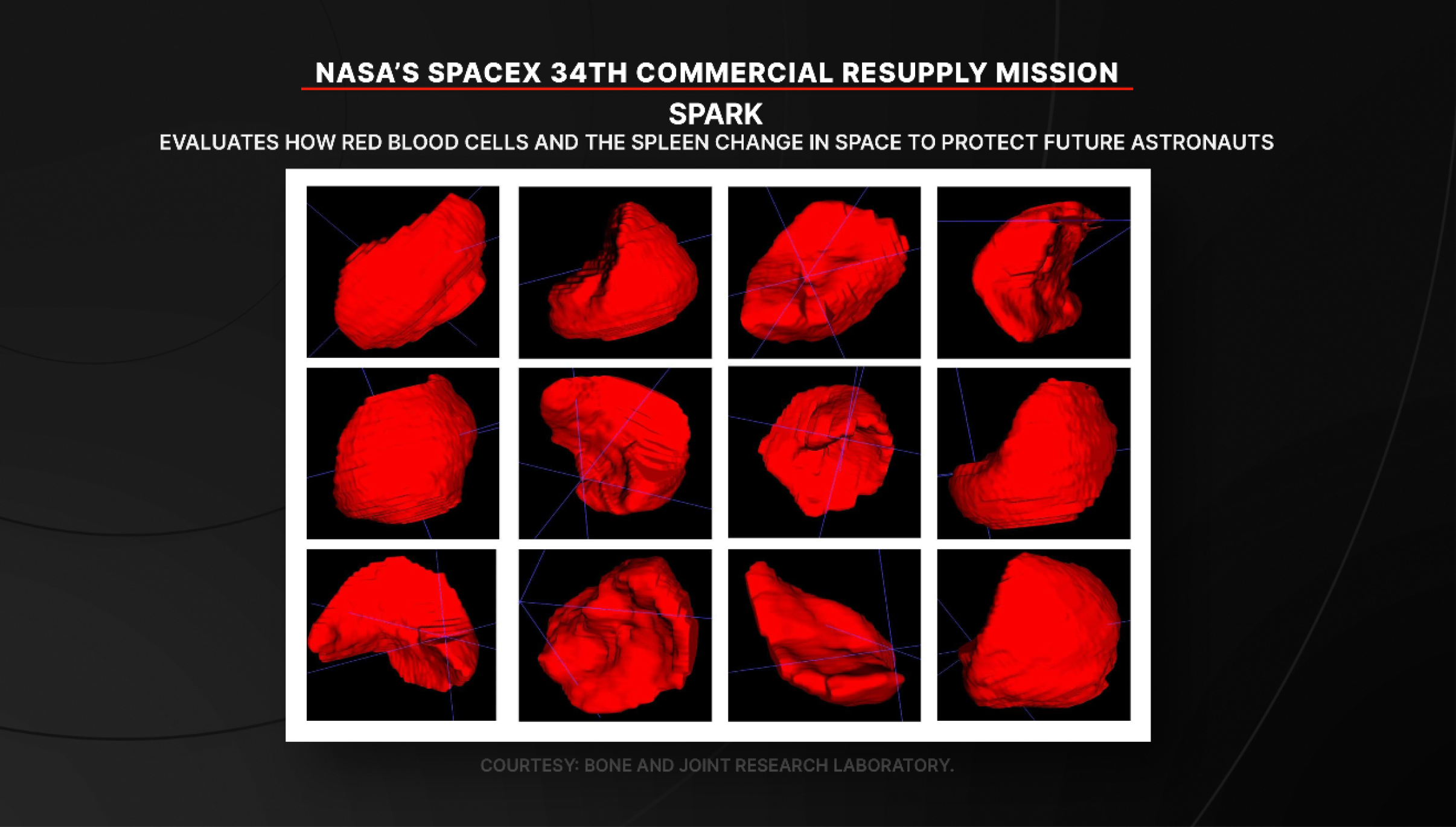
SPARK will evaluate how red blood cells and the spleen change in space for future astronauts. Researchers will observe human samples and imagery taken before, during, and after spaceflight to identify ways to protect astronaut health during long-duration space missions.
Arrival and return:
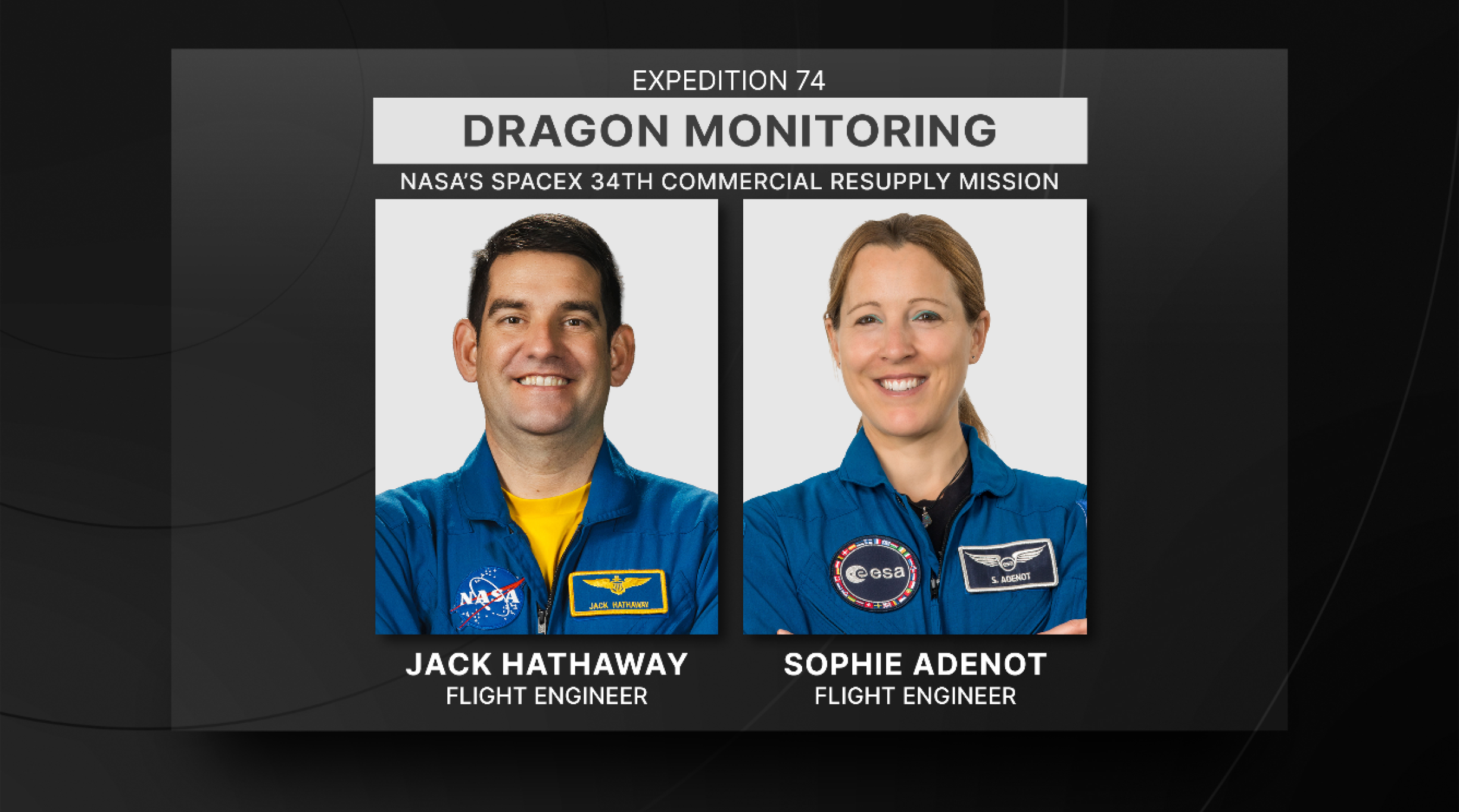
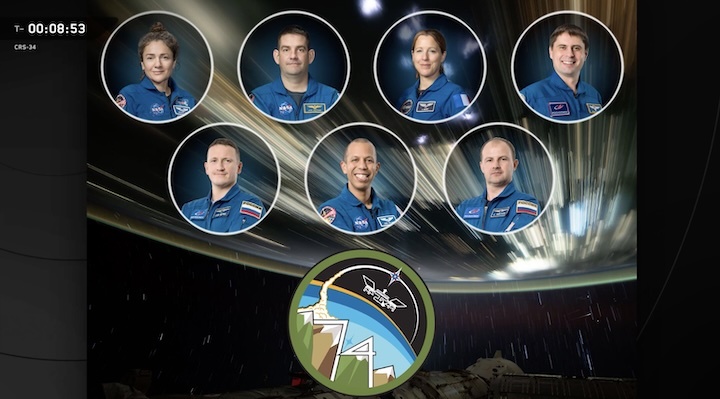
NASA astronaut Jack Hathaway and ESA (European Space Agency) astronaut Sophie Adenot will monitor the spacecraft’s arrival. Dragon will remain docked to the orbiting laboratory for about a month before splashing down in the Pacific Ocean, returning critical science and hardware to teams on Earth.
Cargo highlights:
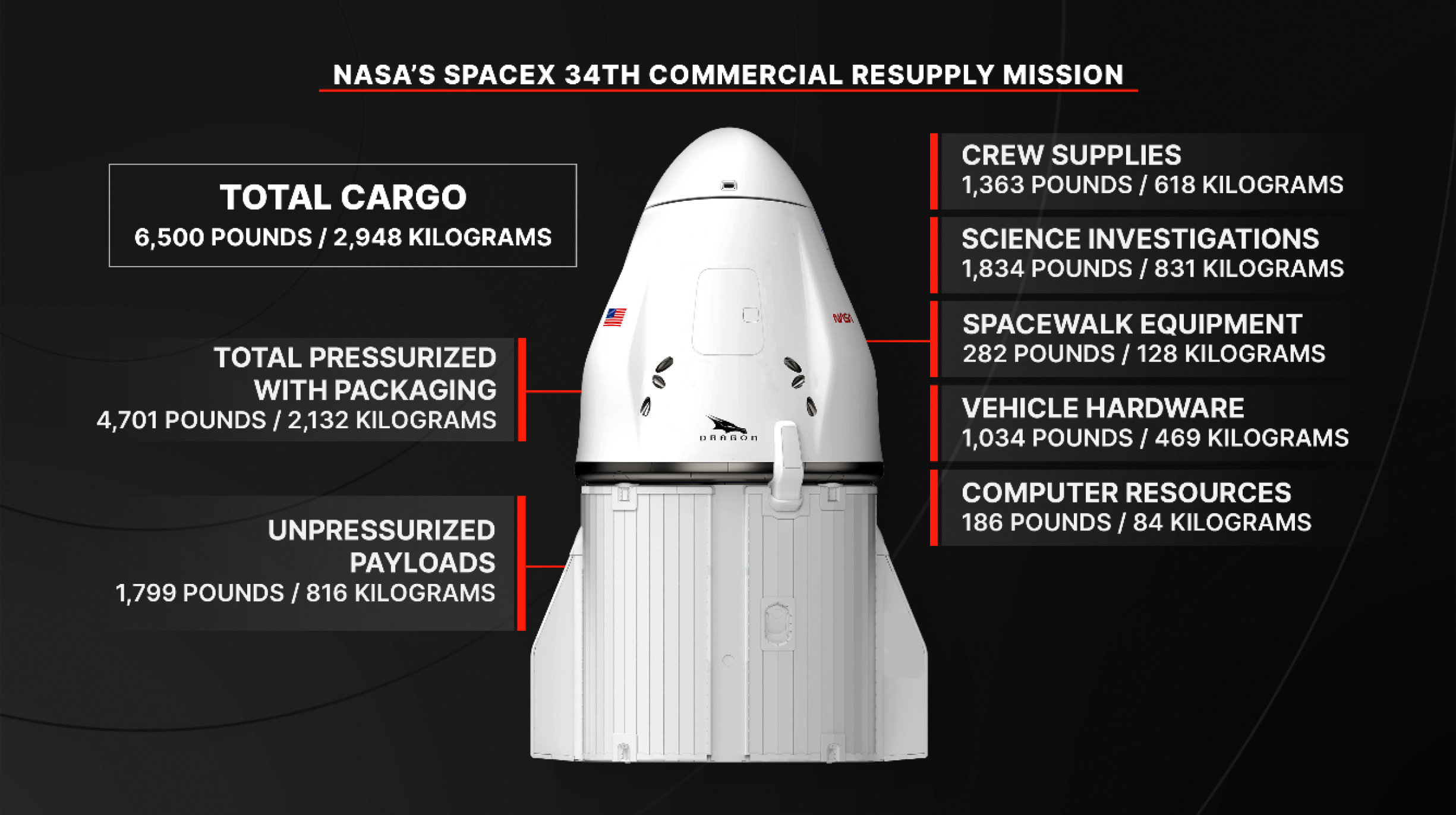
Launch
European Enhanced Exploration Exercise Device Power Cable – A replacement power cable is launching for installation on the European Enhanced Exploration Exercise Device.
Catalytic Reactor – A vital component of the Water Recovery and Management System, the catalytic reactor oxidizes volatile organics from wastewater that are removed by the Gas Separator and Ion Exchange Bed orbital replacement units. This part is launching to maintain on orbit sparing.
Universal Pretreat Concentrate Tank – This is a passive tank to provide alternate pretreat concentrate to the Universal Waste Management System (UWMS) and Waste Hygiene Compartment (WHC). Two units are launching to maintain this hardware, in tandem with Russian pretreat tanks currently used. A universal pretreat concentrate tank adapter will accompany the tanks to connect with the Russian hose.
Additional equipment launching includes an Ultraprobe to replace a worn ultrasonic inspection tool, a Remote Sensor Unit to restore spares for the station’s vibration monitoring system, and flexible repair patches for sealing the pressure hull if needed. The mission also will deliver an updated ARMADILLO (AOGA ReMediation, Advanced DeIonization and Limited Life Optimization) cartridge and hose assemblies to improve water processing for oxygen generation, along with a nitrogen recharge tank assembly to help maintain the station’s gas reserves.
Return
When Dragon returns in mid‑June, it will bring back an ocular imaging device used to monitor crew eye health, a sorbent bed that filters trace contaminants from cabin air, and a separator pump from the Waste and Hygiene Compartment. The Advanced Plant Habitat, which supported long-duration plant biology studies, also will return for eventual museum display. A pressure management device that recovers vestibule air during depressurization will come back for repair and storage as a ground spare.
Quelle: NASA
----
Update: 16.05.2026
.
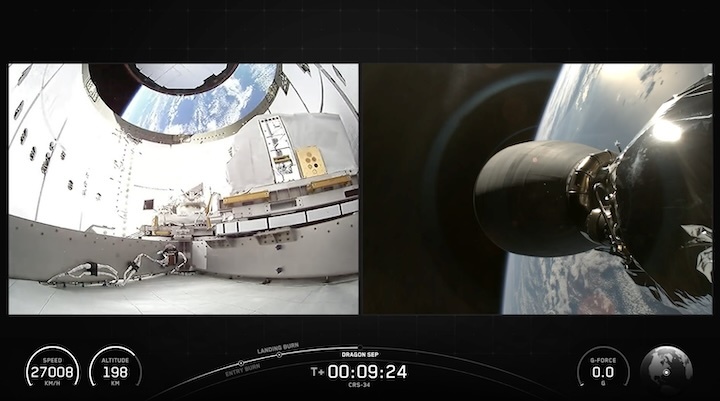
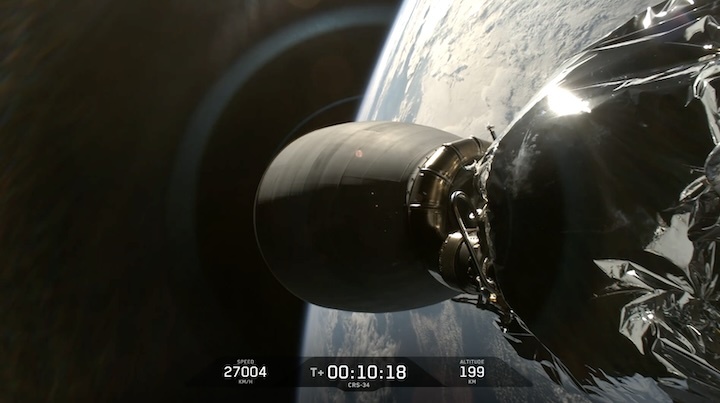
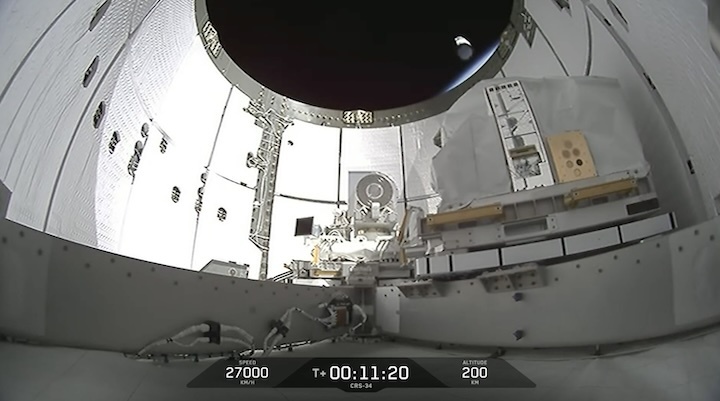
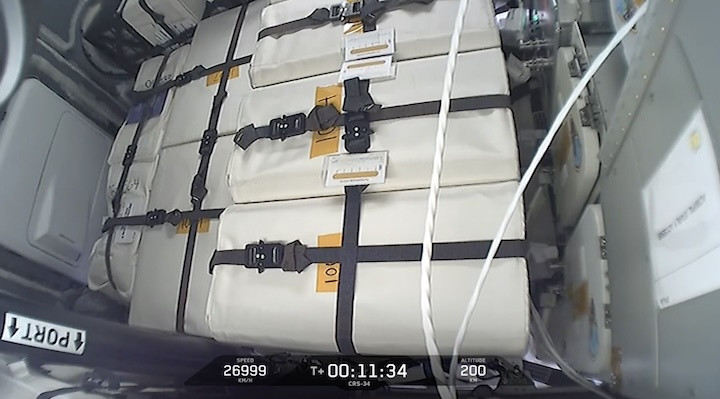
Start von SpaceX CRS-34 Cargo Dragon Mission
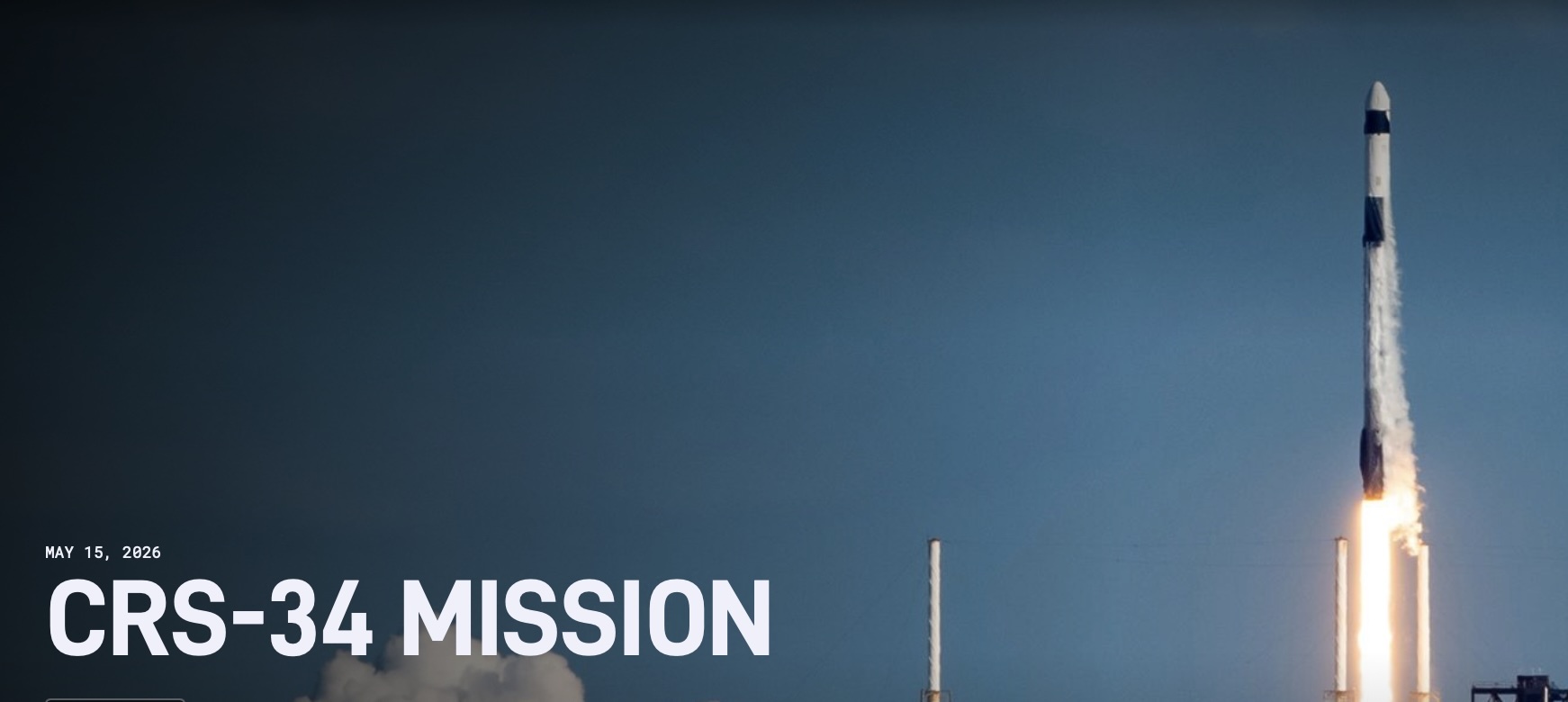
CRS-34 MISSION
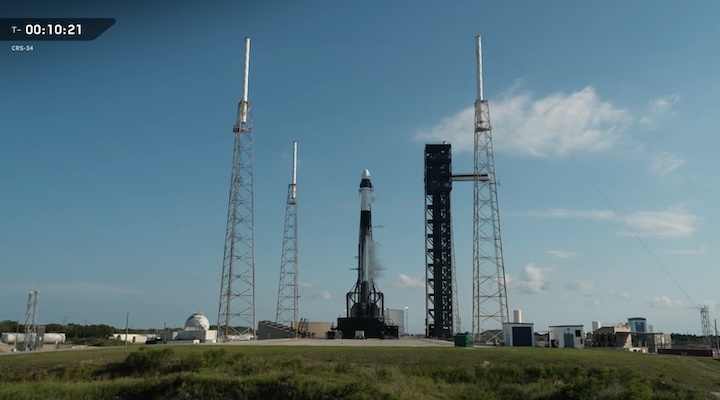
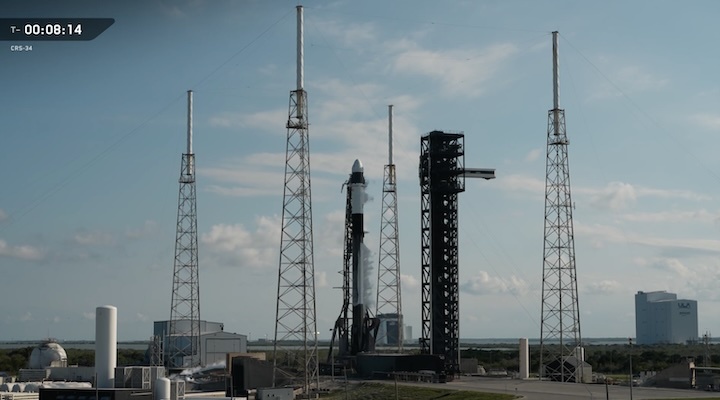
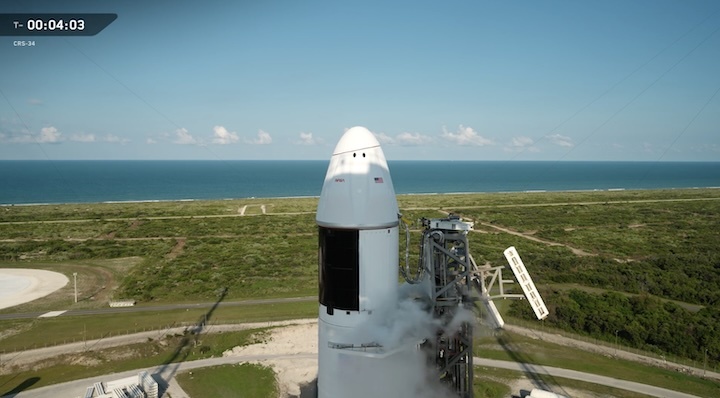
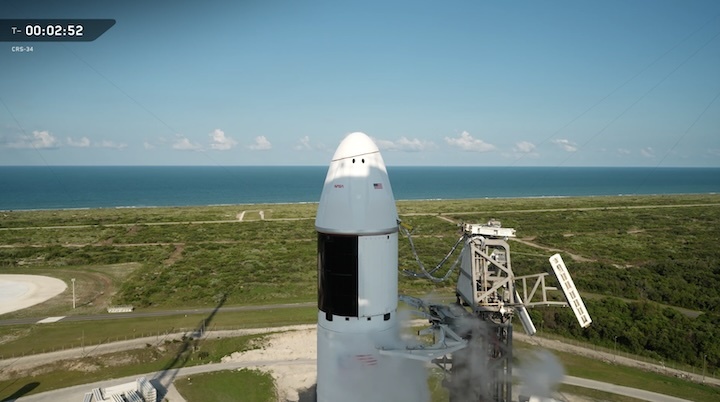
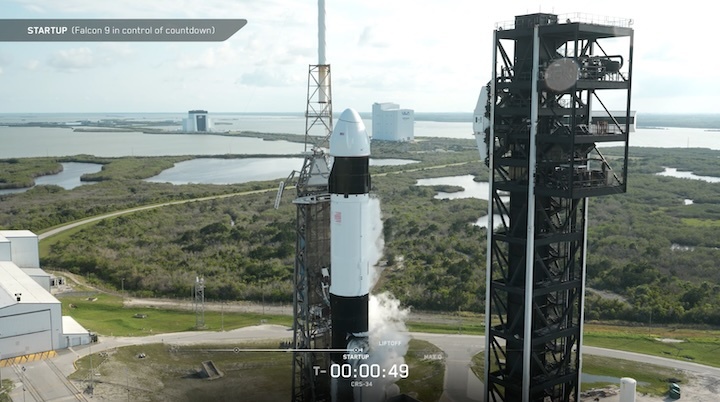
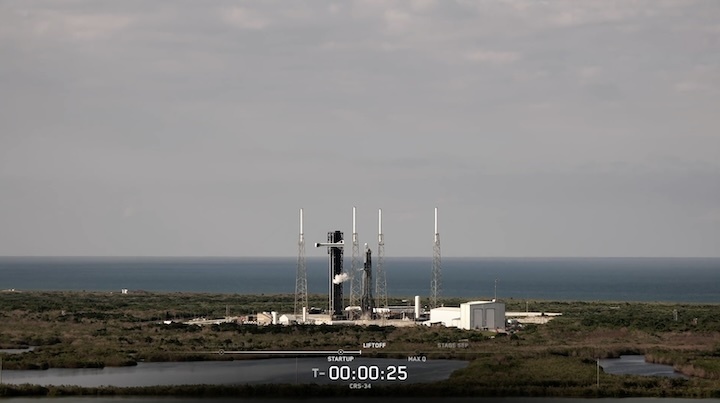
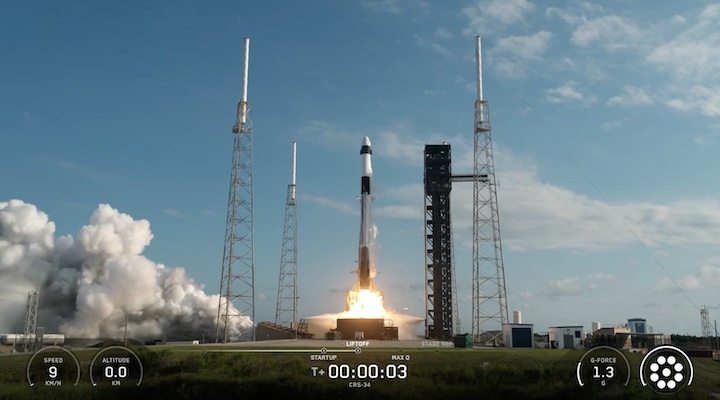
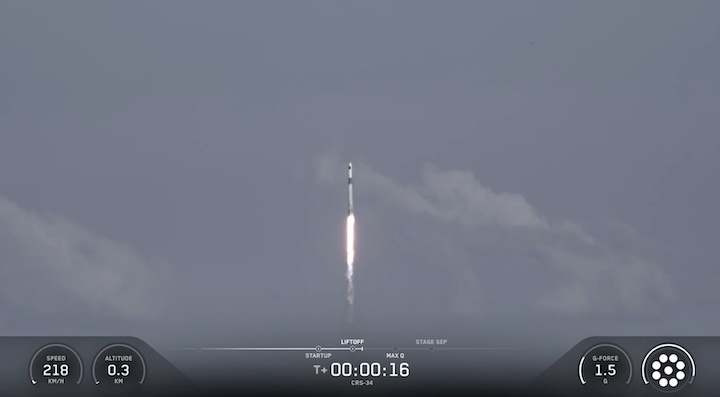
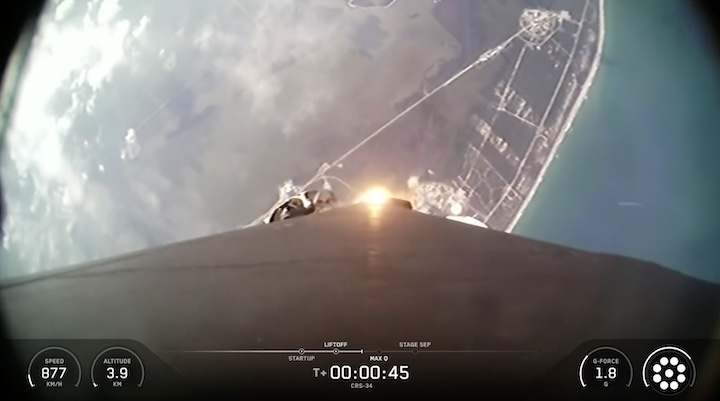
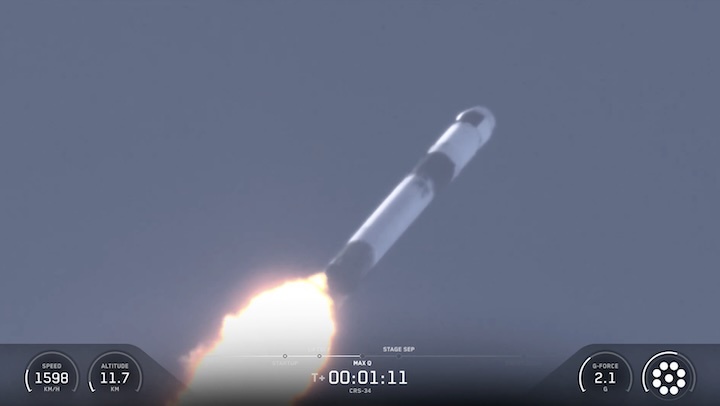
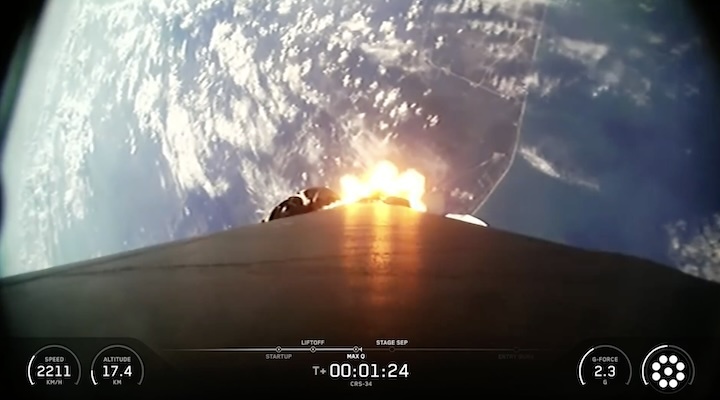
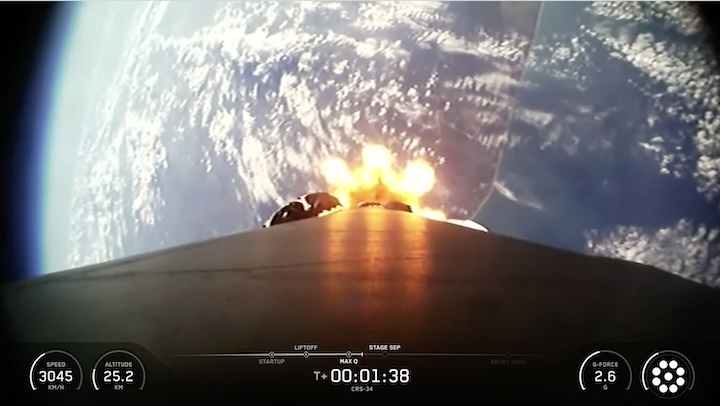
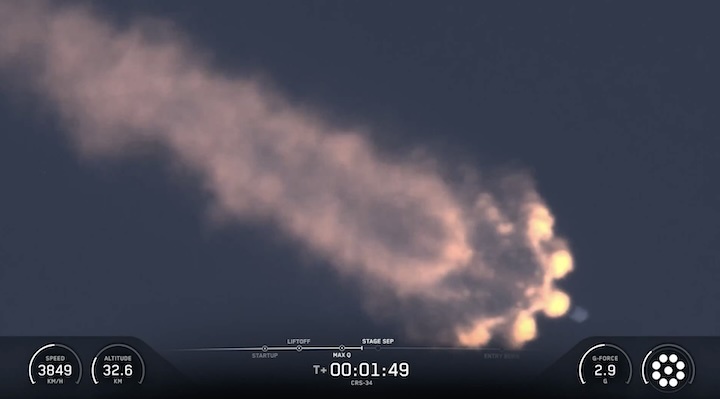
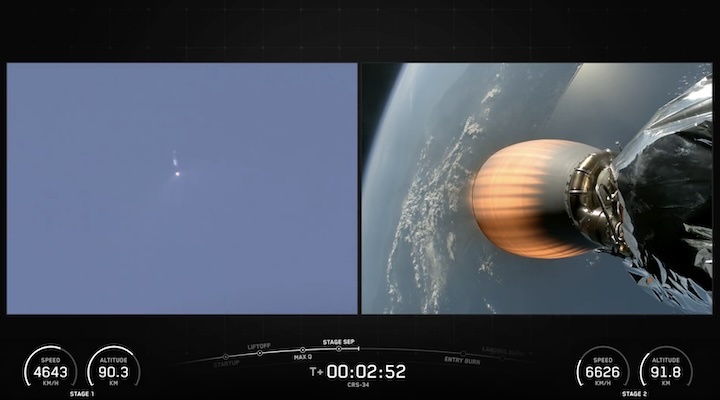
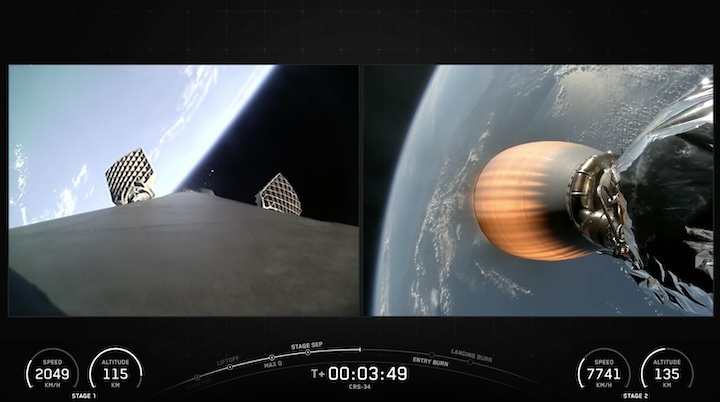
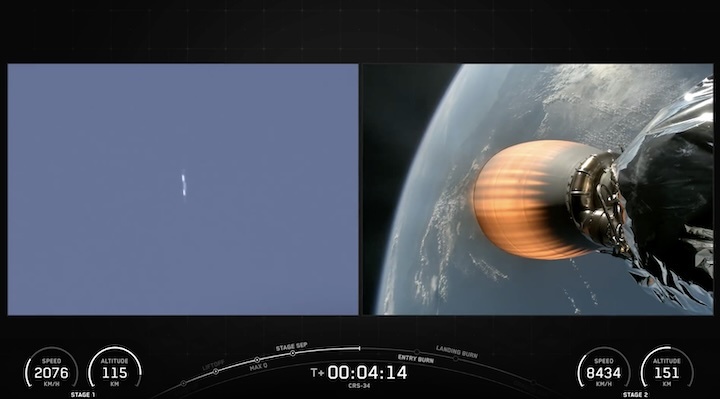
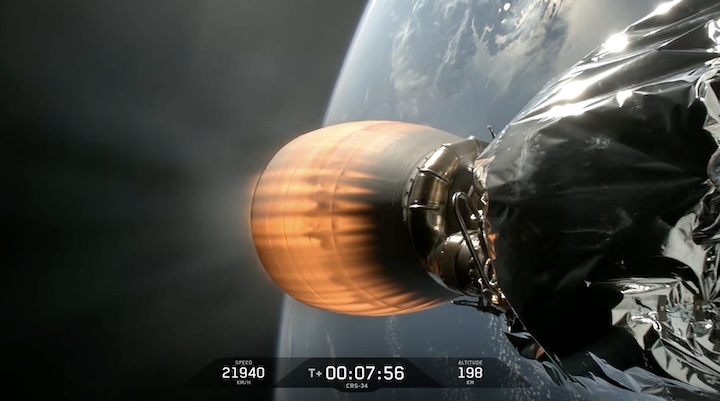
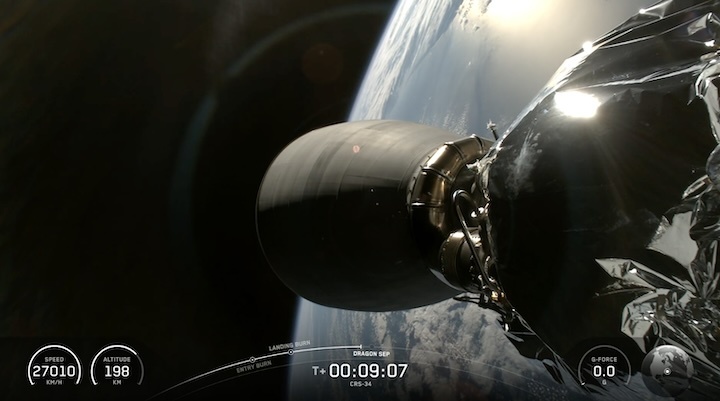
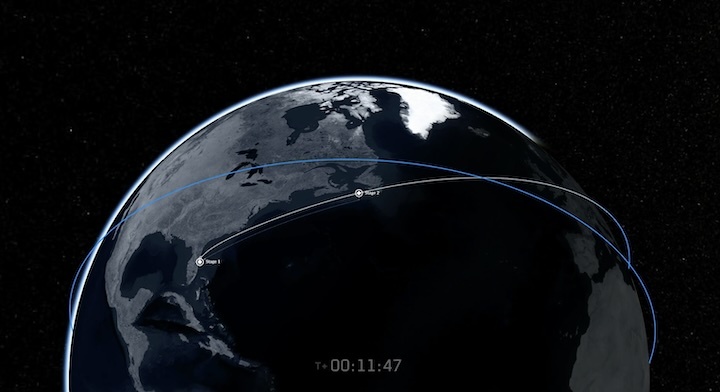
On Friday, May 15 at 6:05 p.m. ET, Falcon 9 launched Dragon’s 34th Commercial Resupply Services (CRS-34) mission to the International Space Station from Space Launch Complex 40 (SLC-40) at Cape Canaveral Space Force Station in Florida. After an approximate 36-hour flight, Dragon will autonomously dock with the orbiting laboratory on Sunday, May 17 at approximately 7:00 a.m. ET.
CRS-34 is the sixth flight of the Dragon spacecraft supporting this mission, which previously flew CRS-22, CRS-24, CRS-27, CRS-30, and CRS-32 to and from the space station.
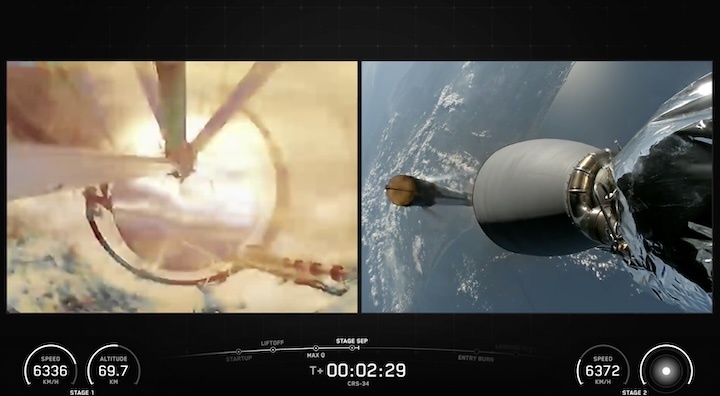
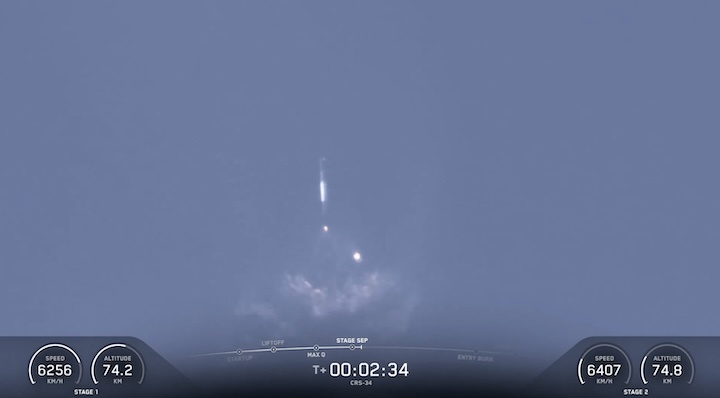
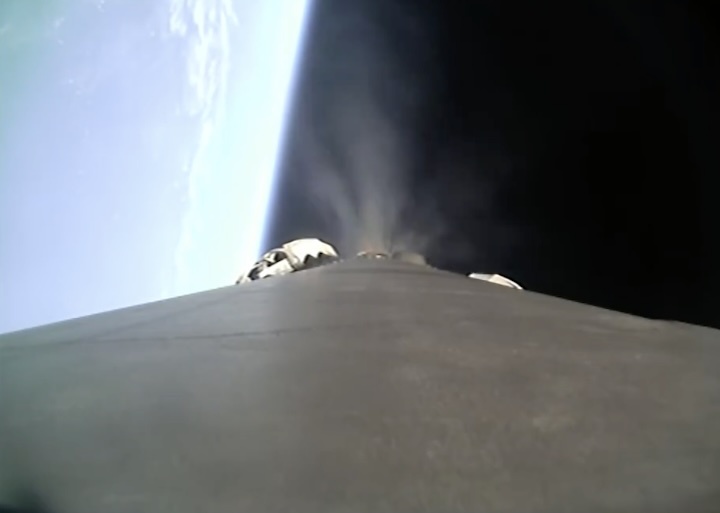
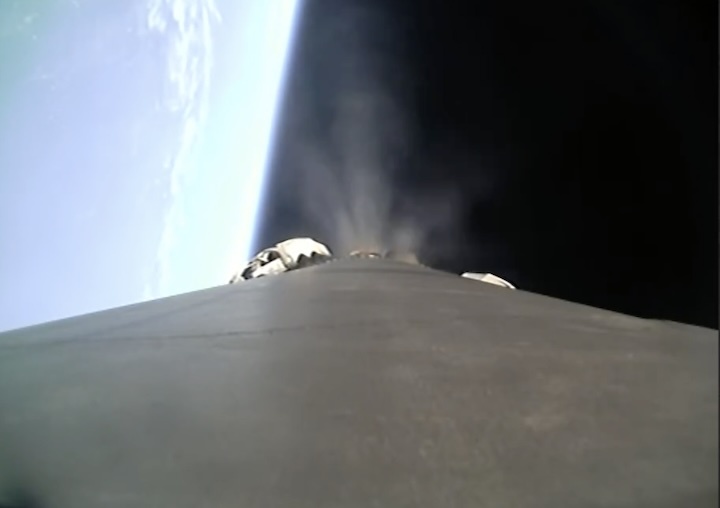
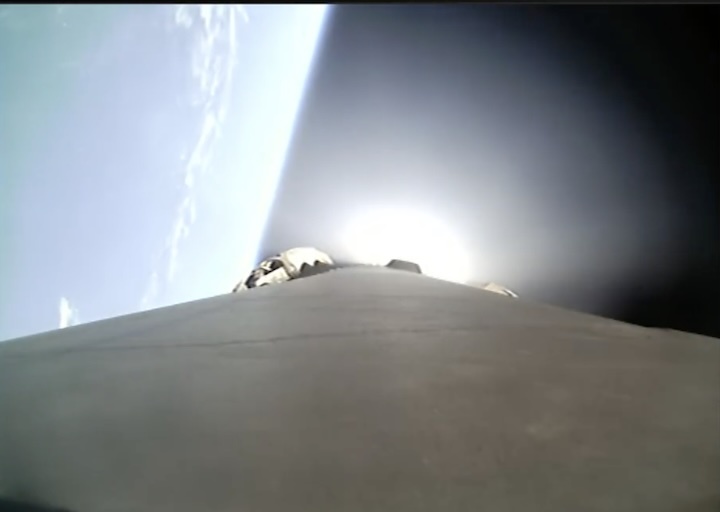
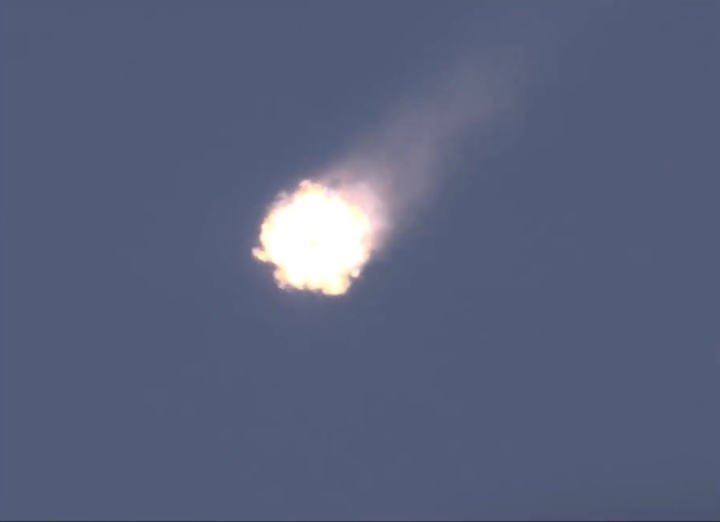
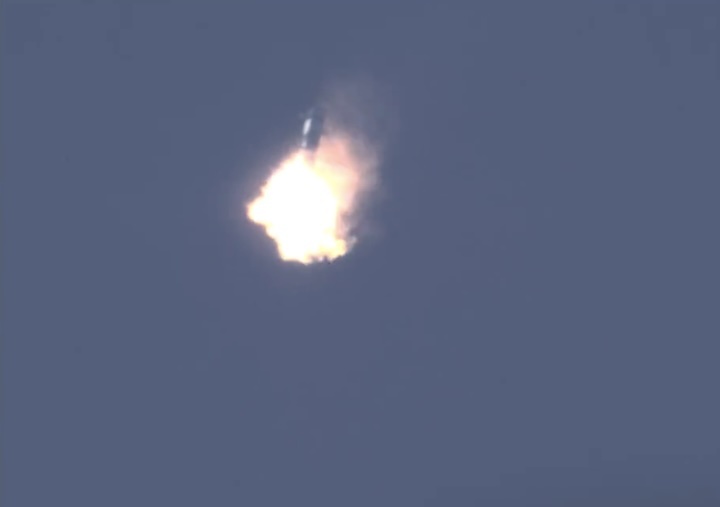
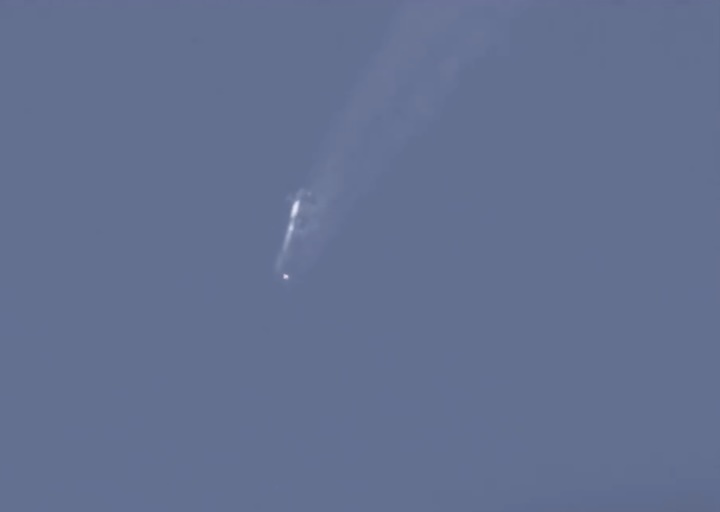
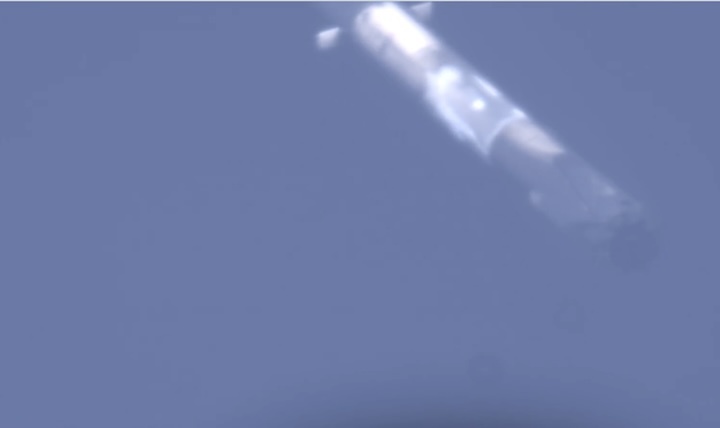
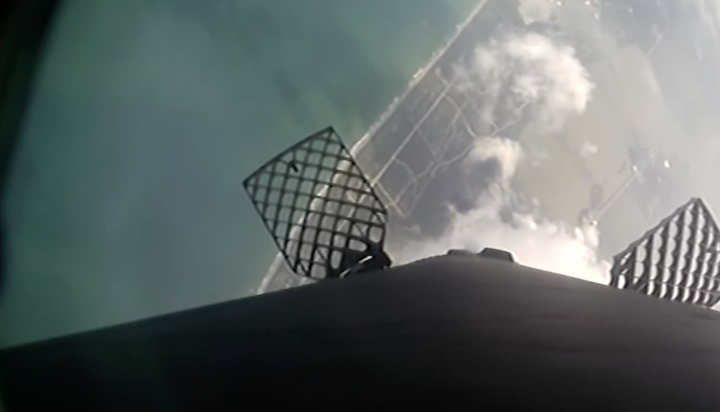
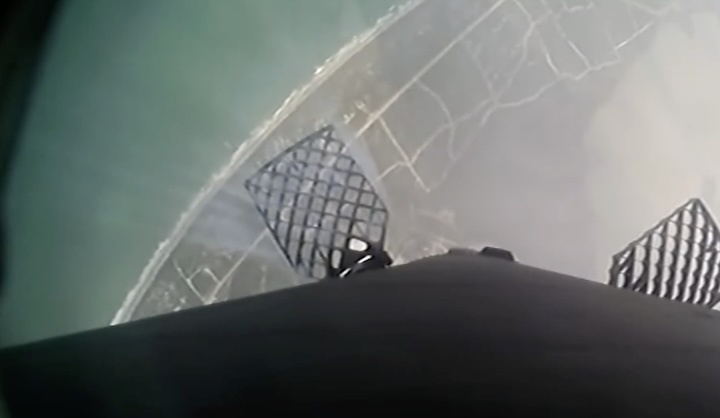
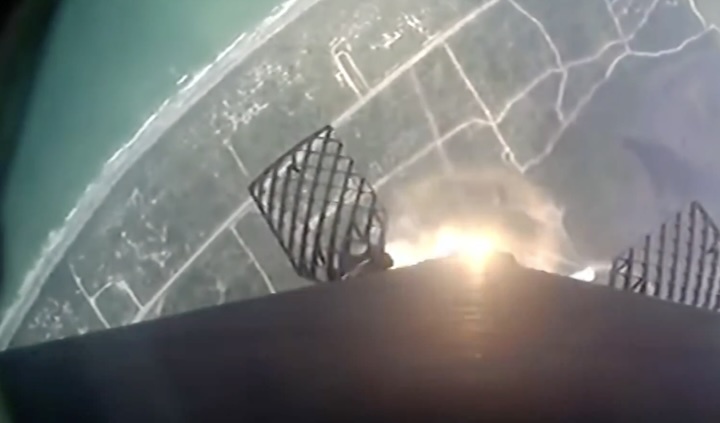
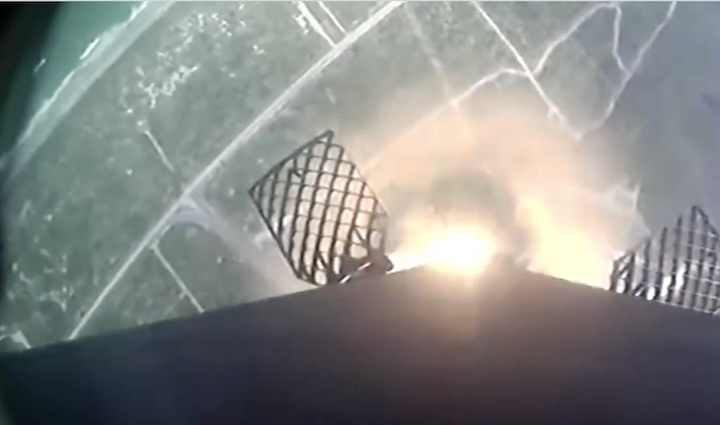
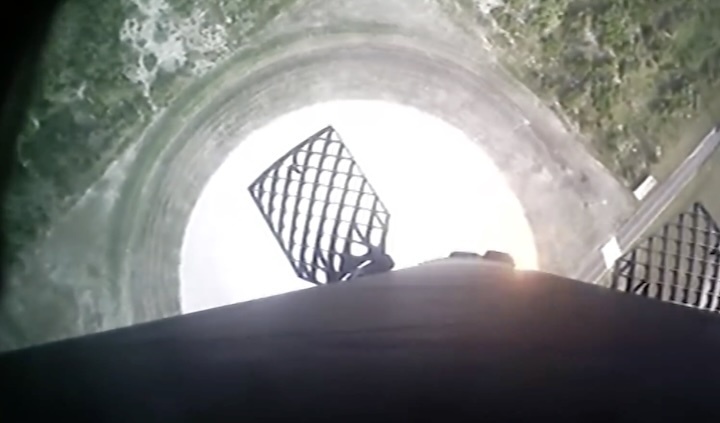
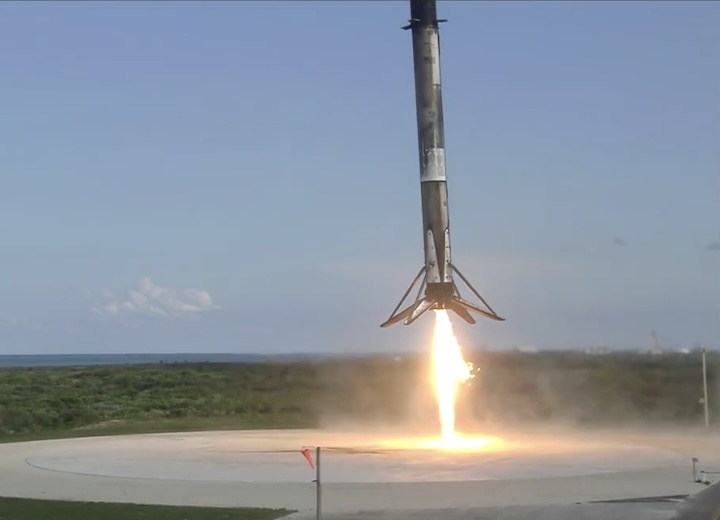
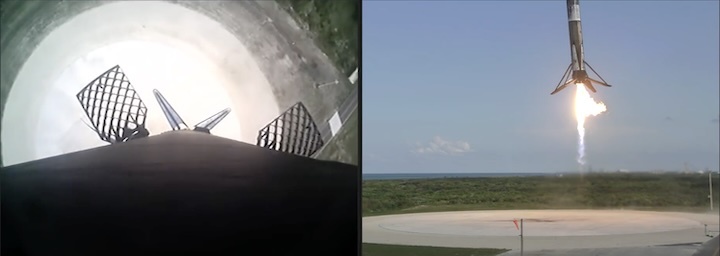
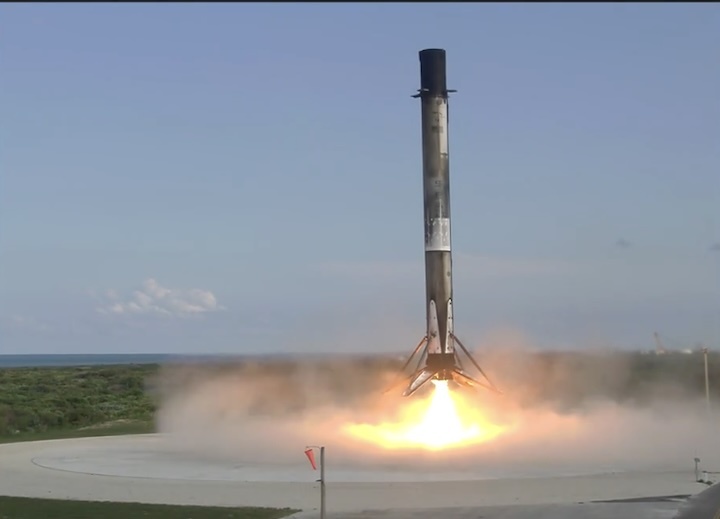
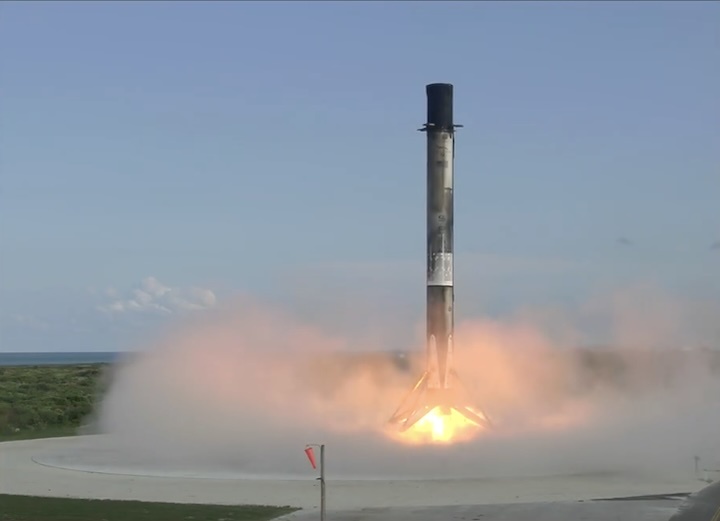
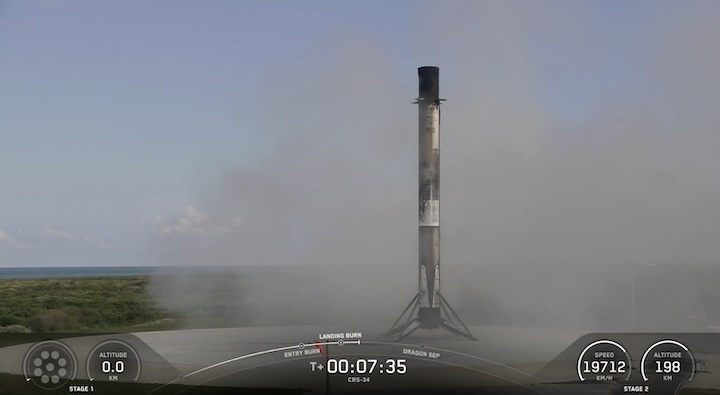
This was the sixth flight of the first stage booster supporting this mission, which previously launched KF-01, IMAP, NROL-77, GPS III-9, and one Starlink mission. Following stage separation, the first stage landed on Landing Zone 40 at Cape Canaveral Space Force Station in Florida.

Quelle: SpaceX