
28.02.2026
NASA’s ESCAPADE Ready to Study Space Weather from Earth to Mars
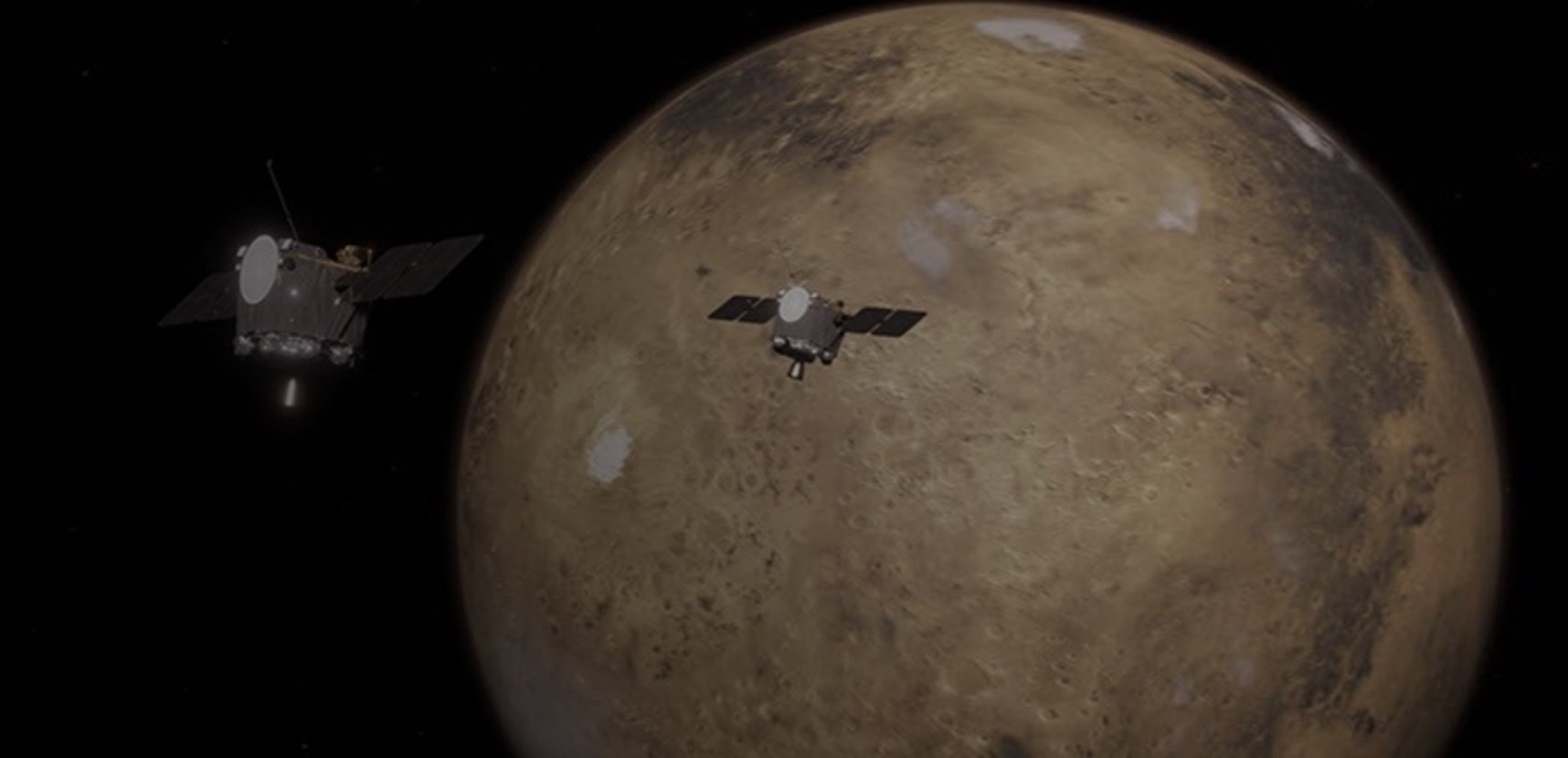
Mars is not what it used to be. Once warm, watery, and blanketed by a thick atmosphere, today the Red Planet is cold, dry, and draped by a thin atmospheric veil.
The main culprit is a relentless stream of particles from the Sun, known as the solar wind. Over billions of years, the solar wind has stripped away much of the Martian atmosphere, causing the planet to cool and its surface water to evaporate.
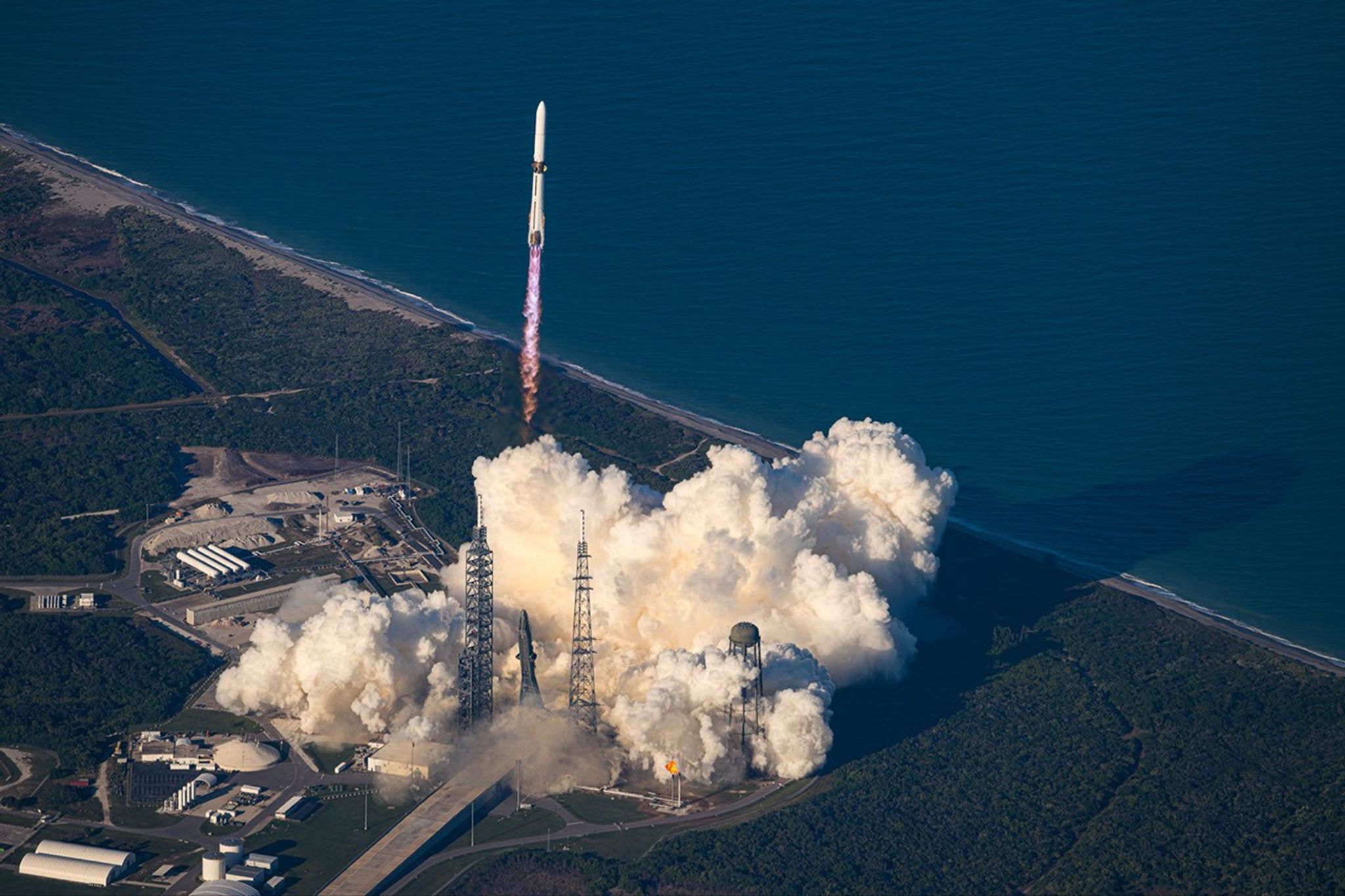
Now, NASA’s ESCAPADE (Escape and Plasma Acceleration and Dynamics Explorers) mission, which launched on Nov. 13, 2025, has turned on the science instruments that will investigate how this happened and how the Sun continues to influence the Red Planet. The science instruments, which are all operating as of Feb. 25, also will study space weather in new ways near Earth and on the way to Mars.
At Mars, ESCAPADE’s findings could also help NASA protect future explorers from the harsh Martian conditions.
“The pioneering ESCAPADE duo will not only investigate the Sun’s role in transforming Mars into an uninhabitable planet, but also will help inform the development of space weather protocols for solar events directed at Mars during future human missions to the Red Planet,” said Joe Westlake, heliophysics division director at NASA Headquarters in Washington. “By joining the heliophysics fleet of missions across the solar system, ESCAPADE will be another weather station making humans and technology in space safer and more successful.”
First of its kind
With its twin spacecraft, ESCAPADE is the first science mission to coordinate two orbiters around Mars, gaining a perspective we’ve never had before. Together, the ESCAPADE twins will measure short-term changes in the magnetized environment around Mars, called the magnetosphere, and uncover real-time processes driving the planet’s atmospheric escape.
“Having two spacecraft is going to help us understand cause and effect — how the solar wind, when it comes to Mars, interacts with the magnetic field,” said Michele Cash, ESCAPADE program scientist at NASA Headquarters.
The ESCAPADE orbiters build on earlier Mars missions that have studied Mars' atmosphere, but with just one spacecraft.
“The ESCAPADE mission is a game changer,” said Rob Lillis, the mission’s principal investigator at the University of California, Berkeley. “It gives us what you might call a stereo perspective — two different vantage points simultaneously.”
Once ESCAPADE reaches Mars, its twin spacecraft will follow each other in the same orbit, passing over the same areas at different times to uncover when and where changes are happening.
“When we have two spacecraft crossing those regions in quick succession, we can monitor how those regions vary on timescales as short as two minutes,” Lillis said. “This will allow us to make measurements we could never make before.”
After six months, the two spacecraft will shift into different orbits, with one traveling farther from Mars and the other staying closer to it. Planned to last for five months, this second formation aims to study the solar wind and Martian magnetosphere simultaneously, allowing scientists to investigate how Mars responds to the solar wind in real time.
“Prior spacecraft could either be in the upstream solar wind, or they could be close to the planet measuring its magnetosphere,” Lillis said, “but ESCAPADE allows us to be in two places at once and to simultaneously measure the cause and the effect.”
Preparing for human exploration
When people set foot on Mars, they will not be as well protected from solar radiation as their family and friends on Earth.
Earth can withstand the solar wind’s ceaseless onslaught because it has a hardy magnetic field that shields us from the Sun’s energetic particles. However, Mars’ once robust magnetic field has weakened over time. Today it’s a patchwork of localized magnetism in the planet’s crust along with an ever-changing magnetic field generated by the solar wind’s interaction with charged particles in Mars’ upper atmosphere.
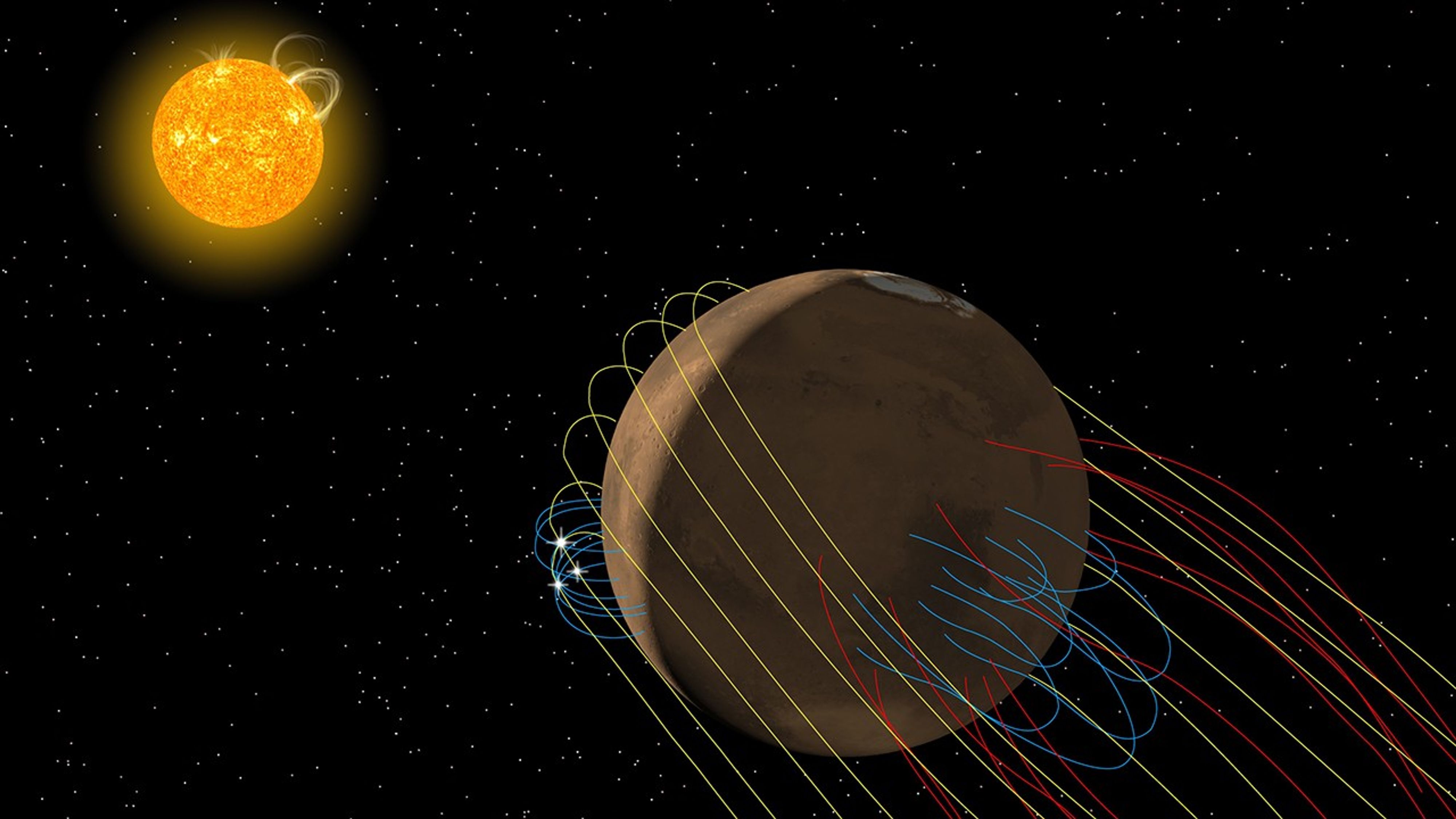
Anil Rao/Univ. of Colorado/MAVEN/NASA GSFC
This “hybrid” magnetosphere provides little protection against the atmosphere-stripping force of the solar wind. This, plus Mars’ thin atmosphere, allows the Sun’s energetic particles to easily reach the Martian surface, endangering future human explorers there.
“Before we send humans to Mars, we need to understand what type of environment these astronauts are going to encounter,” Cash said.
Additionally, ESCAPADE will provide more information about Mars’ ionosphere — part of the upper atmosphere that future astronauts will use to send radio and navigation signals around the planet, as we do on Earth.
“If we ever want GPS at Mars or long-distance communications, we need to understand the ionosphere,” Lillis said.
Unique journey to Mars
Previous Mars missions have launched when Earth and Mars are aligned in their orbits, which only happens every 26 months. But ESCAPADE launched early, pioneering a new strategy that allows Mars-bound spacecraft to launch almost anytime.
Instead of heading directly to Mars, ESCAPADE’s spacecraft are first looping around a location in space a million miles from Earth called Lagrange point 2. In November 2026, when Earth and Mars are aligned, the ESCAPADE spacecraft will return to Earth and use our planet’s gravity to slingshot themselves toward Mars for a September 2027 arrival.
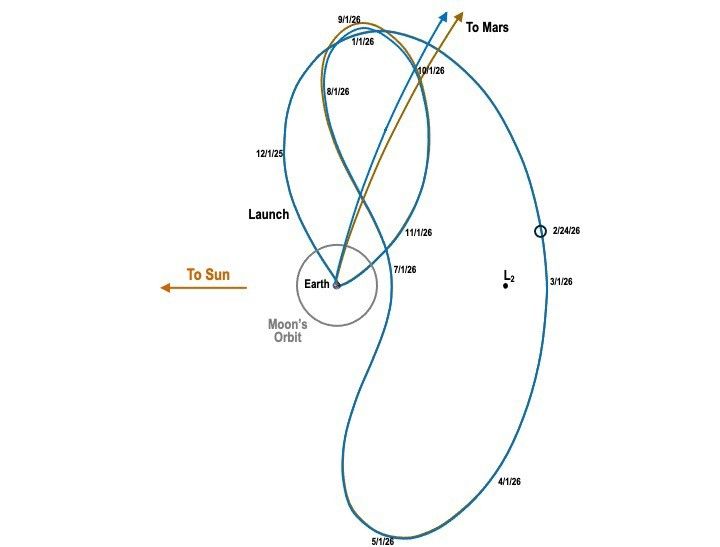
This unique “loiter” orbit will extend approximately 2 million miles from our planet, making the ESCAPADE spacecraft the first to fly through a previously unexplored region of Earth’s distant magnetotail, part of Earth’s magnetosphere opposite the Sun.
“We’re going to be doing some discovery science,” Lillis said. “No one has ever measured Earth’s tail this far away.”
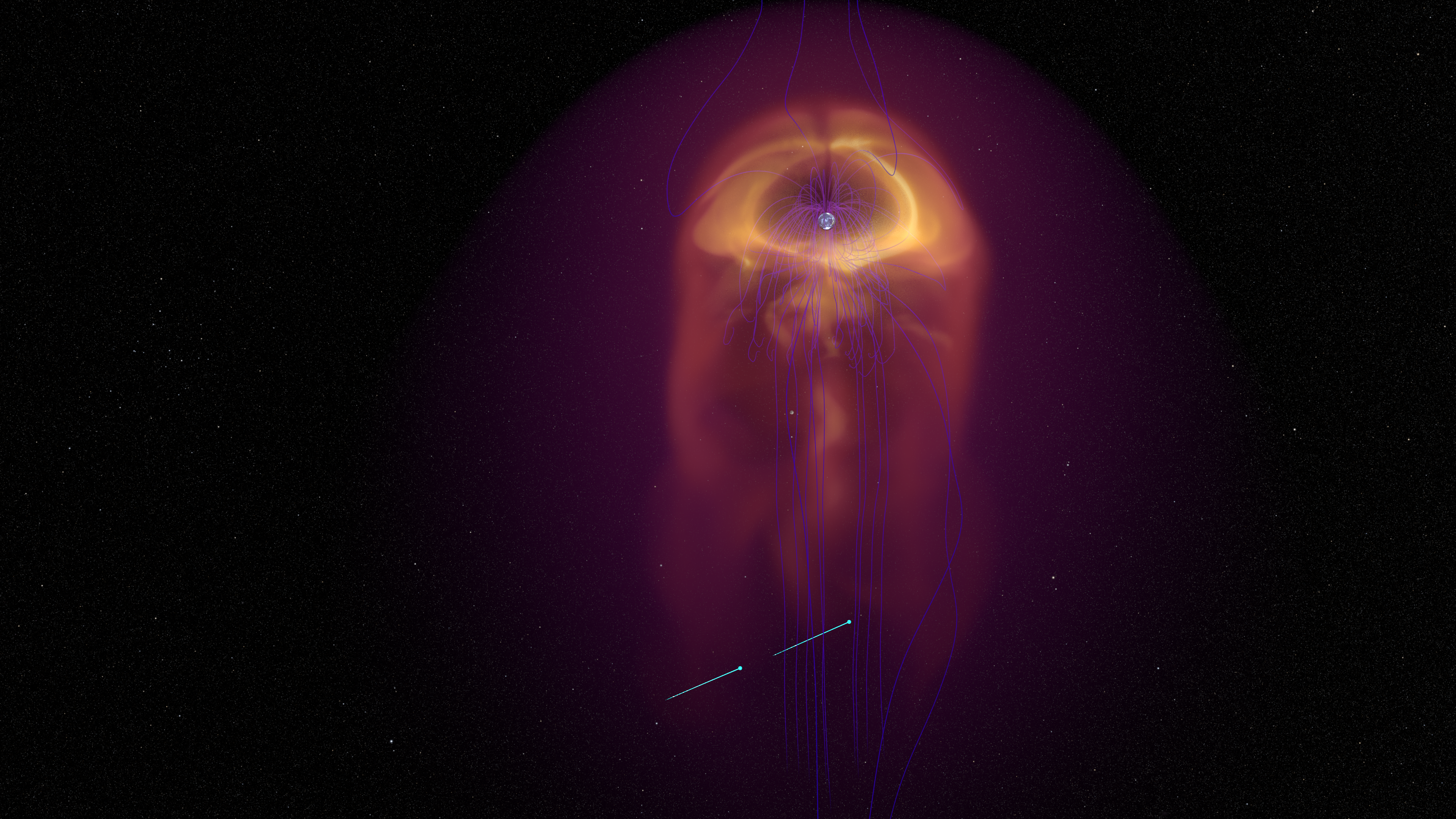
Later, during their 10-month cruise to Mars, ESCAPADE’s two spacecraft will study solar wind and the interplanetary magnetic environment that Mars-bound astronauts will also traverse, preparing for future journeys to the Red Planet.
The ESCAPADE mission is funded by NASA’s Heliophysics Division and is part of the NASA Small Innovative Missions for Planetary Exploration program. UC Berkeley’s Space Sciences Laboratory leads the mission with key partners Rocket Lab; NASA’s Goddard Space Flight Center in Greenbelt, Maryland; Embry-Riddle Aeronautical University; Advanced Space; and Blue Origin.
Quelle: NASA
----
Update: 2.03.2026
.
ROCKET LAB COMPLETES SPACECRAFT COMMISSIONING FOR NASA’S ESCAPADE MARS MISSION
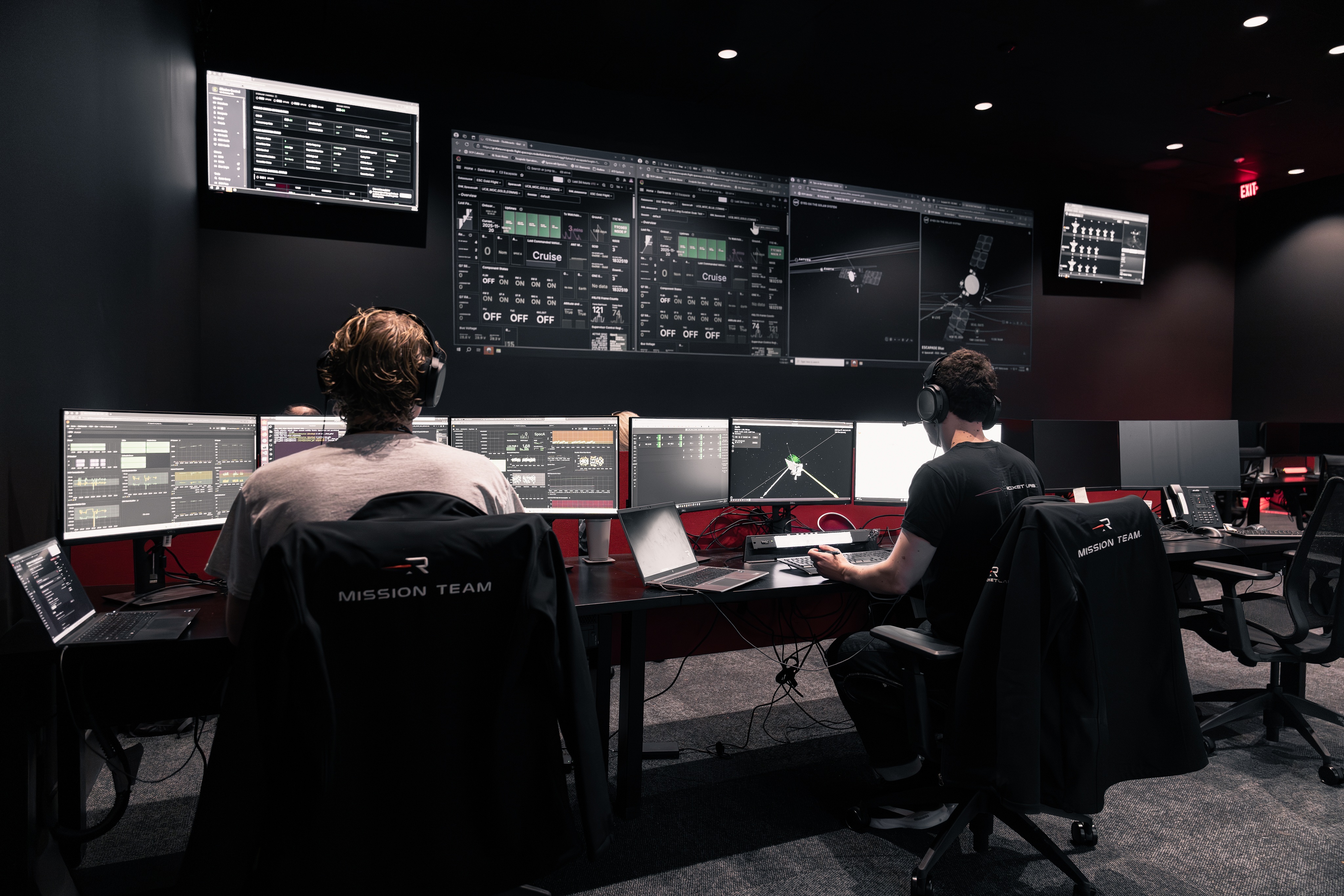
Rocket Lab USA, a wholly owned subsidiary of Rocket Lab Corporation (Nasdaq: RKLB) (“Rocket Lab” or “the Company”), a global leader in launch services and space systems, today announced the successful completion of commissioning for the twin Rocket Lab-built satellites for the University of California Berkeley Space Sciences Laboratory’s (UCB-SSL) Escape and Plasma Acceleration and Dynamics Explorers (ESCAPADE) mission.
With both spacecraft now fully commissioned and successfully operating at the Earth–Sun Lagrange Point 2 (L2), Rocket Lab is preparing to hand over operational control to UCB-SSL, who will lead science operations at L2 and prepare the mission for its cruise to Mars.
Under contract from UCB-SSL, Rocket Lab was selected to design, build, and provide commissioning operations of the two high delta-V Explorer-class interplanetary spacecraft for ESCAPADE. Rocket Lab moved from concept to launch readiness in just over three years, proving commercial collaboration can deliver important science key to supporting future human and robotic exploration of Mars on ambitious schedules and for significantly smaller budgets than typical interplanetary missions. This speed was made possible through Rocket Lab’s vertically integrated spacecraft production, with key components including solar arrays, reaction wheels, propellant tanks, star trackers, radios, avionics, and flight software designed and built in-house.
Launched from Cape Canaveral Space Force Station in November 2025, the twin ESCAPADE spacecraft, known as Blue and Gold, completed spacecraft commissioning and executed two precise trajectory correction maneuvers, placing both spacecraft into their loiter trajectory near L2, approximately 1.5 million kilometers from Earth.
“ESCAPADE proves what’s possible when government, university and commercial teams come together with ambition, drive, and determination to do things differently,” said Rocket Lab Founder and CEO Sir Peter Beck. “Rocket Lab designed and built two Mars spacecraft on a timeline most would call impossible. We have established a long track record of relentless execution across launch, spacecraft development, and complex deep space missions. ESCAPADE is yet another example of the Rocket Lab team delivering mission success for NASA and our mission partners. With Blue and Gold now positioned for their cruise to Mars, we’re laying the groundwork for NASA's long term objectives at Mars. The science ESCAPADE unlocks will be crucial to designing the infrastructure needed for a lasting human presence on the Red Planet, including a Mars Telecommunications Orbiter. This is just the beginning.”
About ESCAPADE: The mission will study how the solar wind strips molecules from Mars’ atmosphere offering insight into the planet’s atmospheric escape history and space weather environment and informing future human exploration strategies. The ESCAPADE spacecraft will continue operating in proximity to Earth, near L2, until November 2026, allowing UCB-SSL to test its science instruments and collect early heliophysics data in the Earth’s magnetotail, the elongated region of the magnetosphere stretched downstream by the solar wind.
In November 2026, both spacecraft will perform a gravity assist maneuver around Earth to slingshot toward Mars. Blue and Gold are scheduled to arrive at Mars in September 2027, with science operations expected to begin in 2028.
Quelle: Rocket Lab
----
Update: 26.07.2026
.
NASA’s ESCAPADE Snaps Family Portrait of Earth, Moon
On July 3, one of NASA’s two Mars-destined ESCAPADE (Escape and Plasma Acceleration and Dynamics Explorers) spacecraft captured photos of Earth and the Moon in visible and thermal infrared light. At the time, the spacecraft was 363,250 miles (584,600 kilometers) from Earth and 115,600 miles (186,100 kilometers) from the Moon, making the Moon appear relatively large.
Taken with the Sun only partly illuminating Earth and the Moon, the visible light image shows the two bodies as crescents, with only around 8% of each face sunlit. Yet in the thermal infrared image, the shadowed hemisphere of Earth is illuminated by its own heat from both the atmosphere and surface, glowing at minus 10 to minus 44 degrees Fahrenheit (250 to 280 kelvins). Without the insulating blankets of oceans and atmospheres, the Moon’s far side remains at a much cooler minus 280 degrees Fahrenheit (100 kelvins).
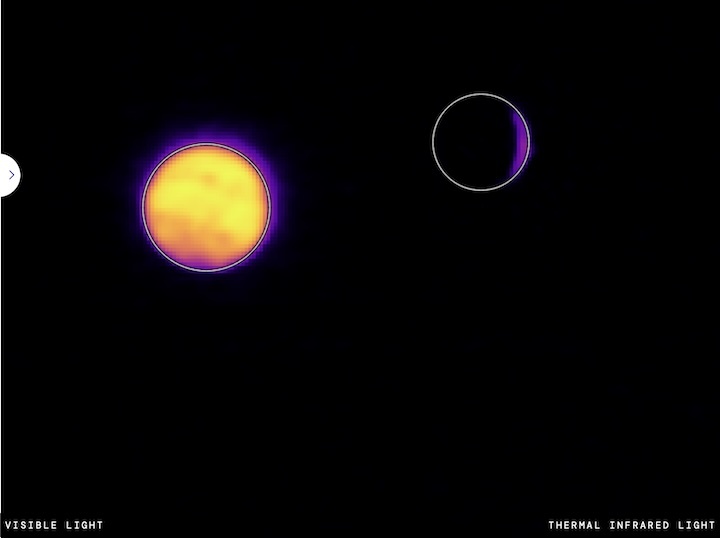
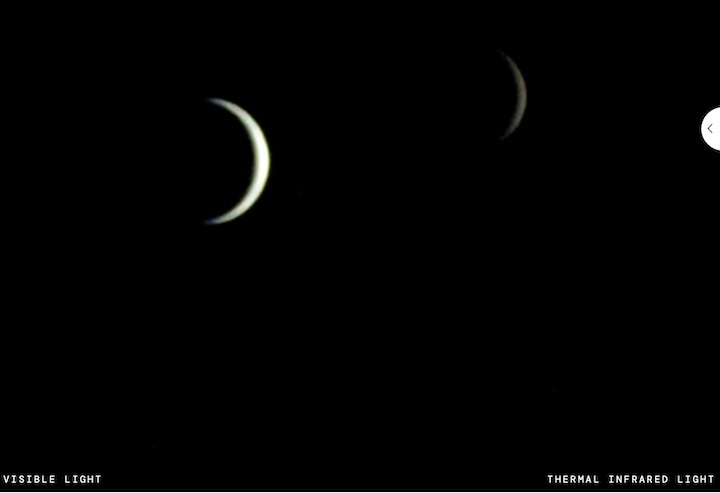
The ESCAPADE mission used its Visible and Infrared Observation System cameras, provided by Northern Arizona University in Flagstaff, to capture the images, which are more than just road trip photo album snaps.
"We are thrilled that ESCAPADE was able to accommodate these excellent space-qualified cameras which will search for visible Martian aurora and investigate thermal properties of the Martian surface and atmosphere,” said Rob Lillis, the mission’s principal investigator at the University of California, Berkeley. “Since Earth and the Moon are well-known targets, imaging them provides an important calibration check for ESCAPADE’s cameras.”
The ESCAPADE spacecraft, which were built by Rocket Lab, are currently in a “loiter” orbit around Lagrange point 2, a location in space about a million miles from Earth. In November 2026, the spacecraft will fly by Earth to use the planet’s gravity to slingshot their way to Mars. When the spacecraft arrive in September 2027, they will study how a million-mile-per-hour stream of material flowing from the Sun, known as solar wind, interacts with the Martian environment and how that drives atmospheric loss at the Red Planet.
The ESCAPADE mission is funded by NASA’s Heliophysics Division and is part of the NASA Small Innovative Missions for Planetary Exploration program. The UC Berkeley’s Space Sciences Laboratory leads the mission with key partners Rocket Lab; NASA’s Goddard Space Flight Center in Greenbelt, Maryland; Embry-Riddle Aeronautical University; Advanced Space; and Blue Origin.
Quelle: NASA
----
Update: 4.11.2026
.
NASA’s Twin ESCAPADE Spacecraft to Slingshot Past Earth on Way to Mars
In a few days, NASA’s ESCAPADE (Escape and Plasma Acceleration and Dynamics Explorers) will perform a maneuver that no agency spacecraft has flown before — and do it twice. Each of the two ESCAPADE spacecraft will execute a “powered” flyby of Earth, combining Earth’s gravity with an engine burn, to slingshot itself toward Mars.
The first spacecraft will conduct its flyby and engine burn around 5 a.m. EST on Saturday, Nov. 7, and the second will do so two days later, around 6 a.m. EST on Monday, Nov. 9. As each spacecraft flies close to Earth, our planet’s gravity will speed it up and redirect it toward Mars. At the spacecraft’s closest approach to Earth, it also will perform a “trans-Mars injection burn,” firing its engine for about 9 minutes to give itself an extra boost toward the Red Planet.
The trans-Mars injection burn will increase each spacecraft’s speed by more than 1,000 miles per hour, or from about 6.3 miles per second to about 6.7 miles per second (from about Mach 30 to Mach 31). At that final speed, the spacecraft could fly from Washington, D.C., to San Francisco in less than 7 minutes.
After completing their successful powered flybys, the two spacecraft will then have a 10-month cruise to Mars, arriving at the Red Planet on Sept. 7 and Sept. 9, 2027, respectively.
At Mars, ESCAPADE will become the first multi-spacecraft mission to fly in formation around the planet. The ESCAPADE mission will study how a million-mile-per-hour stream of material flowing from the Sun, known as the solar wind, interacts with the Martian environment and how that drives atmospheric loss at Mars.
Some spacecraft have used Earth flybys to direct themselves to other destinations in the solar system, but no Mars-bound spacecraft has successfully executed a powered flyby, also known as an Oberth maneuver. Previous missions that reached Mars launched from Earth at a time when the two planets were aligned in space — which only happens every 26 months — to shorten the trip and use the least amount of fuel. However, ESCAPADE launched in November 2025, when Earth and Mars were on opposite sides of the Sun. Instead of heading directly to Mars, ESCAPADE pioneered a new route. The two spacecraft flew in a kidney-bean-shaped loop around a place in space called the Earth-Sun Lagrange point 2 and then headed back toward Earth so they could use Earth’s gravity to propel themselves toward the Red Planet once the planets returned to alignment, which is now.
This unique route already has allowed ESCAPADE to collect some “bonus” science as the spacecraft flew through a distant region of Earth’s magnetotail, a part of Earth’s magnetic environment that gets stretched out away from Earth by the solar wind. No spacecraft had directly explored that part of Earth’s magnetotail before. Mission scientists report that ESCAPADE observed some interesting activity and structure in the magnetotail and are planning to share those findings soon.
As the two ESCAPADE spacecraft perform their Earth flybys on Nov. 7 and 9, some observers on the ground might be able to spot them, though the spacecraft will be faint and a telescope will most likely be needed to find them as dim points moving against the stars. At their closest approach to Earth, the spacecraft, which are each about the size of a standard refrigerator, will be between 600 and 1,100 miles above the planet’s surface, which is higher than most Earth-orbiting satellites.
Each spacecraft will fire its engine as it flies over southern Australia and should be visible with telescopes from there. The first spacecraft’s engine burn will begin at 4:51 a.m. EST (or 8:51 p.m. Australia Eastern Daylight Time, AEDT) on Nov. 7. The second spacecraft’s burn will begin at 5:51 a.m. EST (or 9:51 p.m. AEDT) on Nov. 9.
In the hours leading up to the flybys, each ESCAPADE spacecraft should be visible in the skies over the western U.S. until about an hour before its engine burn, at which point the spacecraft will slip below the horizon. This means the first spacecraft will likely be brightest for the western U.S. between midnight and 1 a.m. PST in the early morning of Nov. 7, and the second one will be brightest between 1 and 2 a.m. PST on Nov. 9.
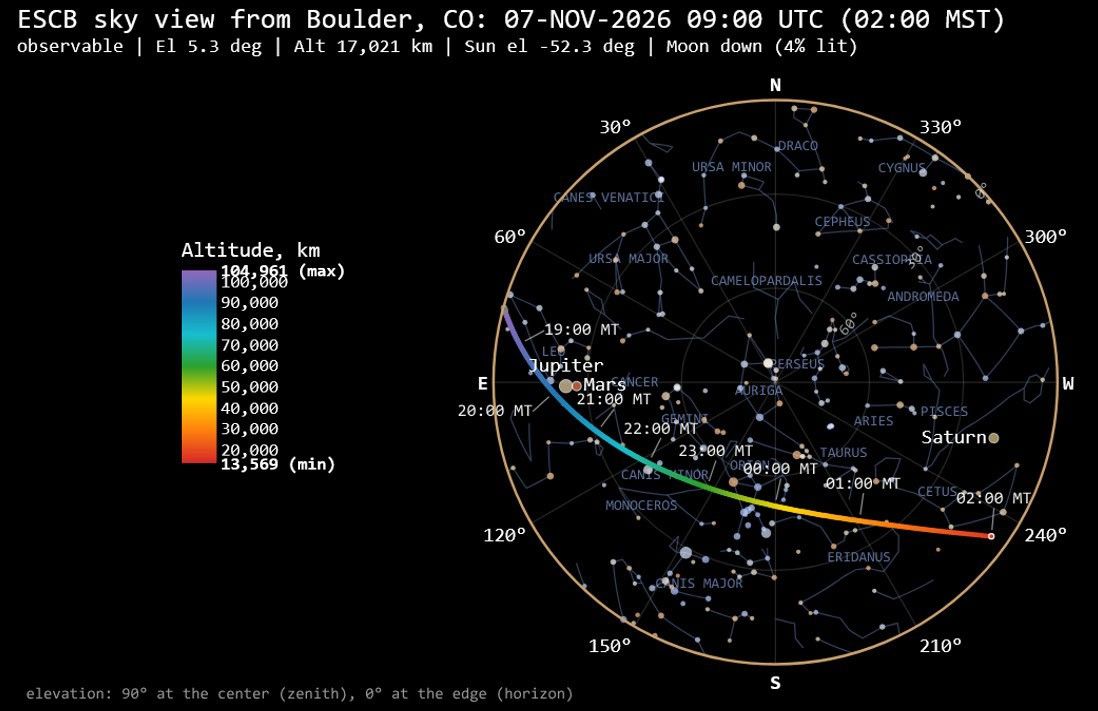
Each spacecraft will appear to move through the sky relatively slowly and take several hours to cross from east to west overhead.
If you would like to try to spot the ESCAPADE spacecraft with a telescope, you can use the NASA Jet Propulsion Laboratory’s Horizons System to get coordinates for the two spacecraft at various times for your viewing location.
Several days after ESCAPADE’s trans-Mars injection burns, the mission team will know how well the spacecraft are aimed for Mars. The team will use multiple trajectory correction maneuvers to adjust the path of the two spacecraft during their journey to Mars, ensuring they are on a precise course to rendezvous with the Red Planet in September next year.
Quelle: NASA
----
Update: 11.11.2026
.
NASA’s ESCAPADE Completes Powered Earth Flybys, Now En Route to Mars
NASA’s two ESCAPADE (Escape and Plasma Acceleration and Dynamics Explorers) spacecraft have each successfully completed a powered Earth flyby, using Earth’s gravity in combination with a sustained engine burn to slingshot themselves toward Mars. With these successful maneuvers complete, the twin spacecraft are on target to reach the Red Planet in September 2027.
“This is the first time NASA has used a powered Earth flyby to propel a spacecraft toward Mars, and we’ve now executed this maneuver twice, flawlessly, in just two days,” said Asal Naseri, acting associate flight director for the Heliophysics Division at NASA Headquarters in Washington.
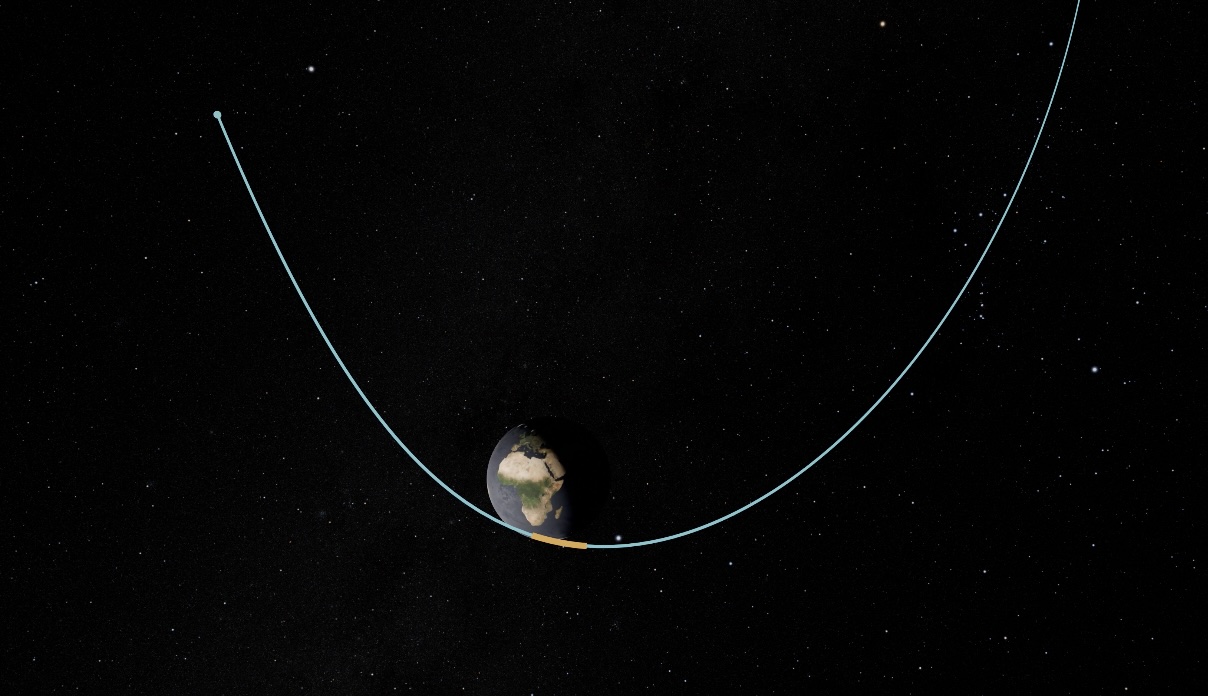
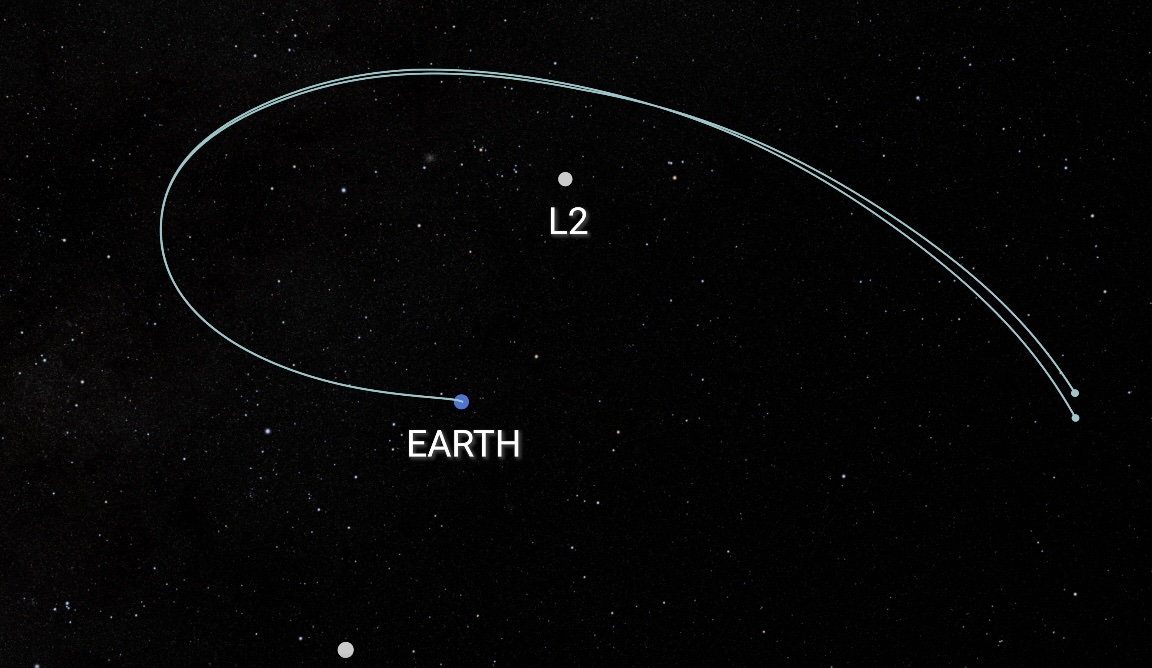
“With this loiter orbit and Earth flyby, ESCAPADE is pioneering a new strategy for getting to Mars,” said Jeff Parker of Advanced Space, lead mission designer. “This method provides the flexibility to launch almost anytime and then use Earth’s gravity to get a boost to Mars, rather than waiting every two years to launch there directly when the planets are aligned.”
The first ESCAPADE spacecraft completed its close approach to Earth and its approximately 9-minute trans-Mars injection burn — the engine firing that commits the spacecraft to its path to Mars — at 5 a.m. EST on Nov. 7, when it was about 1,000 miles above the planet’s surface. The second spacecraft followed suit two days later, completing its close approach and engine burn at 6 a.m. EST on Nov. 9, when it was about 650 miles above the planet’s surface.
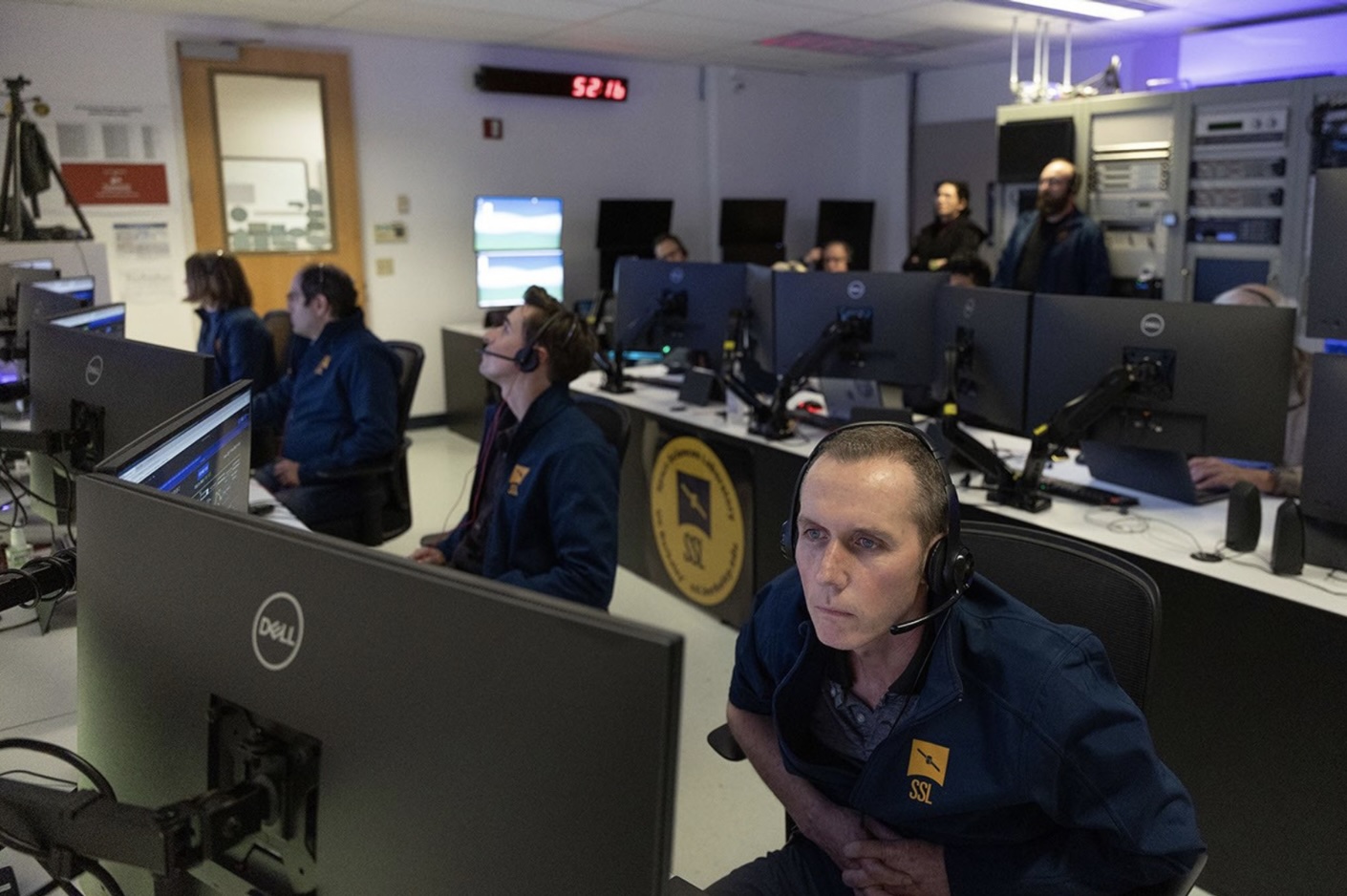
These powered flybys of Earth set both spacecraft on course for their 10-month cruise to Mars, culminating with their Mars orbit insertion burns planned for Sept. 7 and Sept. 9, 2027. Once in orbit around Mars, the two spacecraft will fly in formation to study how a million-mile-per-hour stream of material flowing from the Sun, known as the solar wind, interacts with the Martian environment and how that drives atmospheric loss at Mars.
“By better understanding how the solar wind affects the Martian environment, ESCAPADE’s findings could help us plan and prepare for future human exploration of the Red Planet,” said Michele Cash, ESCAPADE program scientist at NASA Headquarters.
The twin ESCAPADE spacecraft have already taken some science observations during their loiter orbit as they flew multiple times through Earth’s magnetotail, a part of our planet’s magnetic environment that gets stretched away from Earth, opposite the Sun, by the solar wind. During the 10-month trip to Mars, the spacecraft also will be able to study the dynamics of the solar wind between Earth and Mars.
Along the way, the spacecraft will perform a series of trajectory correction maneuvers to adjust their path and ensure they are on a precise course to rendezvous with Mars in September 2027.
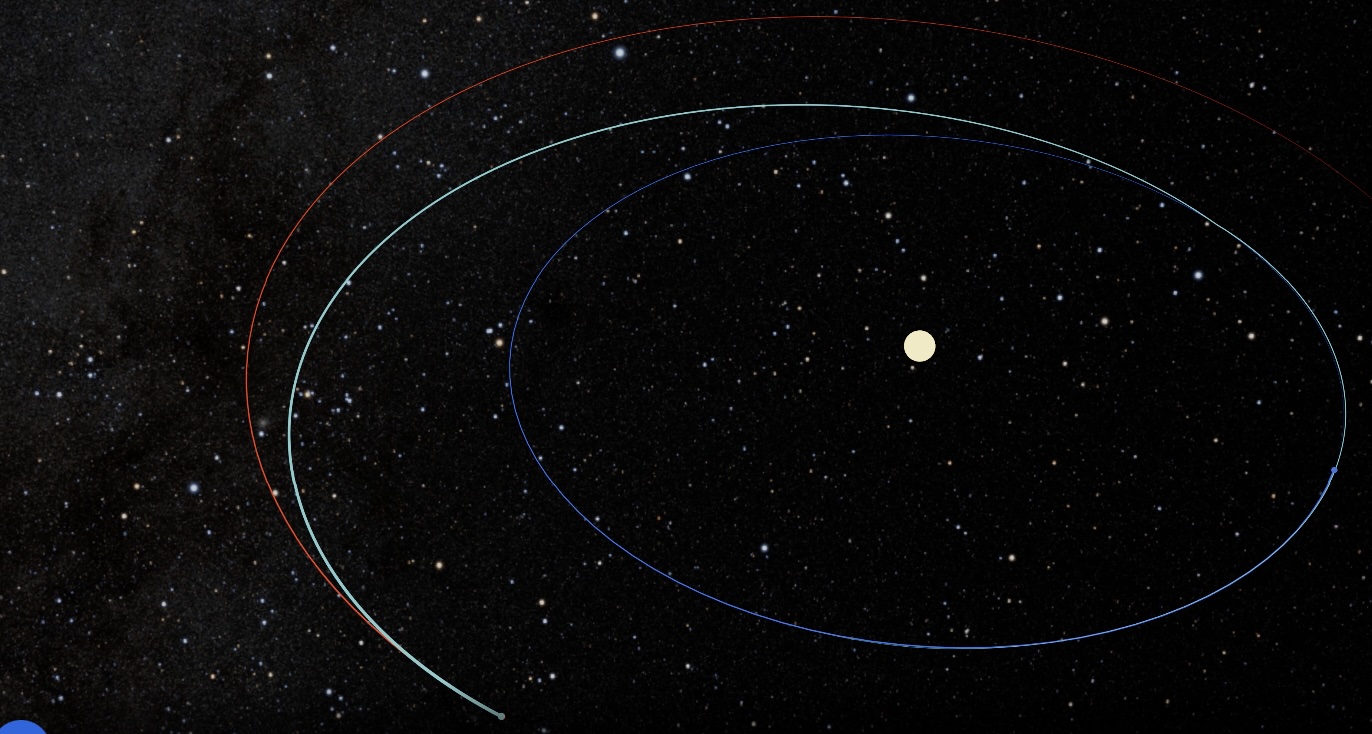
When they reach Mars, two days apart, each spacecraft will fire its engine for about 11 minutes to slow down and enter orbit around the planet. The spacecraft then will take several months to maneuver into their first science formation, where they will follow one another in the same orbit to study how the planet’s environment changes with time and location. Science operations are expected to begin in June 2028.
Six months later, the two spacecraft will shift into different orbits, with one traveling farther from Mars to observe the incoming solar wind and the other staying closer to the planet to study how Mars responds to the solar wind in real time. That science campaign is scheduled to last five months.
“This will be the first science mission to choreograph two orbiters around Mars, and the first time we will be able to make coordinated observations of the Martian environment from two different locations simultaneously,” said ESCAPADE’s principal investigator, Rob Lillis of the University of California, Berkeley.
Funded by NASA’s Heliophysics Division, ESCAPADE is part of the agency’s SIMPLEx (Small Innovative Missions for Planetary Exploration) program, which supports missions that explore the solar system in innovative ways with smaller budgets.
The University of California, Berkeley’s Space Sciences Laboratory leads the mission with key partners Rocket Lab; NASA’s Goddard Space Flight Center in Greenbelt, Maryland; Embry-Riddle Aeronautical University; Advanced Space; and Blue Origin.
“The ESCAPADE mission continues the scientific legacy of historical Mars missions with a dedicated team driving new innovations for its journey to and at the Red Planet,” said Skyler Kleinschmidt, ESCAPADE program executive at NASA Headquarters.
Quelle: NASA