
30.07.2026
Spacecraft Commissioning On Track for Mission to Boost NASA’s Swift
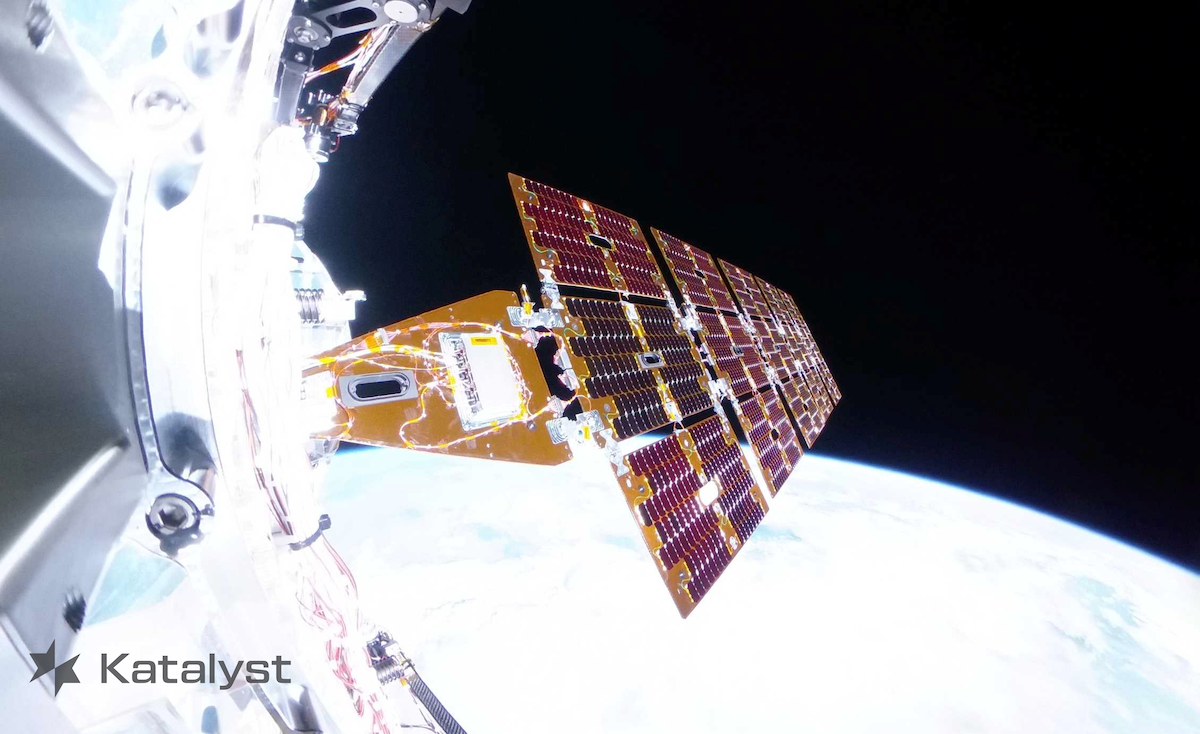
Teams continue to progress through in-orbit preparations for the robotic servicing spacecraft designed to boost NASA’s Neil Gehrels Swift Observatory to a higher altitude. Katalyst Space’s LINK spacecraft remains healthy and is about halfway through this commissioning process.
LINK launched July 3, completed its initial postlaunch sequence, and began system checkouts. After completing solar array deployment and establishing communications, Katalyst now has commissioned LINK’s power systems and avionics, as well as conducted propulsion system checkouts. This has involved firing the spacecraft’s xenon-fueled thrusters, which will be used to travel to Swift and slowly raise its orbital altitude over the course of several months.
The Katalyst team also quickly addressed early communications and attitude control issues seen during flight operations, including an issue with one of the spacecraft’s three reaction wheels. After identifying the cause, they implemented flight software patches and operational updates that restored reliable communications and stable attitude control.
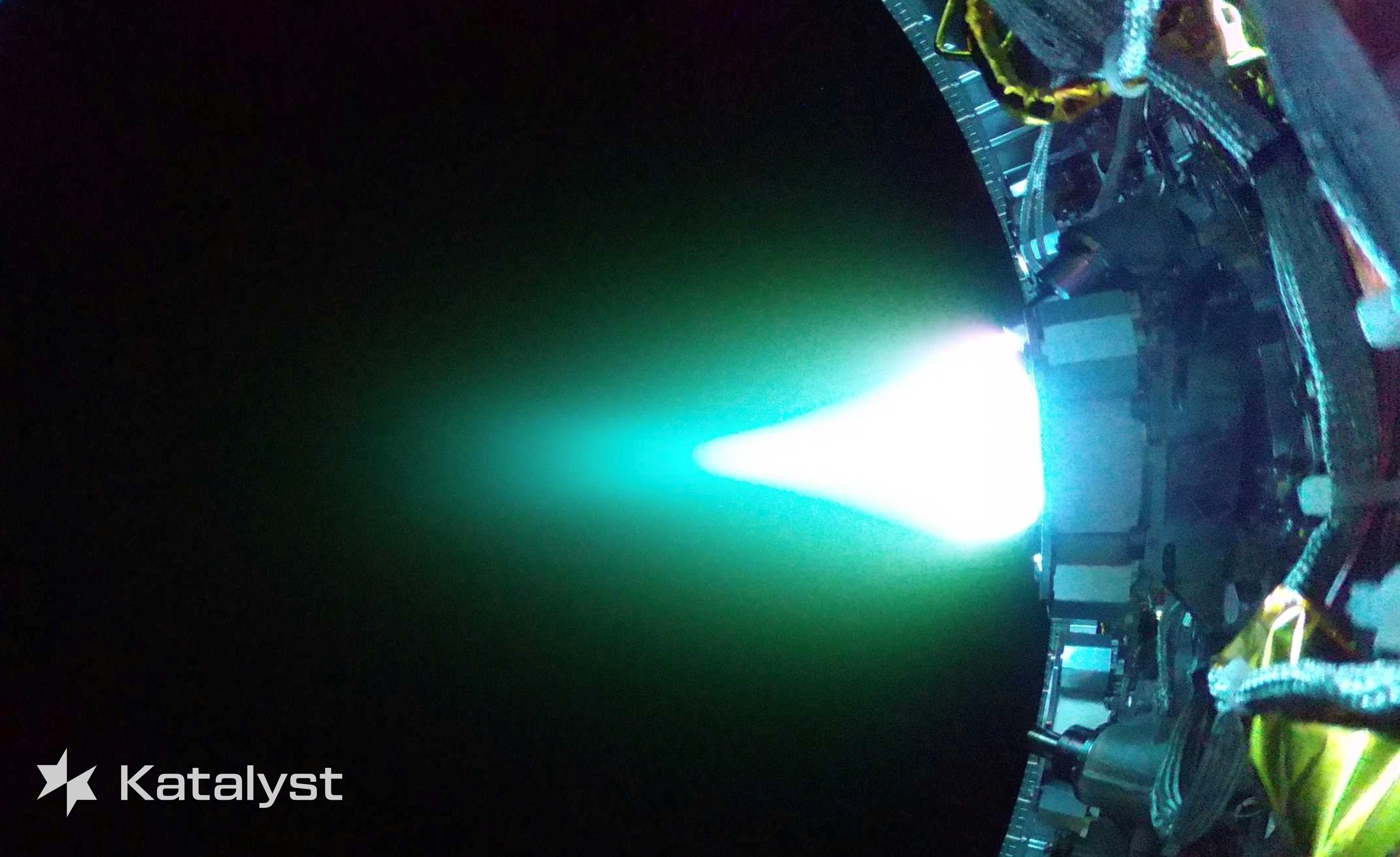
The commissioning process will continue over the coming weeks, with flexibility built in to allow the team to pause, assess data, and adjust as needed.
+++
Commissioning Update for Spacecraft to Boost NASA’s Swift
Over the weekend, Katalyst’s LINK servicing spacecraft experienced issues with attitude control, causing the spacecraft to spin and resulting in sporadic communications. Preliminary investigation shows that two of LINK’s three reaction wheels currently are not operable, and there is some loss of functionality in its cold gas thruster system. LINK is designed to approach, capture, and boost NASA’s Neil Gehrels Swift Observatory to a higher orbital altitude.
LINK’s other major subsystems are functioning as expected. The spacecraft remains power positive and in communication with the Katalyst team.
The team is working to stop LINK’s spin over the next few days, using the spacecraft’s electric propulsion thrusters. After reestablishing stable attitude and further investigating spacecraft status, Katalyst plans to update LINK’s guidance, navigation, and control to accommodate the spacecraft’s new configuration. Working closely with NASA teams, they will then evaluate revised plans to approach and capture Swift, depending on safety of the approach and LINK’s health.
Quelle: NASA
----
Update: 2.08.2026
.
Efforts Continue to Stabilize LINK Spacecraft for NASA’s Swift Boost
Teams at Katalyst Space are making progress slowing the spin of their LINK spacecraft, which is designed to boost the orbit of NASA’s Neil Gehrels Swift Observatory. A series of thruster burns this week reduced the rate of spin from approximately 9 degrees per second to less than 4 degrees per second. Katalyst is continuing with this approach to restabilize the spacecraft in the coming days.
Teams also further evaluated LINK’s functionality and determined there are still potential paths forward for a boost. NASA is working closely with Katalyst to consider revised, innovative approaches. The agency will continue to provide updates about stabilization of LINK and next steps for the mission. LINK is now expected to approach Swift around the end of August.
Quelle: NASA
+++
Mission Updates
Over the last 48 hours, the Katalyst team has worked to reduce LINK’s rotation while assessing current spacecraft functionality and its control system.
A series of burns using a Hall effect thruster on a two-axis gimbal has reduced LINK’s spin rate from approximately 9 degrees per second to approximately 4 degrees per second. We believe the remaining rates will be reduced over the next series of burns.
In parallel, Katalyst is working closely with the NASA team to develop a new attitude controller for LINK’s current configuration. This work includes remapping the available actuators, retuning the control algorithms, and validating the updated controller in simulation before it’s activated on orbit.
The recovery effort has delayed rendezvous, with LINK now expected to approach Swift around the end of August. We’re focused on stabilizing the spacecraft and restoring core system functionality while planning rendezvous with Swift, which we will begin executing once recovery is complete.
During commissioning, the Katalyst team encountered a series of technical issues related to attitude control of the spacecraft. Over the last 72 hours, the LINK spacecraft has been in a multi-axis spin, causing a temporary loss of communications and subsequent bus reset.
Currently, two of three reaction wheels onboard LINK are disabled due to issues related to the upstream bus electrical power system, and the spacecraft has partial RCS functionality. LINK’s other major subsystems, electric propulsion, robotics, RPO sensing, and power are functioning properly, as well as S-band and L-band communications.
Over the coming days, Katalyst will work to reduce the body rates using the gimbaled electric propulsion thrusters and stabilize the spacecraft. We have already begun this series of burns and are seeing the intended effect.
We anticipate the following steps over the next few weeks:
- Update the guidance, navigation, and control schemes to reflect the current spacecraft configuration
- Verify and validate the updated control schemes and FSW with end-to-end simulation and ground testing to thoroughly understand the interactions between subsystems with the updated configuration
- Maneuver to co-elliptical with Swift using the updated control schemes
- Perform inspection of Swift and other RPO activities
- Attempt a capture of Swift, pending spacecraft state of health and safety
While these technical issues require a revised approach, our team is working around the clock alongside our NASA partners. The mission remains active and we continue to believe that with these changes, LINK has a viable path to rendezvous with Swift.