
13.06.2026
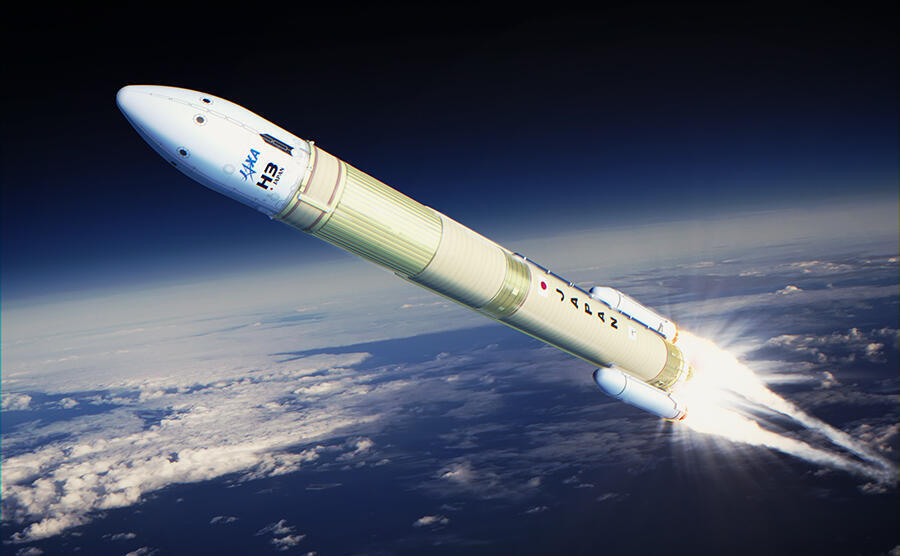
Japan Aerospace Exploration Agency (JAXA) launched H3 Launch Vehicle flight No.6, 30 configuration Test Vehicle at 09:53:59(JST) on June 12, 2026 from the Tanegashima Space Center. The Launch Vehicle flew as planned, and the second stage of the H3 Launch Vehicle was injected into the predetermined orbit. Approximately 16 minutes and 4 seconds after the liftoff, the separation of the PETREL and STARS-X were confirmed.
Additionally, based on the post-Earth orbit data from the second-stage vehicle, JAXA confirmed that the separation signals were sent to BRO-22, VERTECS, HORN-L and HORN-R.
JAXA appreciates all for the support shown in behalf of the launch.
Quelle: JAXA
+++
Japan successfully launches H3 rocket
Japan successfully launched its flagship H3 rocket Friday morning, marking the resumption of the rocket’s flights roughly six months after a failed mission in December and the first flight of a new low-cost configuration intended to strengthen the country’s competitiveness in the global launch market.
H3 Launch Vehicle No. 6 lifted off from the Tanegashima Space Center in Kagoshima Prefecture at 9:53 a.m., according to the Japan Aerospace Exploration Agency (JAXA). It reached its target orbit approximately 16 minutes later.
Friday’s mission was the first flight of the H3’s “30 configuration,” a booster-free variant equipped with three first-stage liquid-fueled LE-9 engines and no solid rocket boosters. The configuration is expected to be the lowest-cost model in the H3 series.
“We will remain vigilant and continue our efforts to make Japan’s space transportation system more reliable and internationally competitive,“ JAXA President Hiroshi Yamakawa said during a news conference Friday afternoon.
The H3 is Japan’s next-generation mainstay rocket, developed by JAXA and Mitsubishi Heavy Industries (MHI) as the successor to the H-IIA. The program is intended to provide a more flexible and lower-cost launch vehicle as global demand for satellite launches continues to grow.
Unlike some previous H3 missions, No. 6 did not carry a large operational satellite. Instead, it carried JAXA’s Vehicle Evaluation Payload-5, or VEP-5, a dummy satellite designed to collect flight data and verify the rocket’s performance. Six small secondary satellites developed by universities and other organizations were also carried aboard the rocket and successfully placed into orbit.
The launch had originally been scheduled for Wednesday but was postponed due to poor weather.
The mission was closely watched after the previous launch of the H3 No. 8 failed in December while carrying Michibiki No. 5, a quasi-zenith satellite that forms part of Japan’s satellite positioning system, sometimes described as the Japanese version of GPS. During that launch, the rocket’s second-stage engine stopped burning earlier than planned, preventing the satellite from reaching its intended orbit.
December’s setback left Japan in a critical position, without a reliable means of transporting goods into space. Friday’s successful launch is an important comeback, as the country seeks to restore confidence in the H3 series and demonstrate that the rocket can support a wider range of missions, thus reviving its space development.
“It’s been a long six months (since December),” MHI’s H3 project manager, Osamu Kitayama, told reporters. “I feel profoundly relieved.”
JAXA and MHI are planning a busy launch schedule for fiscal 2026. Planned payloads include Michibiki No. 7, the HTV-X cargo transfer vehicle, the Martian Moons eXploration probe, a space domain awareness satellite, an information-gathering satellite and the Engineering Test Satellite No. 9.
Quelle: The Japan Times