
2.11.2026
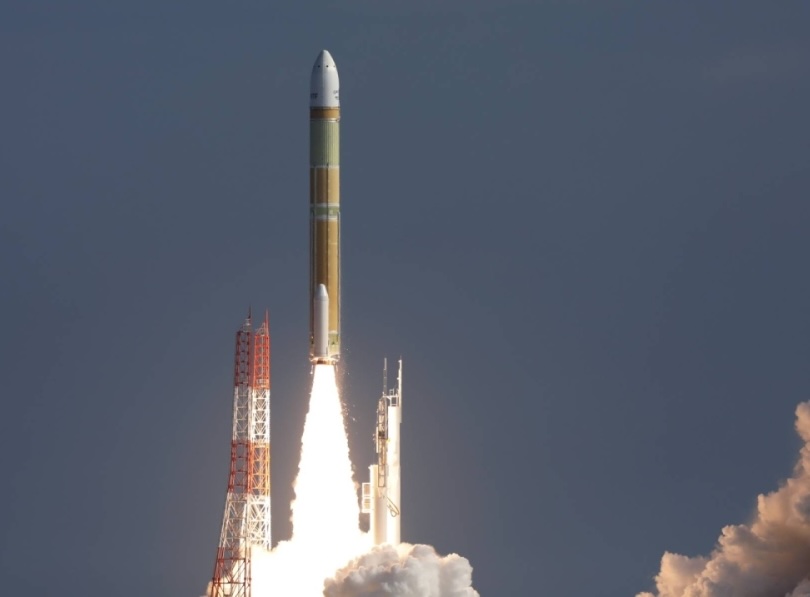
TAIKI, Hokkaido—In a town where cattle outnumber humans 6 to 1, efforts are accelerating to turn the community into a “spaceport” that can enable travel to and from outer space.
Taiki is one of several municipalities across Japan riding the tailwind of a global craze for space development.
Many of these places had previously welcomed space-related projects to revitalize their depopulated communities. Taiki, for example, already has a launch complex for small rockets and is currently building a larger launching site.
But town authorities have even larger space plans to attract a variety of industries.
“I hope to make this town a ‘space answer to Silicon Valley,’ which will revitalize all of Hokkaido,” Taiki Mayor Yutaka Kurokawa said.
SPACE TOWN
Twenty high school students from various parts of Japan gathered in Taiki this past summer for a four-day summer school to learn the cutting edges of space development.
The students presented their proposals for future space-use services.
Kazuto Enchi, a second-year student at Taiki High School in the town, was on a team of students who suggested a project for recycling disused artificial satellites.
“More and more satellites are going up, so we have to think about this problem sooner or later, right?” Enchi, 17, asked a nodding audience at the presentation.
Enchi’s family home is in Suita, Osaka Prefecture.
But he decided to study at Taiki High School after learning about the town’s plans for space development.
Enchi said the issue of space was more familiar to him in Taiki than in any place he had been.
Residents customarily ask things like, “When is the next launch?”
Enchi also said Taiki, with its low light pollution, offers night skies full of stars.
“You will only see these kinds of things in a space town,” the teenager said. “I am so happy I am here.”
Taiki, a rural community in east Hokkaido, was already being plagued by low birthrates, an aging population and a decrease in people of working age.
But in 1984, Hokkaido-Tohoku Development Finance Public Corp., one of the predecessors to today’s Development Bank of Japan, announced a large-scale aerospace industrial base project in Taiki.
A number of factors give Taiki an advantage as a host for rocket launch sites.
The town, located north of Cape Erimo, opens out toward the Pacific on the southeast. It lies apart from airplane and ship routes, and the weather is fine on many days.
The Japan Aerospace Exploration Agency has also set up an outpost in Taiki.
The Taiki town government is spending 4.3 billion yen ($27 million) to build the new launch complex on the grounds of Hokkaido Spaceport (HOSPO).
Once it is completed, Interstellar Technologies Inc., a private rocket developer based in Taiki, is expected to launch the first rocket from the site in fiscal 2027.
“Space industries have a far-reaching base,” said Yoshinori Odagiri, CEO of HOSPO operator Space Cotan Co. “I have this ambition of ensuring that businesses from all parts of Hokkaido will be working together under this project, which will thereby revitalize all of Hokkaido.”
GLOBAL DEMAND GROWS
Spaceport projects have also taken off in other parts of Japan.
In Kushimoto, Wakayama Prefecture, Spaceport Kii has hosted three rocket launches.
The Oita prefectural government is also planning to turn Oita Airport into a hub for space flights under the name Spaceport Oita.
And in Kochi Prefecture, local volunteers are working on a spaceport project.
In the backdrop is rising global demand for rockets.
Rocket launches are increasing in number, corresponding to the rise in “satellite constellations,” which consist of many telecommunications or Earth observation satellites.
One example is the Starlink Internet service, enabled by more than 10,000 satellites.
“Rockets have abruptly fallen in short supply during the past several years, partly because we stopped using Russian rockets following the country’s invasion of Ukraine,” said Tsuyoshi Onuki, a writer on space issues.
But with space development, the risk of failure is always present.
For example, three straight rocket launches have failed in Kushimoto.
Oita Airport has also seen the collapse of its U.S. space business partner.
“Japan’s rocket development will face a crucial moment over the next several years,” Onuki said. “The hosting communities have high expectations for regional development, but a succession of failures could raise concerns about the soundness of the projects.”
He continued, “It will be important for the business operators to explain what benefits rocket development is expected to bring to the hosting communities.”
Quelle: The Asahi Shimbun