
1.09.2026
ISRO GSLV-F17 launch: All about India’s first imaging satellite from geosynchronous orbit
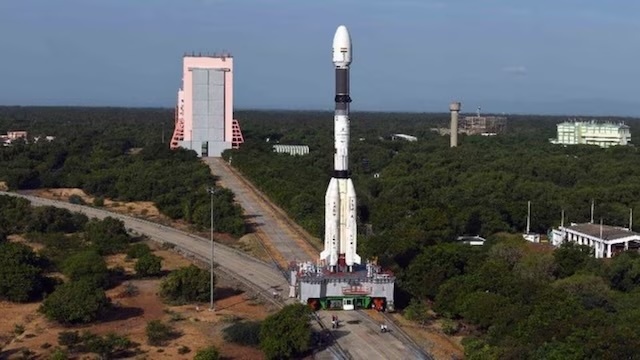
The Indian Space Research Organisation (ISRO) is preparing for the launch of its GSLV-F17 rocket carrying EOS-05, an advanced Earth observation satellite.
The mission is scheduled for September 4, with the satellite expected to repeatedly image the Indian landmass and support monitoring of cyclones, floods, forest fires and other rapidly developing events.
EOS-05 will be India’s first imaging satellite to operate from a geosynchronous orbit, nearly 36,000 kilometres above Earth. The mission marks an important return to the launchpad for ISRO following recent PSLV setbacks.
When and where will GSLV-F17 launch?
The Indian Space Research Organisation (ISRO) is scheduled to launch the GSLV-F17/EOS-05 mission on September 4 at 2:55 am IST. The launch will take place from the second launch pad at the Satish Dhawan Space Centre in Sriharikota, Andhra Pradesh. ISRO has said that live streaming of the mission will begin at 2:25 am IST on the same day.
What is GSLV-F17?
GSLV-F17 is the 19th flight of India’s Geosynchronous Satellite Launch Vehicle (GSLV). The rocket will carry EOS-05 and place it into a Sub-Geosynchronous Transfer Orbit (Sub-GTO), from where the satellite will move towards its intended orbit. The mission will use the GSLV Mk II configuration, with a four-metre-diameter ogive composite payload fairing.
The GSLV-F17 is a three-stage launch vehicle standing 51.7 metres tall and weighing 420.5 tonnes at liftoff.
What is EOS-05?
EOS-05 is an advanced Earth observation satellite and, according to ISRO, will be India’s first imaging satellite to operate from a geosynchronous orbit. The satellite is designed to observe large areas of the Earth from a much higher orbit than conventional imaging satellites.
Its position nearly 36,000 kilometres above Earth is expected to give it a broad view and allow it to repeatedly observe the Indian landmass.
What will EOS-05 be used for?
The satellite is expected to provide repeated observations that can help track rapidly developing events and changes on the ground. Its imaging capability could support the monitoring of cyclones, floods, cloudbursts, forest fires and other natural events.
The information can also be useful for disaster management agencies, weather forecasters, agricultural planners and security agencies, particularly when quick updates are needed over large areas.
Why is the mission important for India?
EOS-05 is intended to give India a new Earth-observation capability by combining imaging with a geosynchronous orbit. The ability to repeatedly observe large parts of the country could be particularly useful during emergencies when conditions can change quickly.
For ISRO, the mission is also an important test of the GSLV Mk II's reliability and its ability to place an Earth-observation satellite into the required orbit.
A comeback mission for ISRO
The launch comes after a period of heightened focus on ISRO's launch programme following two consecutive PSLV failures and the investigations and validation work that followed. The GSLV-F17 mission is being prepared separately from the PSLV programme, as the two vehicles do not share the same engines or critical propulsion systems.
EOS-05 also carries significance because it follows an earlier attempt to establish a similar capability. The GSLV-F10 mission carrying EOS-03 failed on August 12, 2021, after a problem with the indigenous cryogenic upper stage. EOS-05 is the successor to that lost mission.
What comes next for ISRO?
The EOS-05 launch is part of a broader launch schedule outlined by ISRO Chairman Dr V Narayanan. According to a report in NDTV, ISRO is targeting seven launches between now and March 2027, including the G1 mission of the Gaganyaan programme, the first uncrewed flight.
The agency has also outlined plans to realise 12 satellites and eight launch vehicle missions during the current financial year.
Quelle: CNBC TV18
----
Update: 4.09.2026
.
GSLV-F17/EOS-05 MISSION
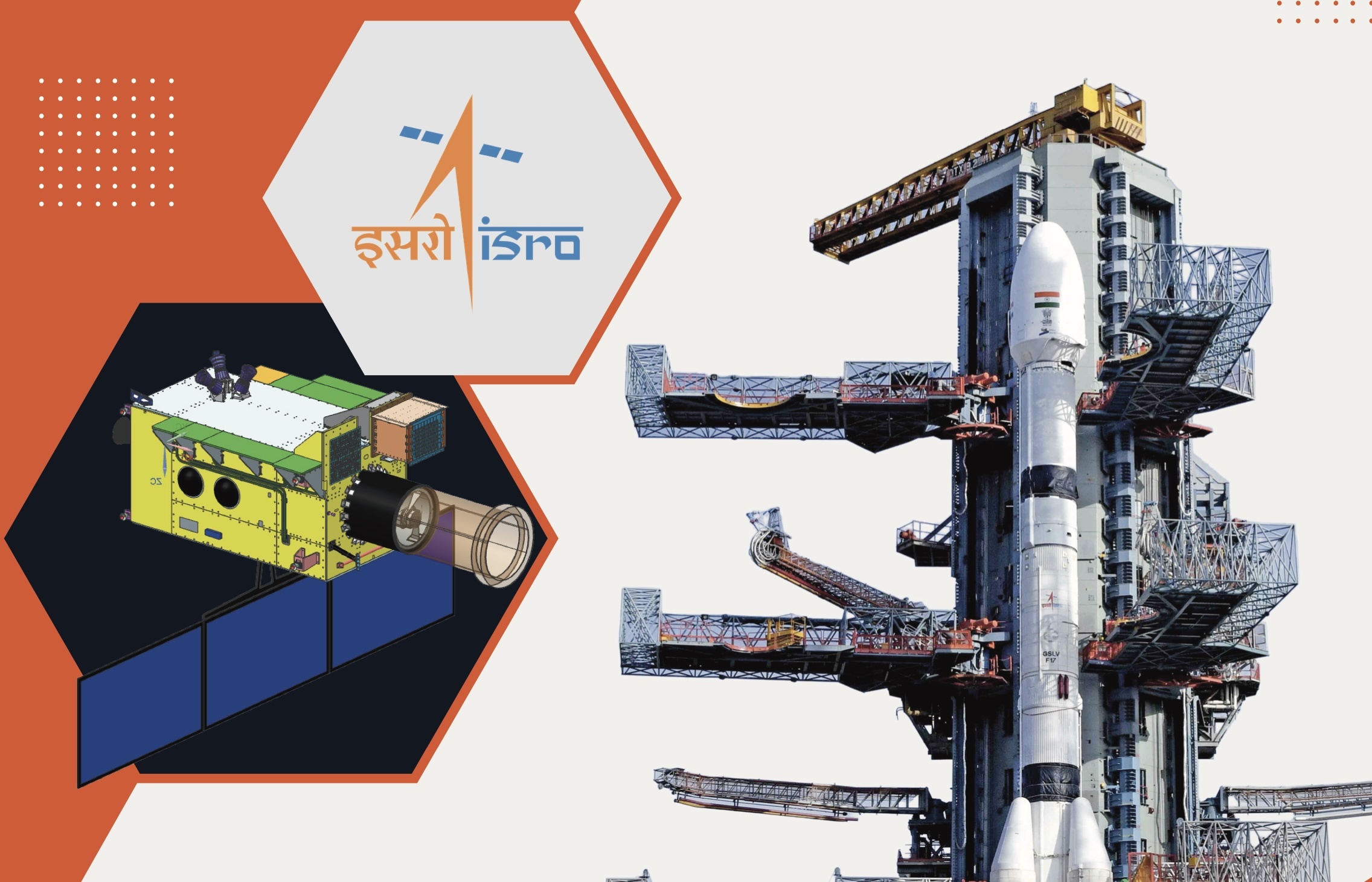
GSLV-F17
GSLV-F17 is the 19th flight of India’s Geosynchronous Satellite Launch Vehicle (GSLV) and the configuration of GSLV-F17 Payload Fairing is 4 m dia Ogive (composite) version.
The GSLV-F17 vehicle has placed EOS-05 satellite into a Sub-Geosynchronous Transfer Orbit (Sub- GTO). Launch was planned from the Second Launch Pad (SLP) at Satish Dhawan Space Centre, SHAR.
EOS-05
EOS-05 is a state-of-the-art Earth observation spacecraft. It is India’s first ever imaging satellite from Geosynchronous orbit.
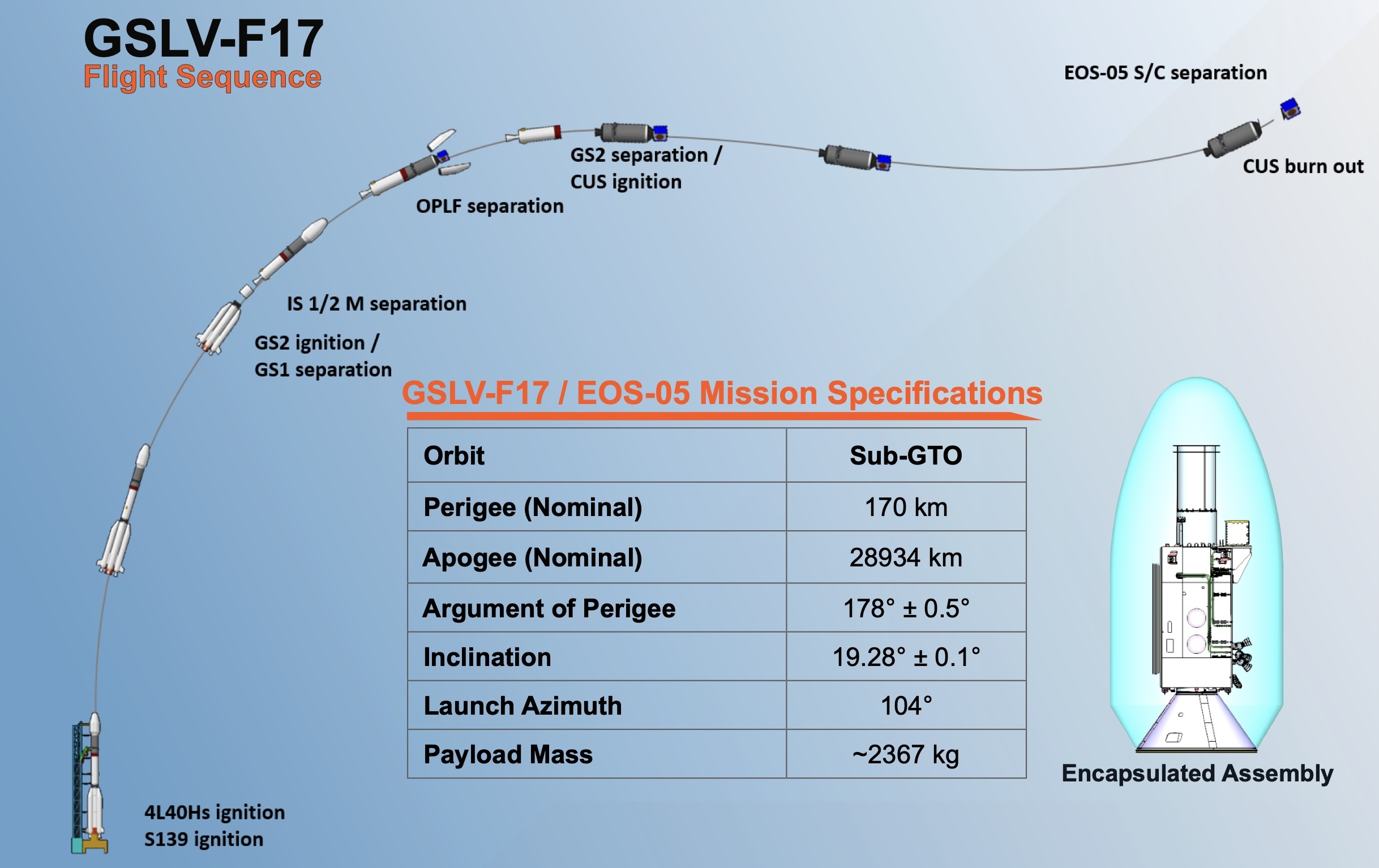
Launch Vehicle: GSLV-F17
Type of Satellite: Earth Observation
Application: Earth Observation
Quelle: ISRO