
6.04.2026

Update: 18:30 MESZ
It’s time for Artemis II to break Apollo 13’s distance record. What to know about the moon flyby
The Artemis II astronauts are already the champions of a fresh new era of lunar exploration. Now it’s time to set a new distance record.
Launched last week on humanity’s first trip to the moon since 1972, the three Americans and one Canadian are chasing after Apollo 13’s maximum range from Earth. That will make them our planet’s farthest emissaries as they swing around the moon without stopping on Monday and then hightail it back home.
Their roughly six-hour lunar flyby promises views of the moon’s far side that were too dark or too difficult to see by the 24 Apollo astronauts who preceded them. A total solar eclipse also awaits them as the moon blocks the sun, exposing snippets of shimmering corona.
“We’ll get eyes on the moon, kind of map it out and then continue to go back in force,” said flight director Judd Frieling. The goal is a moon base replete with landers, rovers, drones and habitats.
A look at Artemis II’s up-close and personal brush with another world — our constant companion, the moon.
Apollo 13 holds the distance record from Earth
Apollo 13’s astronauts missed out on a moon landing when one of their oxygen tanks ruptured on the way there in 1970.
With the three lives in jeopardy, Mission Control pivoted to a free-return lunar trajectory to get them home as fast and efficiently as possible. This routing relies on the gravity of Earth and the moon, and minimal fuel.
It worked for Apollo 13, turning it into NASA’s greatest “successful failure.” (For the record, flight director Gene Kranz never uttered “Failure is not an option.” The line is pure Hollywood, originating with the 1995 biopic starring Tom Hanks.)
How Artemis II will surpass Apollo 13
Commander Jim Lovell, Fred Haise and Jack Swigert reached a maximum 248,655 miles (400,171 kilometers) from Earth before making their life-saving U-turn on Apollo 13.
Artemis II’s astronauts are following the same figure-eight path since they are neither orbiting the moon nor landing on it. But their distance from Earth should exceed Apollo 13’s by more than 4,100 miles (6,600 kilometers).
Artemis II’s Christina Koch said late last week that she and her crewmates don’t live on superlatives, but it’s an important milestone “that people can understand and wrap their heads around,” merging the past with the present and even the future when new records are set.
Artemis II astronauts take shifts for prime lunar views
During the flyby, the astronauts will split into pairs and take turns capturing the lunar views out their windows with cameras. At closest approach, they will come within 4,070 miles (6,550 kilometers) of the moon.
Because they launched on April 1, the rendezvous won’t have as much of the far lunar side illuminated as other dates would have. But the crew still will be able make out “definite chunks of the far side that have never been seen” by humans, said NASA geologist Kelsey Young, including a good portion of Orientale Basin.
They’ll call down their observations as they photograph the gray, pockmarked scenes. There’s a suite of professional-quality cameras on board, and each astronaut also has an iPhone for more informal, spur-of-the-minute picture-taking.
Young’s team made lunar geography flashcards for the astronauts to study before the flight.
“They’ve practiced for many, many, many months on visualizations of the moon,” she said over the weekend, “and getting their eyes on the real thing, I’m really, really looking forward to them bringing the moon a little closer to home on Monday.”
A total solar eclipse is in store during the moon flyby
The upside of the April 1 launch is a total solar eclipse. The eclipse won’t be visible from Earth — only from the Orion capsule — treating the astronauts to several minutes’ worth of views of the sun’s outermost, radiating atmosphere, the corona.
The astronauts will be on the lookout for any unusual solar activity during the eclipse, Young said, and will use their “unique vantage point” to describe the features of the solar corona, or crown.
All four astronauts packed eclipse glasses to protect their eyes.
How long the brief blackout behind the moon lasts
Orion will be out of contact with Mission Control for nearly an hour when it’s behind the moon. The same thing happened during the Apollo moonshots.
NASA is relying on its Deep Space Network to communicate with the crew, but the giant antennas in California, Spain and Australia won’t have a direct line of sight when Orion disappears behind the moon for approximately 40 minutes.
These communication blackouts were always a tense time during Apollo although, as Frieling points out, “physics takes over and physics will absolutely get us back to the front side of the moon.”
It’s homeward bound for Artemis II after the moon flyby
Once Artemis II departs the lunar neighborhood, it will take four days to return home. The capsule will aim for a splashdown in the Pacific near San Diego on April 10, nine days after its Florida launch.
During the flight back, the astronauts will link up via radio with the crew of the orbiting International Space Station. This is the first time that a moon crew has colleagues in space at the same time and NASA can’t pass up the opportunity for a cosmic chitchat. The conversation will include both members of the first all-female spacewalk in 2019: Koch aboard Orion and Jessica Meir, on the station.
Quelle: AP
+++
Artemis II Flight Day 5: Crew Starts Day with Suit Demo
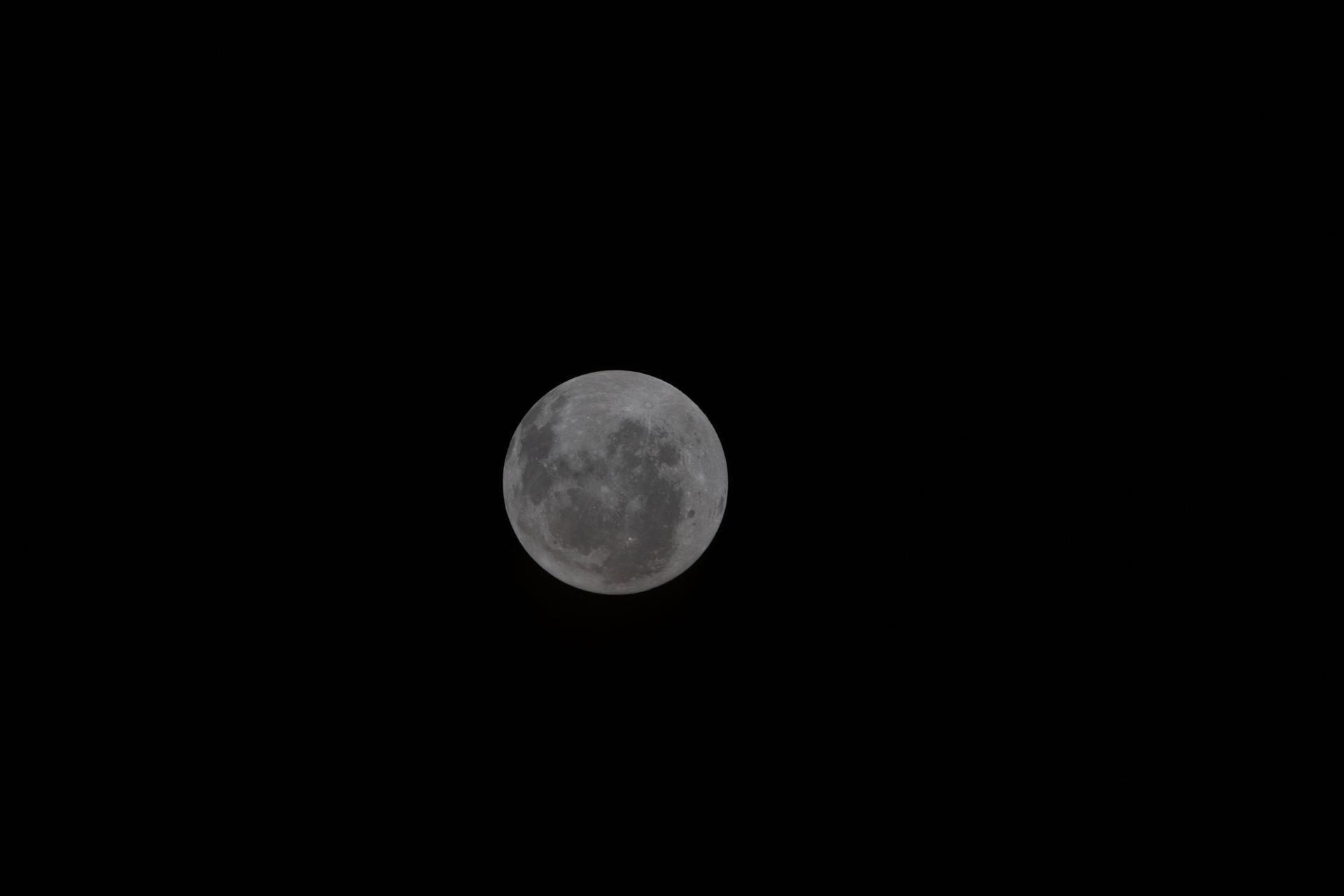
The morning opened to the beat of “Working Class Heroes (Work)” by CeeLo Green as the Artemis II crew, now flying about 65,235 miles from the Moon, began preparations for their first test objective of the day: an evaluation of the Orion Crew Survival System suit. The crew also heard a special message from Apollo astronaut Charlie Duke.
John Young and I landed on the Moon in 1972 in a lunar module we named Orion. I’m glad to see a different kind of Orion helping return humans to the Moon as America charts the course to the lunar surface. Below you on the Moon is a photo of my family. I pray it reminds you that we and America and all of the world are cheering you on.

CHARLIE DUKE
Apollo 16 Astronaut
NASA astronauts Reid Wiseman, Victor Glover, and Christina Koch, along with CSA (Canadian Space Agency) astronaut Jeremy Hansen, will conduct a full sequence of suit operations, including putting on and pressurizing their suits, performing leak checks, simulating seat entry, and assessing mobility and their ability to eat and drink.
The suits are designed to protect astronauts during dynamic phases of flight, provide life support in the event of cabin depressurization, and support survival operations after splashdown. The demonstration offers insight into how the suit performs during extended wear in microgravity and how its enhanced mobility, thermal management, and communication systems support crew operations during Artemis missions.
Later today, the crew will perform an outbound trajectory correction burn, receive their final lunar science targets, and enter the Moon’s gravitational sphere of influence. Mission managers and NASA science experts also will hold a daily mission status briefing at 5:30 p.m. on the agency’s YouTube channel.
View the latest imagery from the Artemis II mission on our Artemis II Multimedia Resource Page. Please follow @NASAArtemis on X, Facebook, and Instagram for real-time updates. Live mission coverage is available on NASA’s YouTube channel.
Quelle: NASA
+++
Artemis II Flight Day 5: Correction Burn Complete
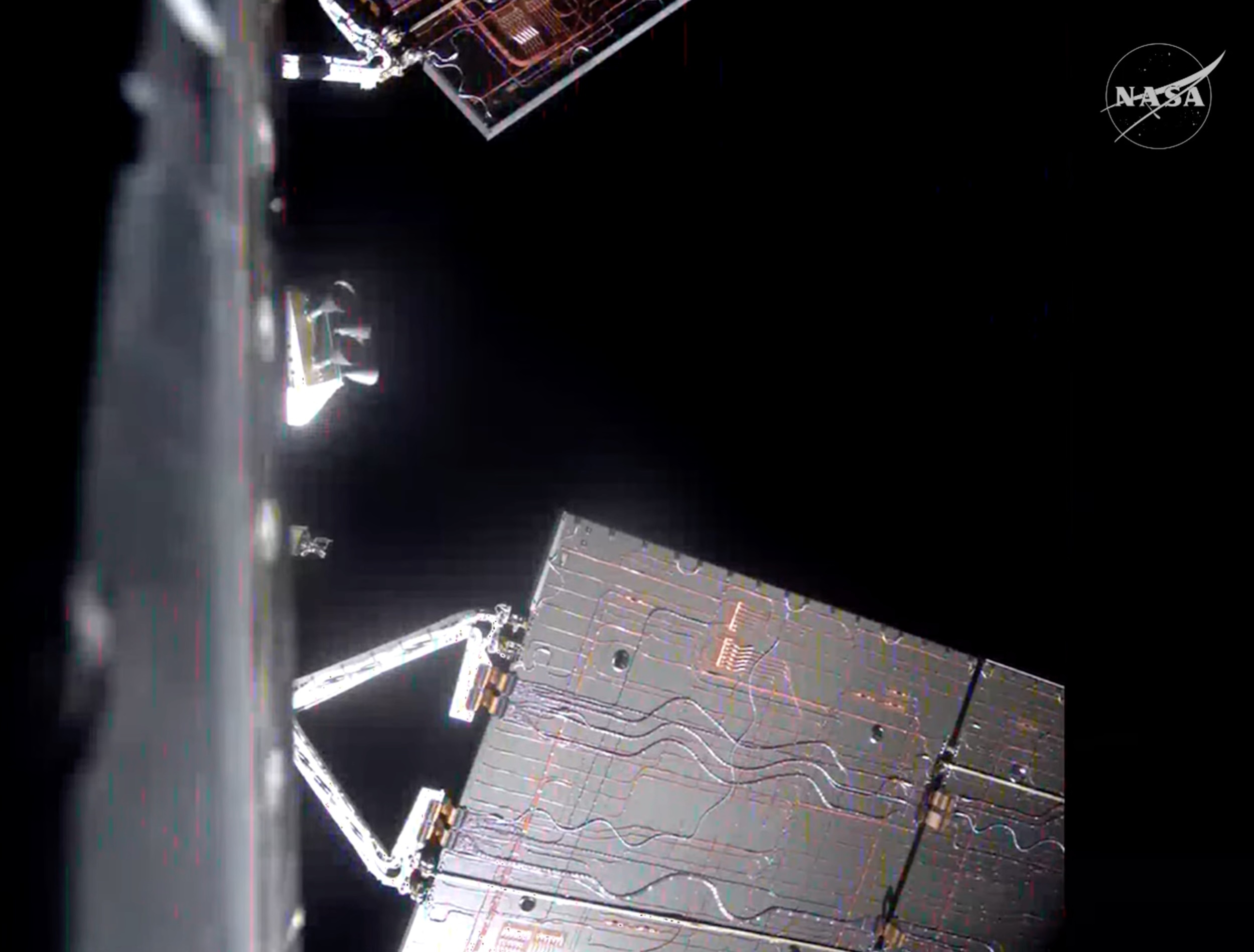
Mission control teams in Houston and the Artemis II crew completed an outbound correction burn to refine the Orion spacecraft’s trajectory to the Moon. The burn began at 11:03 p.m. EDT and lasted 17.5 seconds.
NASA astronauts Reid Wiseman, Victor Glover, and Christina Koch, along with CSA (Canadian Space Agency) astronaut Jeremy Hansen, continue on a precise path to flyby the Moon on Monday, April 6.
Early in their workday, the crew completed a key test objective of the mission: the Orion Crew Survival System (OCSS) suit.
All four crew members conducted a full sequence of tests, including putting on and pressurizing the suit, performing leak checks, simulating seat entry, and assessing mobility and their ability to eat and drink. The suit protects astronauts during dynamic phases of flight and provides life support in the event of cabin depressurization and survival operations after splashdown.
Wrapping up the day, the crew will enter the Moon’s sphere of influence at 12:41 a.m. Monday, April 6, when the Moon’s gravity becomes the dominant force controlling Orion’s trajectory.
That milestone sets the stage for the main event of flight day 6: the crew’s flight around the far side of the Moon.
Watch live coverage of the Artemis II lunar flyby on NASA+, Amazon Prime, Apple TV, Hulu, Netflix, HBO Max and Roku beginning at 1 p.m., alongside the agency’s 24/7 coverage on its YouTube channel. Learn how to stream NASA content through a variety of online platforms, including social media.
Key lunar flyby times, milestones (all times Eastern subject to change based on real-time operations):
- 1 p.m.: NASA+ coverage of lunar flyby begins.
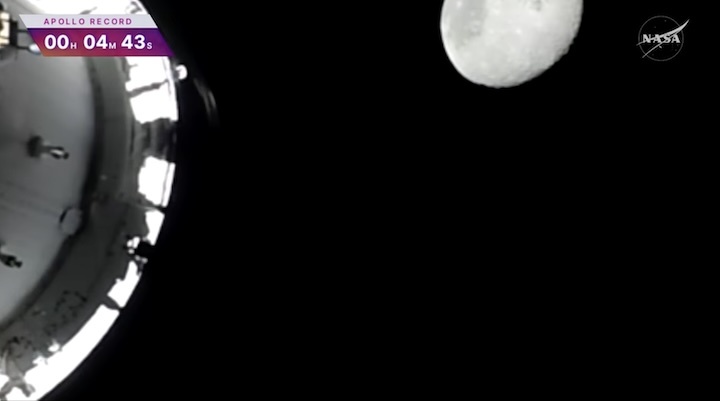
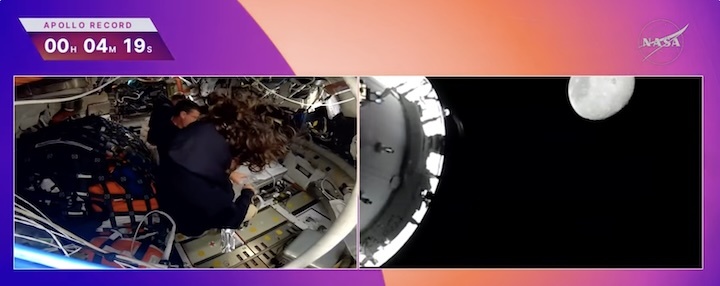
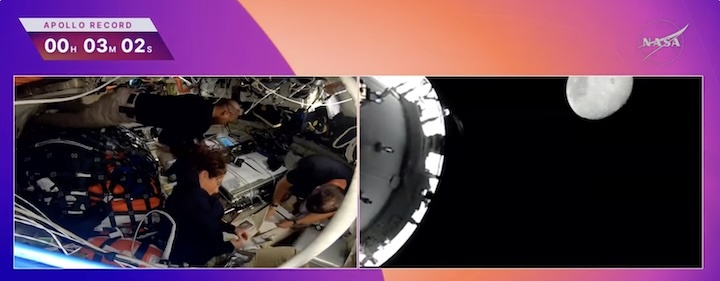
- 1:56 p.m.: The crew will surpass the record for humans’ farthest distance from Earth, previously set by Apollo 13 in 1970.
- 2:10 p.m.: Crew remarks on breaking Apollo 13 distance record (audio only)
- 2:15 p.m.: Crew configures Orion’s cabin for flyby operations
- 2:45 p.m.: Lunar observation begins
- 6:44 p.m.: Predicted loss of communications as crew heads behind the Moon (approximately 40 minutes)
- 7:02 p.m. Orion closest approach to the Moon (4,070 miles)
- 7:07 p.m.: Orion reaches maximum distance from Earth (252,757 miles)
- 7:25 p.m.: “Earthrise” marks Earth coming back into view on the opposite edge of the moon; Predicted acquisition of communications as crew reemerges from behind the Moon
- 8:35-9:32 p.m.: During a solar eclipse, the Sun will pass behind the Moon from the crew’s perspective
- 9:20 p.m.: Lunar observation concludes
The crew is scheduled to begin their sleep period for the day at 2:20 a.m., and will receive their wake up call to begin flight day 6 at 10:50 a.m. on Monday, April 6.
Quelle: NASA
+++
Artemis II Flight Day 6: Crew Ready for Lunar Flyby
The Artemis II crew is awake and beginning preparations for today’s lunar flyby — a first for humans since Apollo 17 in 1972.
The sounds of “Good Morning,” by Mandisa and TobyMac played as NASA astronauts Reid Wiseman, Victor Glover, and Christina Koch, along with CSA (Canadian Space Agency) astronaut Jeremy Hansen, woke up just 18,830 miles from the Moon. The crew also received a special message that Apollo 8 and Apollo 13 astronaut Jim Lovell recorded for the mission before his passing in 2025.
“Hello, Artemis II! This is Apollo astronaut Jim Lovell. Welcome to my old neighborhood! When Frank Borman, Bill Anders, and I orbited the Moon on Apollo 8, we got humanity’s first up-close look at the Moon and got a view of the home planet that inspired and united people around the world. I’m proud to pass that torch on to you — as you swing around the Moon and lay the groundwork for missions to Mars … for the benefit of all. It’s a historic day, and I know how busy you’ll be. But don’t forget to enjoy the view. So, Reid, Victor, Christina, and Jeremy, and all the great teams supporting you – good luck and Godspeed from all of us here on the good Earth.”

JIM LOVELL
Gemini VII, Gemini XII, Apollo 8, and Apollo 13 Astronaut
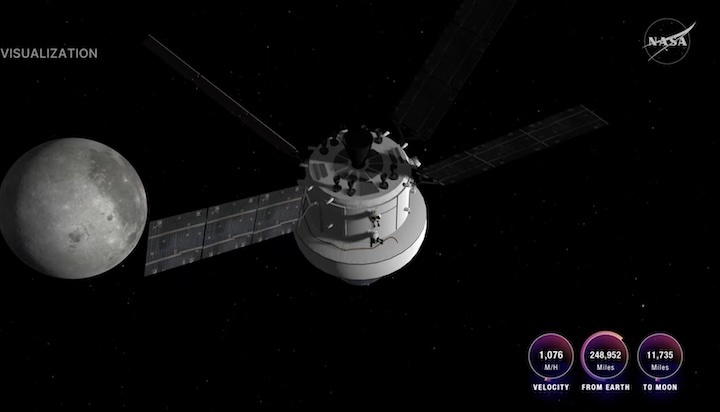
At approximately 1:56 p.m. EDT, the spacecraft will break the record for the farthest distance from Earth traveled by any human, surpassing the mark set by Apollo 13 in April 1970, during its emergency return to Earth. The spacecraft will reach its maximum distance at 7:07 p.m., a total of 252,760 miles from Earth; Apollo 13 reached 248,655 miles from Earth.
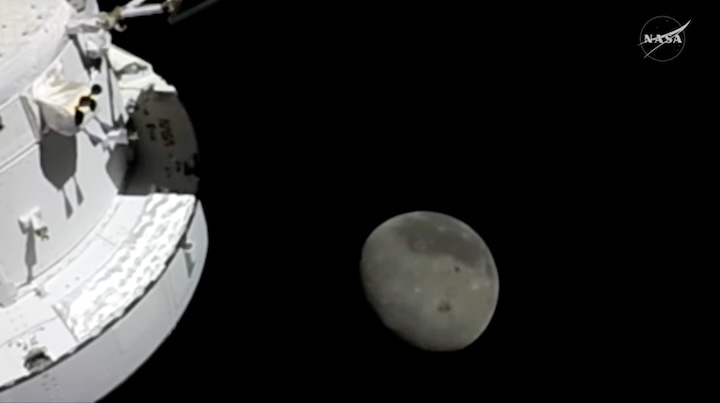
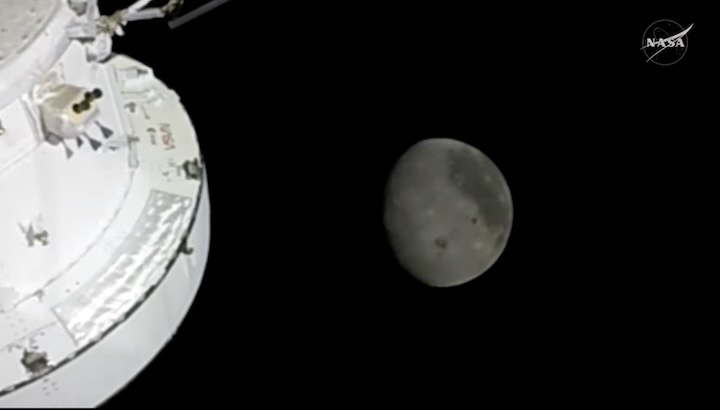
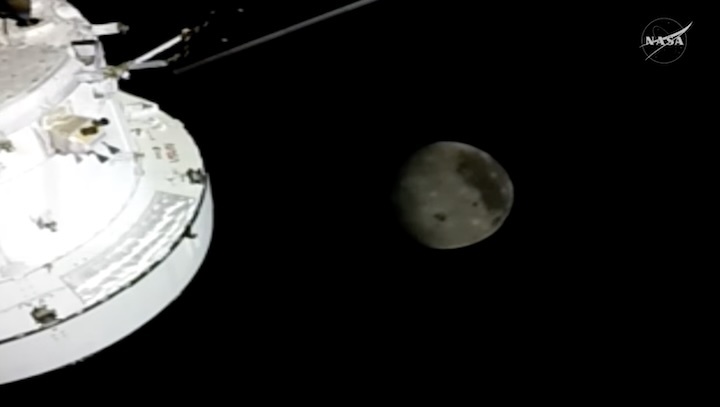
The lunar observation is scheduled to begin at about 2:45 p.m. EDT. The roughly seven-hour flyby covers the period when their Orion spacecraft will be close enough to the Moon for the crew to make detailed observations of geologic features on the lunar surface.
Watch live coverage of the Artemis II lunar flyby on NASA+, Amazon Prime, Apple TV, Hulu, Netflix, HBO Max, and Roku starting at 1 p.m., alongside the agency’s 24/7 coverage on its YouTube channel. Learn how to stream NASA content through a variety of online platforms, including social media.
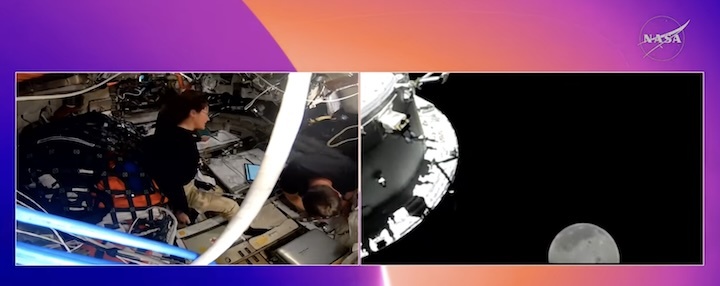
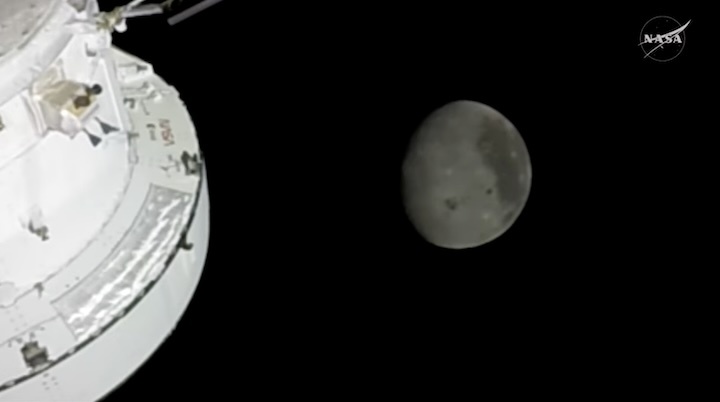
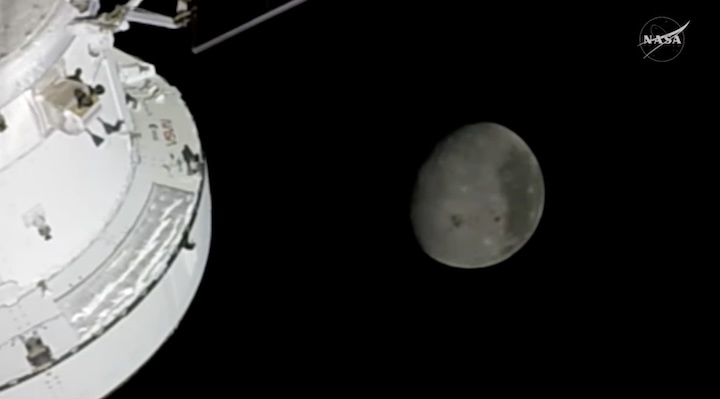
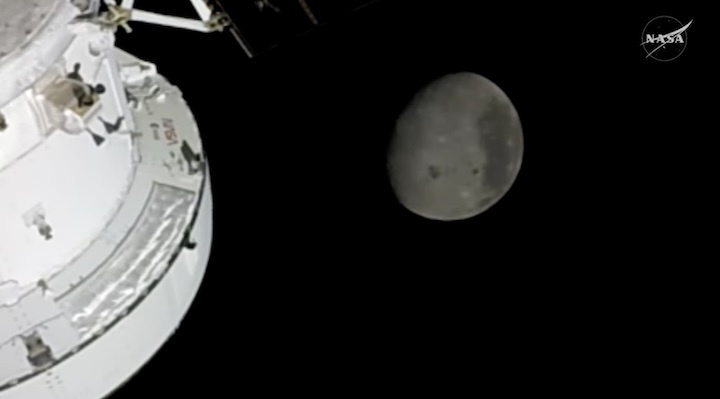
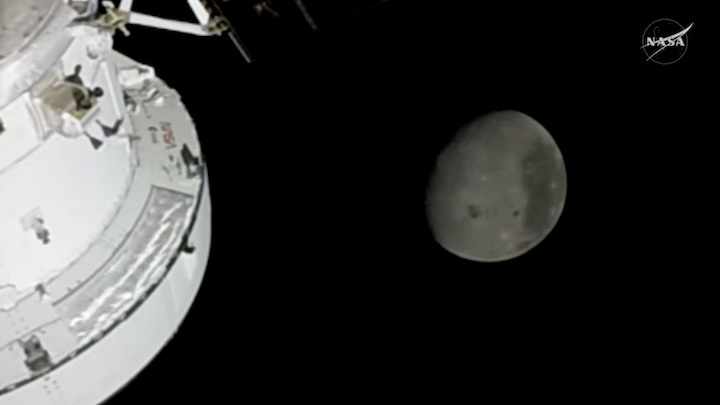
Coverage will include live views of the Moon from cameras mounted on Orion’s solar arrays. Image and view quality may vary throughout the lunar observation period due to distance from Earth, system limitations, and bandwidth across NASA’s communications network.
When Orion passes behind the Moon, starting at approximately 6:44 p.m., the mission will enter a planned communications blackout lasting about 40 minutes. During this period, the Moon blocks the radio signals needed for the Deep Space Network to maintain contact with the spacecraft. Shortly after loss of signal, Orion is expected to make its closest approach at about 7:02 p.m., when it will be just 4,070 miles above the surface.
Toward the end of their observation, starting at 8:35 p.m., the crew will witness a solar eclipse from space as Orion, the Moon, and the Sun align. The astronauts will see the Sun disappear behind the Moon for nearly an hour. During this period, they will view a mostly darkened Moon and will use the opportunity to analyze the solar corona — the Sun’s outermost atmosphere — as it appears around the edge of the Moon.
Key moments for the lunar flyby include this following. All times are Eastern and may be adjusted based on real-time operations:
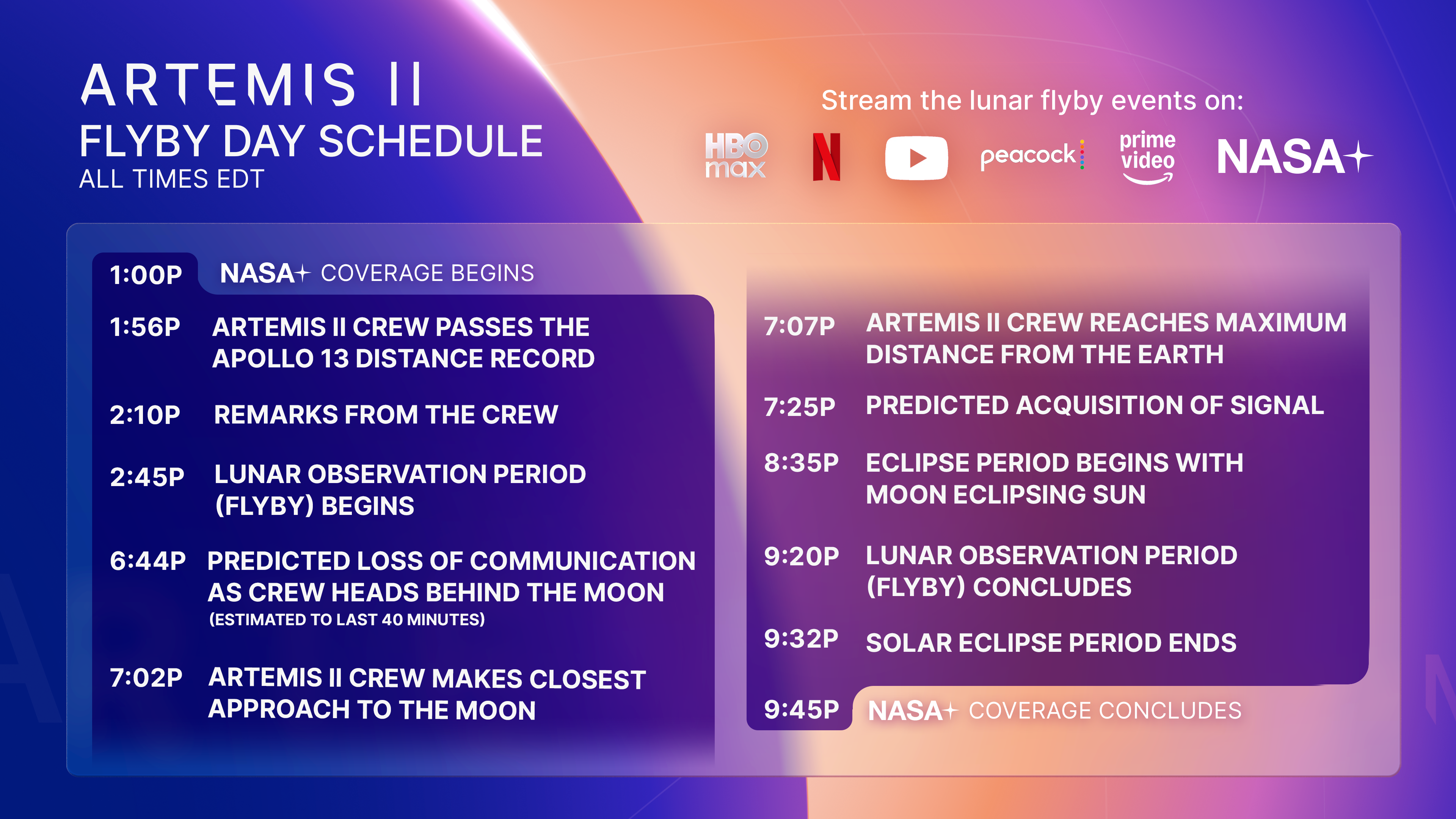
Monday, April 6
- 1:30 p.m.: The science officer in the Mission Control Center at NASA’s Johnson Space Center in Houston will brief the crew on their science goals for the upcoming flyby.
- 1:56 p.m.: The Artemis II crew is expected to surpass the record previously set by the Apollo 13 crew in 1970 for the farthest humans have ever traveled from Earth.
- 2:45 p.m.: Lunar observations begin.
- 6:44 p.m.: Mission control expects to temporarily lose communication with the crew as the Orion spacecraft passes behind the Moon.
- 6:45 p.m.: During “Earthset,” Earth will glide behind the Moon from Orion’s perspective.
- 7:02 p.m.: Orion reaches its closest approach to the Moon at 4,070 miles above the surface.
- 7:07 p.m.: Crew reach their maximum distance from Earth during the mission (252,706 miles).
- 7:25 p.m.: “Earthrise” marks Earth coming back into view on the opposite edge of the Moon.
- 7:25 p.m.: Mission control will re-acquire communication with the astronauts.
- 8:35-9:32 p.m.: During a solar eclipse, the Sun will pass behind the Moon from the crew’s perspective.
- 9:20 p.m.: Lunar observations conclude.
Quelle: NASA
+++
Artemis II crew capture new photo of far side of the moon
The crew of NASA's Artemis II mission captured a new photo of the far side of the moon on Saturday, on the fourth day of the astronauts' lunar journey.
NASA released the image on Sunday. In it, the moon is oriented upside down, with its South Pole facing upward and parts of its far side visible, according to the agency's description. The Orientale basin, a massive crater that's hard to see from Earth, is situated along the right edge of the moon in the latest picture, NASA said, adding that the Artemis II voyage marks the first time humans have ever seen the basin in full.
The Orientale basin will be an ongoing subject of study for members of the Orion spacecraft's four-person crew, which includes commander Reid Wiseman, pilot Victor Glover, and mission specialists Christina Koch and Jeremy Hansen.
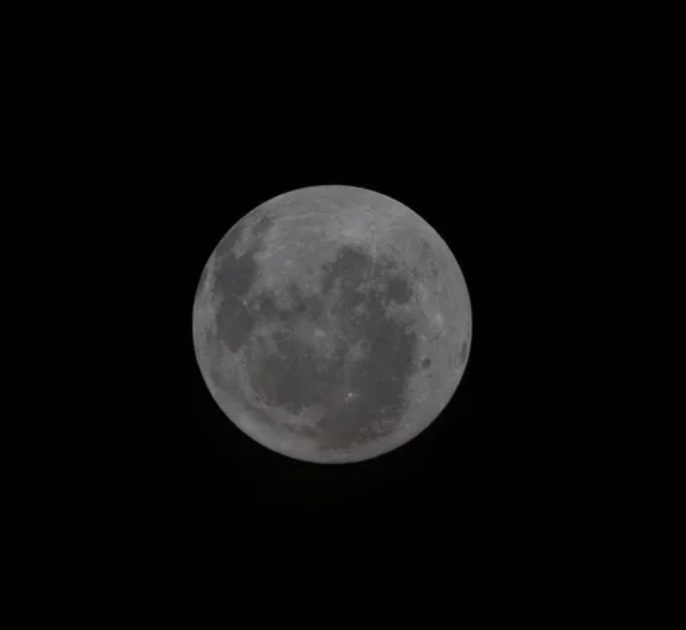
"The Artemis II crew will continue to observe Orientale from multiple angles as they approach the Moon and throughout the lunar flyby," said NASA. The agency noted how the basin can be "used as a baseline to compare other impact craters on rocky worlds from Mercury to Pluto."
The Artemis II mission lifted off from Cape Canaveral, Florida, last week, in the first piloted moonshot since the Apollo program more than 50 years ago. It is meant to be a test flight that sets the stage for future missions that return astronauts to the moon.
On "Face the Nation with Margaret Brennan" Sunday, NASA Administrator Jared Isaacman underscored that collecting data observations and data is the mission's primary goal right now.
"We want to gather as much data as we possibly can for that," he said. "Of course, there's various science experiments, there's lunar observations, but learning as much as we can about Orion is critically important, because Artemis III is a year away."
Artemis II was about 64,000 miles from the Moon on Sunday, according to NASA. A mission status update shared just before 12:30 p.m. ET said the crew had recently woken up for the fifth day of their flight to the song "Working Class Heroes (Work)" by CeeLo Green. A flight controller sitting in mission control "was seen briefly dancing in his chair" to the wakeup call, it said.
Later on Sunday, Artemis II is due to enter the lunar sphere of influence, which is the point where the pull of the Moon's gravity becomes stronger than the pull of the Earth's. The crew will have a full day to test their spacesuits and conduct other flight tests as they move toward the moon. NASA will host a televised briefing about the mission Sunday evening from the Johnson Space Center.
Early Monday, NASA said Artemis II officially entered the lunar sphere of influence at 12:38 a.m. EDT. The moon, rather than Earth, was the main gravitational force acting on the Orion spacecraft.
Quelle: CBS News
+++
Update: 20:20 MESZ
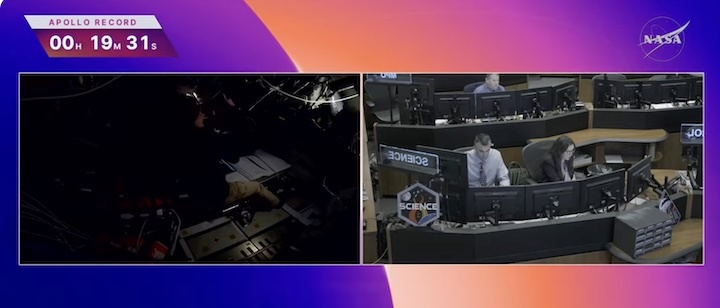
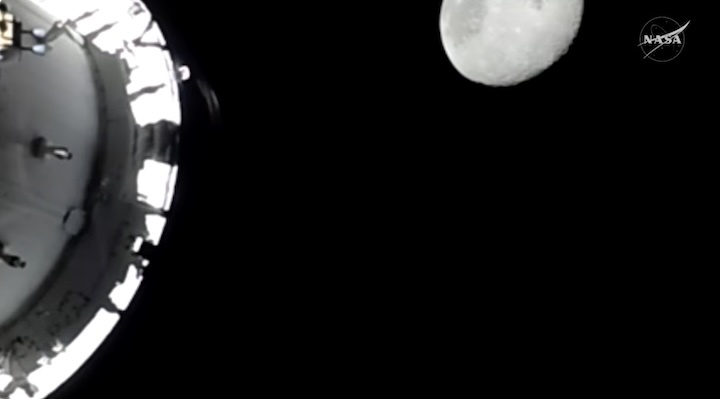
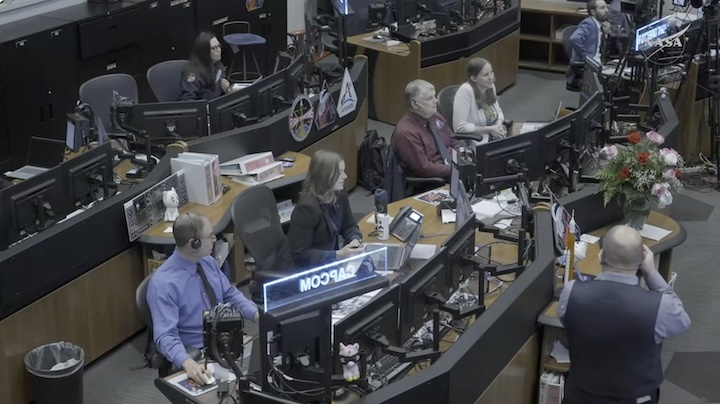
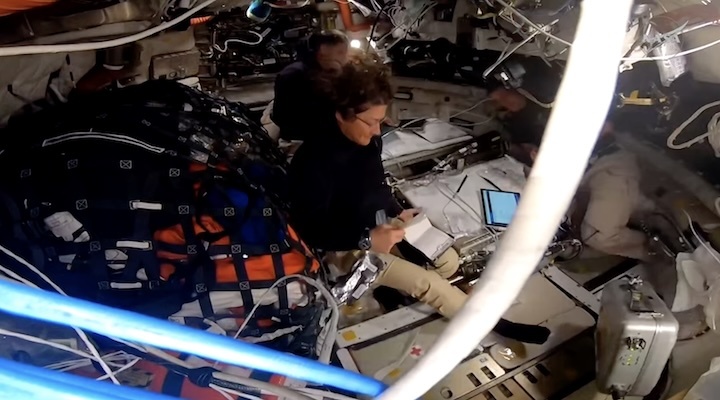
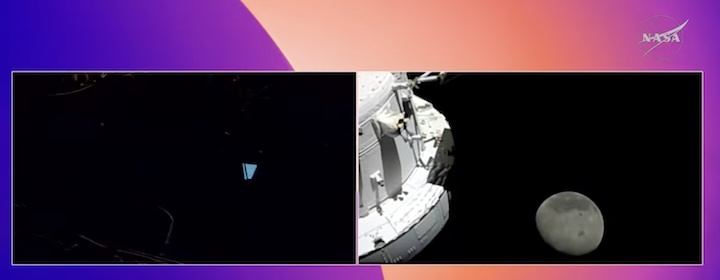
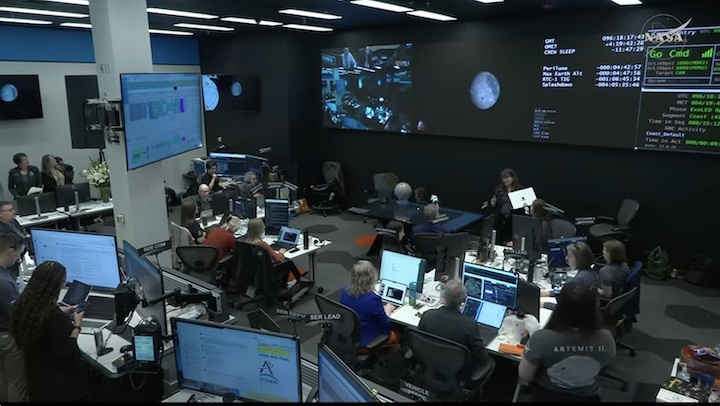
NASA’s Artemis II Crew Flies Around the Moon (Official Broadcast)
Quelle: NASA