6.04.2026

NASA Answers Your Most Pressing Artemis II Questions


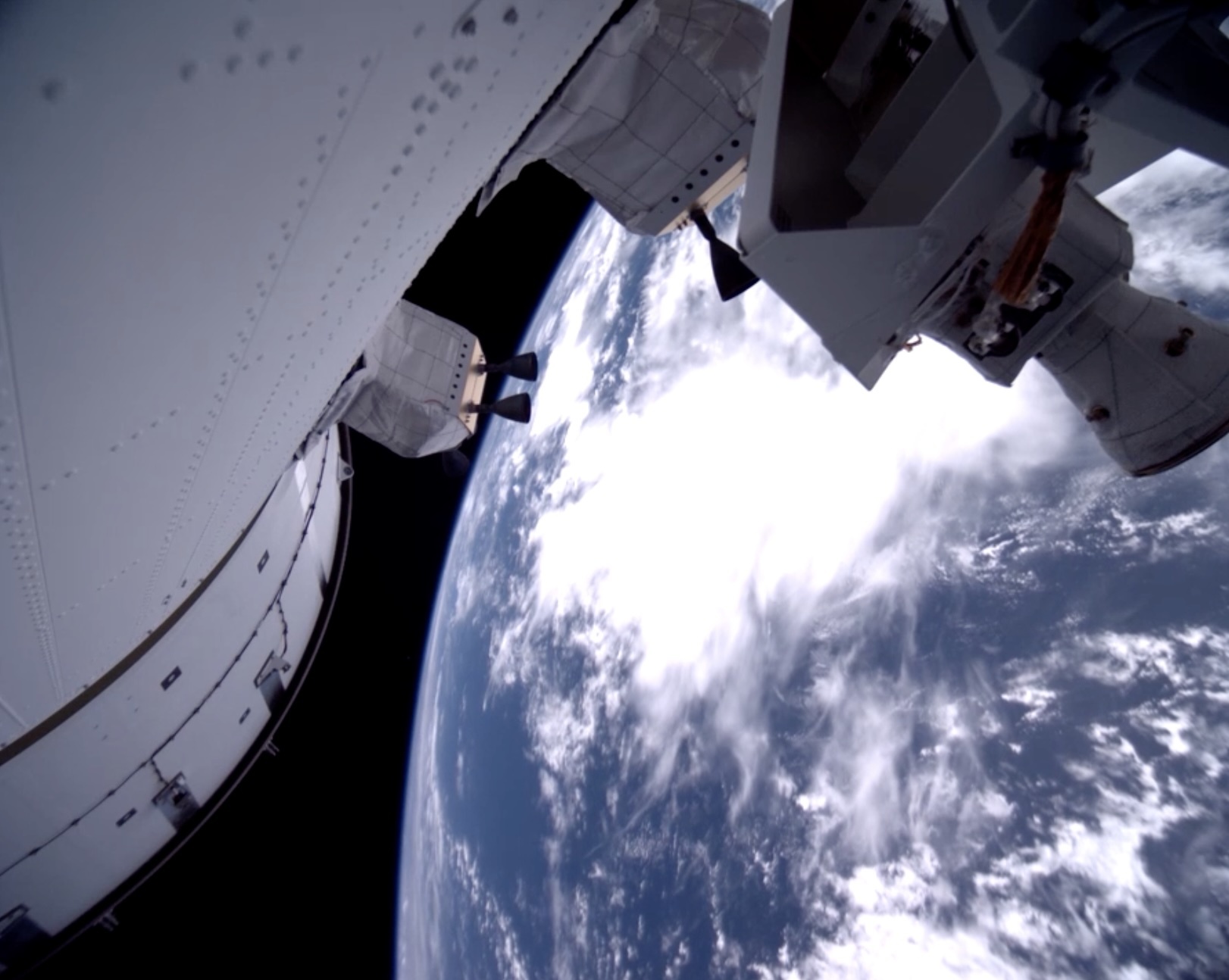
Home, Seen From Orion.

The first crewed test flight under NASA’s Artemis program is underway. Four Artemis IIastronauts are flying aboard NASA’s Orion spacecraft around the Moon and back, as they test how the spacecraft’s systems operate in a deep space environment.
NASA astronauts Reid Wiseman, Victor Glover, and Christina Koch, and CSA (Canadian Space Agency) astronaut Jeremy Hansen lifted off at 6:35 p.m. EDT on April 1 from launch pad 39B at the agency’s Kennedy Space Center in Florida.
Real-time coverage continues throughout the mission on NASA’s YouTube channel. The agency also provides a separate live stream of views from the Orion spacecraft as bandwidth allows, as well as inside the capsule. In addition NASA is providing the latest mission imagery online.
Daily mission status briefings are held live from the agency’s Johnson Space Center in Houston through splashdown, except for Monday, April 6, due to lunar flyby activities. A list of activitiesis regularly updated online.
The crew are participating in live conversations throughout the mission, which were scheduled prior to their departure from Earth. NASA will provide the exact times of each of these downlink events, as well as the latest mission coverage, on the Artemis blog.
To track Orion in space, visit: nasa.gov/trackartemis
Frequently Asked Questions (all times Eastern):
How long is the Artemis II mission? NASA’s Artemis II mission is an approximately 10-day journey around the Moon including launch, a lunar flyby, and a safe splashdown off the coast of San Diego.
How far will Artemis II travel? Crew is expected to travel a total of 695,081 miles from launch to splashdown. The spacecraft will pass within 4,066 miles of the lunar surface during its closest approach and will reach a maximum distance of 252,757 miles from Earth, about 4,102 miles farther than Apollo 13.
When and where will the Artemis II crew and Orion spacecraft splashdown?
The location and time of our Artemis II splashdown will continue to shift as mission milestones are reached. In the days leading up to splashdown, updates will be available on NASA’s website and in our daily news conferences. Mission media events are available on the agency’s website.
NASA’s Artemis II mission is scheduled to splash down off the coast of San Diego at approximately 8:07 p.m. EDT (5:07 p.m. PDT) on Friday, April 10. Following splashdown, recovery teams will retrieve the crew using helicopters and deliver them to the USS John P. Murtha. Once aboard, the astronauts will undergo post-mission medical evaluations in the ship’s medical bay before traveling back to shore to meet with an aircraft bound for NASA’s Johnson Space Center in Houston.
What is the crew doing on this mission? Artemis II astronauts are putting the Orion spacecraft through a series of planned tests to evaluate systems, procedures, and performance in deep space. They will conduct manual spacecraft operations and monitor automated activities; evaluate Orion’s life-support, propulsion, power, thermal, and navigation systems; perform proximity operations activities; assess habitability and crew interfaces; and participate in science activities, including lunar surface observations and human health studies, that will inform science operations on future Moon missions. They also will practice mission-critical activities, including trajectory adjustments, communications at lunar distances, and piloting Orion during key phases of flight, culminating in a re-entry and splashdown to further validate the spacecraft’s performance with crew aboard.
What can we expect to see during lunar flyby? All times are subject to change. Here’s a rough schedule of activities:
- Live coverage begins at 1 p.m., and continues through 9:45 p.m.
- 1:30 p.m.: NASA hosts a conversation between the crew and the science officer in NASA’s Mission Control Center at the agency’s Johnson Space Center in Houston, to go over the objectives and timeline for the flyby.
- Because the Sun’s angle on the Moon shifts by about one degree every two hours, the crew could not know the exact lighting conditions to expect on the lunar surface until after launch. This briefing provides one final opportunity to review details before the flyby begins.
- 7:05 p.m.: The Artemis II crew is expected surpass the record previously set by the Apollo 13 crew in 1970 for the farthest humans have ever traveled from Earth.
- The Apollo 13 crew traveled 248,655 miles from Earth; Artemis II will reach a maximum distance of 252,757 miles from Earth, surpassing the record by about 4,102 miles. The crew is expected to make remarks on the milestone around 2:10 p.m.
- 2:45 p.m.: The seven-hour lunar observation period begins. Crew will see both the near and far sides of the Moon as the observation period begins.
- Because room at Orion’s windows is limited, the crew will divide into pairs, with two crew members observing for 55 to 85 minutes, while the other pair exercises or works on other tasks.
- 6:47 p.m.: Mission control expects to temporarily lose communication with the crew as Orion passes behind the Moon.
- 7:02 p.m.: Astronauts will make their closest approach to the Moon, the reach its farthest point from Earth at 7:05 p.m.
- At this distance, the Moon will appear to the astronauts about the size of a basketball held at arm’s length. They also may be the first humans to see some parts of the Moon’s far side with the unaided eye.
- 7:27 p.m.: NASA’s Mission Control Center should re-acquire communication with the astronauts.
- 9:20 p.m.: The flyby observation period wraps, and crew will begin transferring some of the imagery to the ground. NASA’s science team will review the images and observations overnight, and then discuss with crew the following day, while the experience is still fresh.
Why do we need astronauts to view the Moon when we have robotic observers? Human eyes and brains are highly sensitive to subtle changes in color, texture, and other surface characteristics. Having astronaut eyes observe the lunar surface directly, in combination with the context of all the advances that scientists have made about the Moon over the last several decades, may uncover new discoveries and a more nuanced appreciation for the features on the surface of the Moon.
Though the crew will not be able to downlink all their imagery before they return to Earth, as much as possible will be made available on the Artemis II Multimedia website. Additional imagery will also be added as it is processed following splashdown.
What do the astronauts eat during the mission? The Artemis II crew has access to 189 unique menu items during their mission, including 10 different beverages like coffee and smoothies. Common food items include tortillas, nuts, barbeque beef brisket, cauliflower, macaroni and cheese, butternut squash, cookies, and chocolate. Food flying aboard Artemis II is designed to support crew health and performance during the mission around the Moon. Menu selections are developed with space food experts and the crew to balance calorie needs, hydration, and nutrient intake while accommodating individual preferences. For more information about their menu, visit here.
What are the goals of the Artemis II Mission? The Artemis II test flight will confirm the systems necessary to support astronauts in deep space exploration and prepare to establish a sustained presence on the Moon. The primary goal of Artemis II is a crewed test flight in lunar space. There are five main additional priorities for Artemis II:
- Crew: Demonstrate the ability of systems and teams to sustain the flight crew in the flight environment, and through their return to Earth.
- Systems: Demonstrate systems and operations essential to a crewed lunar campaign. This ranges from ground systems to hardware in space, and operations spanning from development to launch, flight, and recovery.
- Hardware and Data: Retrieve flight hardware and data, assessing performance for future missions.
- Emergency Operations: Demonstrate emergency system capabilities and validate associated operations to the extent practical, such as abort operations and rescue procedures, as needed.
- Data and Subsystems: Complete additional objectives to verify subsystems and validate data.
Can I talk to the crew aboard Orion during their mission? During their mission, crew will participate in several live and taped downlinks with news outlets, administration officials, and more. These opportunities were allocated prior to their launch. A schedule of these events is available on the agency’s website.
What is the Artemis II zero-gravity indicator and how was it selected? NASA’s Artemis II crew selected Rise as their zero-gravity indicator for the mission. A zero-gravity indicator is a small plush item that flies along with a crew to visually indicate when they are in space. Rise was designed by Lucas Ye from Mountain View, California, as a tribute to the iconic Earthrise moment from the Apollo 8 mission, which deeply resonated with the crew. Rise was fabricated by NASA’s Thermal Blanket Lab at the Goddard Space Flight Center in Greenbelt, Maryland. NASA worked with the company Freelancer to hold a Moon Mascot Design Challenge to design the zero-gravity indicator for Artemis II, which drew more than 2,600 submissions from more than 50 countries, including from K-12 students.
How many cameras are installed on the Orion spacecraft? Orion is carrying 32 cameras and devices, including any instrument with a lens capable of capturing photos or video, inside or on the exterior of the vehicle. The systems support engineering, navigation, crew monitoring, and a range of lunar science and outreach activities. Fifteen cameras are mounted directly to the spacecraft, and 17 are handheld cameras operated by the crew.
Artemis Program FAQs
Artemis II will travel around the Moon but will not land on its surface. Why is this mission so important? The Artemis II test flight is NASA’s first crewed Artemis mission. Astronauts on their first flight aboard NASA’s Orion spacecraft will confirm the spacecraft’s systems operate as designed with crew aboard in the actual environment of deep space. The unique Artemis II mission profile builds on the uncrewed Artemis I flight test by demonstrating a broad range of SLS (Space Launch System) and Orion capabilities needed on deep space missions. This mission will verify Orion’s life support systems can sustain astronauts on longer-duration missions ahead and allow the crew to practice operations essential to Artemis III and beyond.
What is the next mission for NASA’s Artemis program and the agency? NASA is aligning agencywide initiatives to achieve President Donald J. Trump’s National Space Policy and advance American leadership in space. During an Ignition event on March 24 at the agency’s headquarters in Washington. Among the updates, NASA is prioritizing the Artemis program launch cadence, a robust U.S. presence in low Earth orbit, the creation of a Moon Base, breakthrough science, space nuclear power and propulsion, and investment in the NASA workforce to deliver on the agency’s mission with urgency. Learn more on the agency’s website: https://www.nasa.gov/ignition.
Quelle: NASA
+++
Artemis II Flight Day 4: Crew Completes Manual Piloting Demonstration
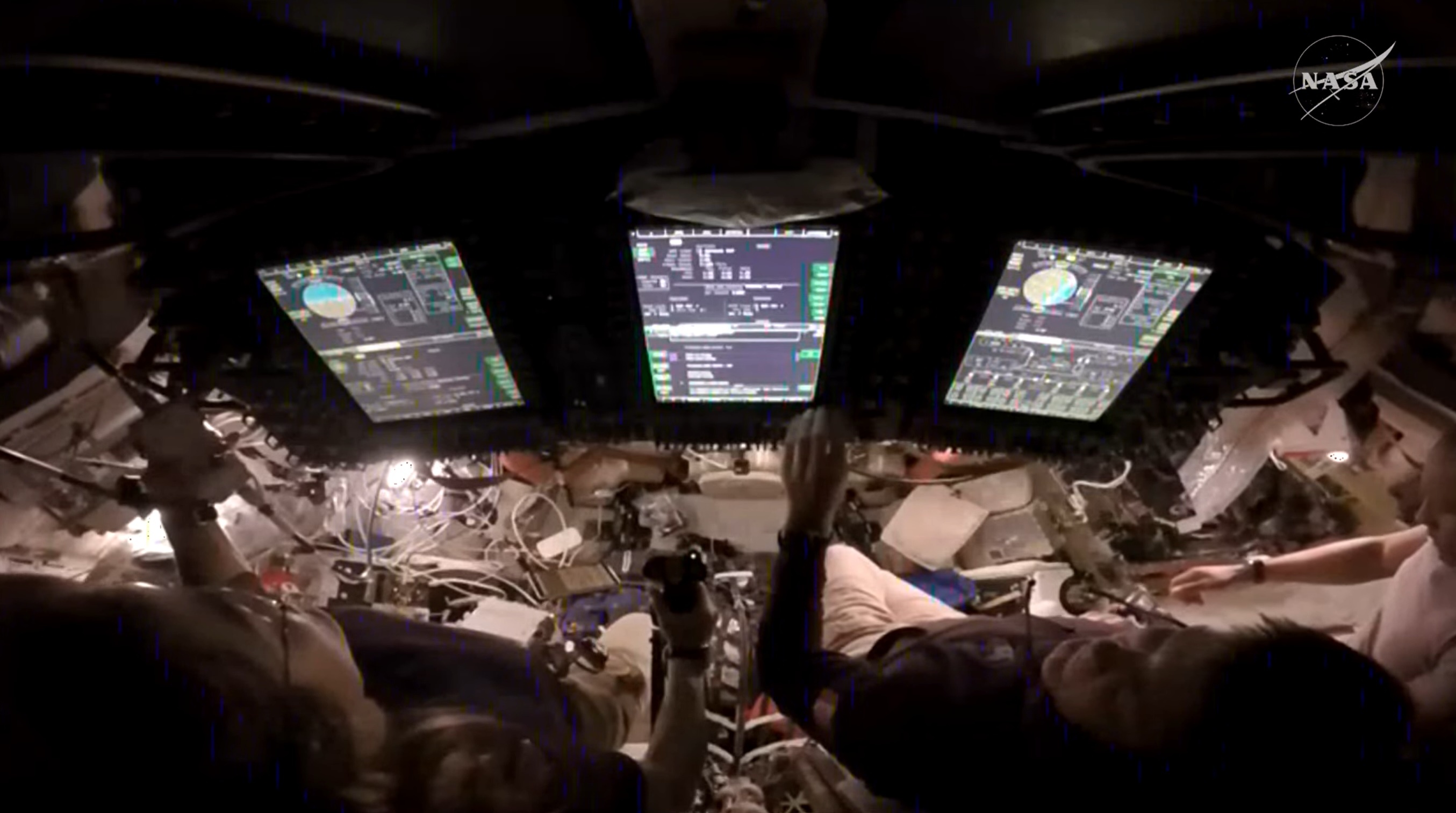
NASA’s Artemis II crew in Orion completed a manual piloting demonstration and reviewed their lunar flyby plan to wrap up their third full day in space.
NASA astronaut Christina Koch and CSA (Canadian Space Agency) astronaut Jeremy Hansen took turns controlling the spacecraft to test its performance in deep space starting at 9:09 p.m. EDT. For 41 minutes, the pair tested two different thruster modes, six degrees of freedom and three degrees of freedom, to provide engineers with more data about the spacecraft’s piloting capabilities. Commander Reid Wiseman and Pilot Victor Glover are scheduled to repeat the demo on flight day 8 – Wednesday, April 9 – to give the teams on the ground as many perspectives on the spacecraft as possible.
Lunar imaging targets received by crew
Over the course of the day, the crew also reviewed a list sent by the lunar science team of surface features on the Moon that they will photograph and analyze during their six-hour flyby on Monday, April 6. The flyby period begins at 2:45 p.m. April 6, when Orion’s main cabin windows will be pointed toward the Moon.
Earlier in the day, the Moon-bound quartet also took some crew selfies using one of Orion’s solar array wing cameras. The images should be sent to the ground in the coming days.
The Artemis II crew is scheduled to go to sleep for the night at 3:15 a.m.; Mission Control will wake them to begin flight day 5 at noon on Sunday, April 5.
View the latest imagery from the Artemis II mission on our Artemis II Multimedia Resource Page. Please follow @NASAArtemis on X, Facebook, and Instagram for real-time updates. Live coverage of the mission is available on NASA’s YouTube channel.
Quelle: NASA
+++
Artemis II Flight Day 4: Deep-Space Flying, Lunar Flyby Prep
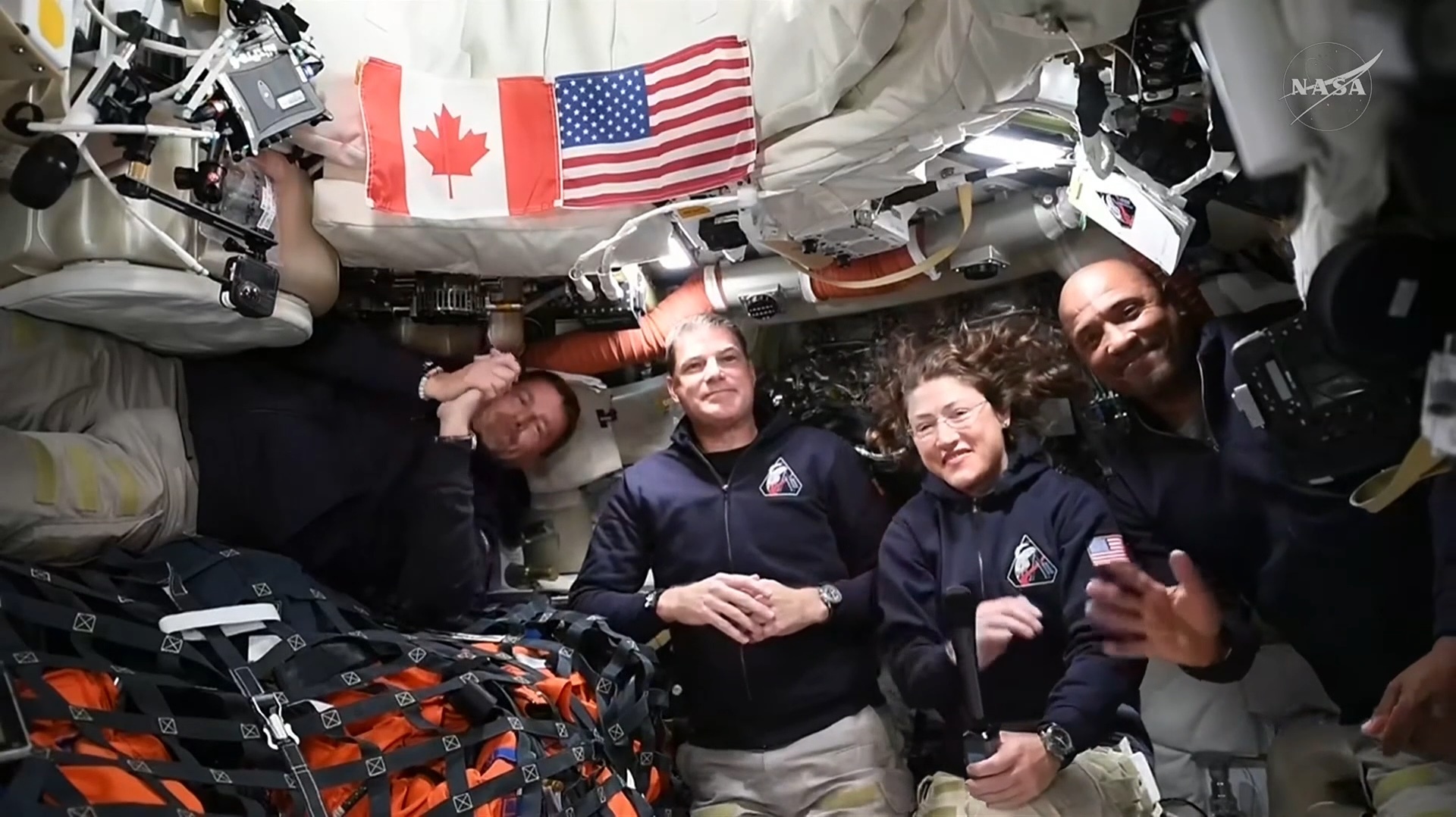
As the Orion spacecraft continues its path toward the Moon, the Artemis II crew will spend their fourth flight day preparing for their lunar flyby on Monday, April 6.
The crew of NASA astronauts Reid Wiseman, Victor Glover, Christina Koch, and CSA (Canadian Space Agency) astronaut Jeremy Hansen, began their day in space to the tune of Chappell Roan’s “Pink Pony Club,” before transitioning into their daily activities.
At wakeup, the spacecraft and its crew were approximately 169,000 miles from Earth and approaching the Moon at 110,700 miles.
View the updated mission schedule for the lunar flyby here.
Taking control of Orion in deep space
Later Saturday, Glover will take manual control of the spacecraft to test its performance in deep space to provide more data about the spacecraft’s handling qualities across different movements. The demonstration is scheduled for 9:10 p.m.
A 24-hour acoustics test also will occur to help engineers characterize the sound environment in the spacecraft.
Crew prepares to study lunar surface
After the piloting demonstration, the crew will review a list of the surface features the NASA science team has asked them to analyze and photograph during their six-hour flyby on Monday, April 6. The flyby period begins at 2:45 p.m., when Orion’s main cabin windows will be pointed toward the Moon and the Artemis II crew will be close enough to make scientific observations.
The crew will see the Moon from a unique vantage point compared with the Apollo missions, which flew about 70 miles above the surface. Orion will fly 4,066 miles away at closest approach at approximately 7:02 p.m. From that distance, the crew will see the entire disk of the Moon at once, including regions near the north and south poles.
As they pass the Moon, the crew will apply geology skills learned in the classroom and in Moon-like environments on Earth to photograph and describe features including impact craters, ancient lava flows, and surface cracks and ridges formed as the Moon slowly changed over time. They will note differences in color, brightness, and texture, which provide clues that help scientists understand what the surface is made of and how it formed.
Toward the end of the flyby, the crew will observe a solar eclipse from space as Orion, the Moon, and the Sun align in such a way that the astronauts will see our star disappear behind the Moon for about an hour. During this period, the crew will see a mostly dark Moon. They will use the opportunity to analyze the solar corona — the Sun’s outermost atmosphere — as it peeks out from the edge of the Moon. The crew also will look for flashes of light from meteoroids if they strike the surface to gather insight on potential surface hazards.
In addition to the flyby, the spacecraft is expected to surpass the Apollo 13 distance record by 4,102 miles and will reach its maximum distance from Earth at 7:05 p.m., a total of 252,757 miles from the planet. Apollo 13’s trajectory around the Moon carried its crew 248,655 miles from Earth.
Far side communications
When Orion passes behind the Moon, the mission will experience a planned communications blackout beginning at approximately 5:47 p.m. and lasting 40 minutes. During this time, the Moon blocks the radio signals between the Deep Space Network (DSN) and the spacecraft.
Similar blackouts occurred during the Artemis I and Apollo missions and are expected when using an Earth-based communications infrastructure. Once Orion reemerges from behind the Moon, the DSN quickly reacquires its signal and restores contact with mission control.
Characterizing deep space environment and life
In addition to preparing for the lunar flyby, Artemis II includes several payloads and activities designed to help NASA understand how spacecraft systems, the crew, and biological samples respond to the deep space environment.
The AVATAR payload is carrying bone marrow cells derived from crew blood samples and will help researchers study how the human immune system reacts to deep space. The payload is operating as expected. The immune biomarkers activity will provide further insights, and the crew is scheduled to collect saliva samples today. Additionally, the German Space Agency (DLR) provided multiple M-42 radiation sensors that are installed inside Orion. The sensors, along with NASA’s own radiation measurements, are helping characterize radiation levels throughout the spacecraft. Finally, the crew is wearing actigraphy devices — small, watchlike sensors that gather health-related data — and answering periodic questions about conditions aboard Orion. These Standard Measures, combined with the actigraphy data (ARCHER), will help NASA improve crew efficiency on future missions.
Clearing vent line
Flight controllers in the Mission Control Center at NASA’s Johnson Space Center in Houston again have cancelled another planned outbound trajectory correction (OTC) burn, as Orion’s trajectory remains on track. The team will instead adjust the spacecraft’s attitude to point the vent toward the Sun to help clear a wastewater vent line. This change in the OTC burn schedule does not impact the current trajectory of the Orion spacecraft.
Overnight, controllers vented wastewater overboard to free up space in Orion’s waste management system tank, but the activity ended earlier than expected. Engineers have been using the vent heaters to melt any potential ice that may be clogging the line and orienting the vent toward the Sun to help mitigate the issue. Teams also are reviewing other potential causes. The wastewater tank is not full and the toilet is operational; however, the crew was instructed to use backup collection devices overnight if needed.
Optical communications demo surpasses 100 GB
Just after 12 p.m. EDT, the Orion Artemis II Optical Communications System surpassed 100 gigabytes of data downlinked during the mission, including high resolution images. The terminal, mounted on the outside of the Orion capsule, uses laser communications — infrared light — to transmit more data than traditional radiofrequency systems. Demonstrations like this highlight the potential of laser communications for missions to the Moon as operations become more complex and future crewed missions to Mars and beyond.
Artemis II Flight Day 5: Crew Starts Day with Suit Demo

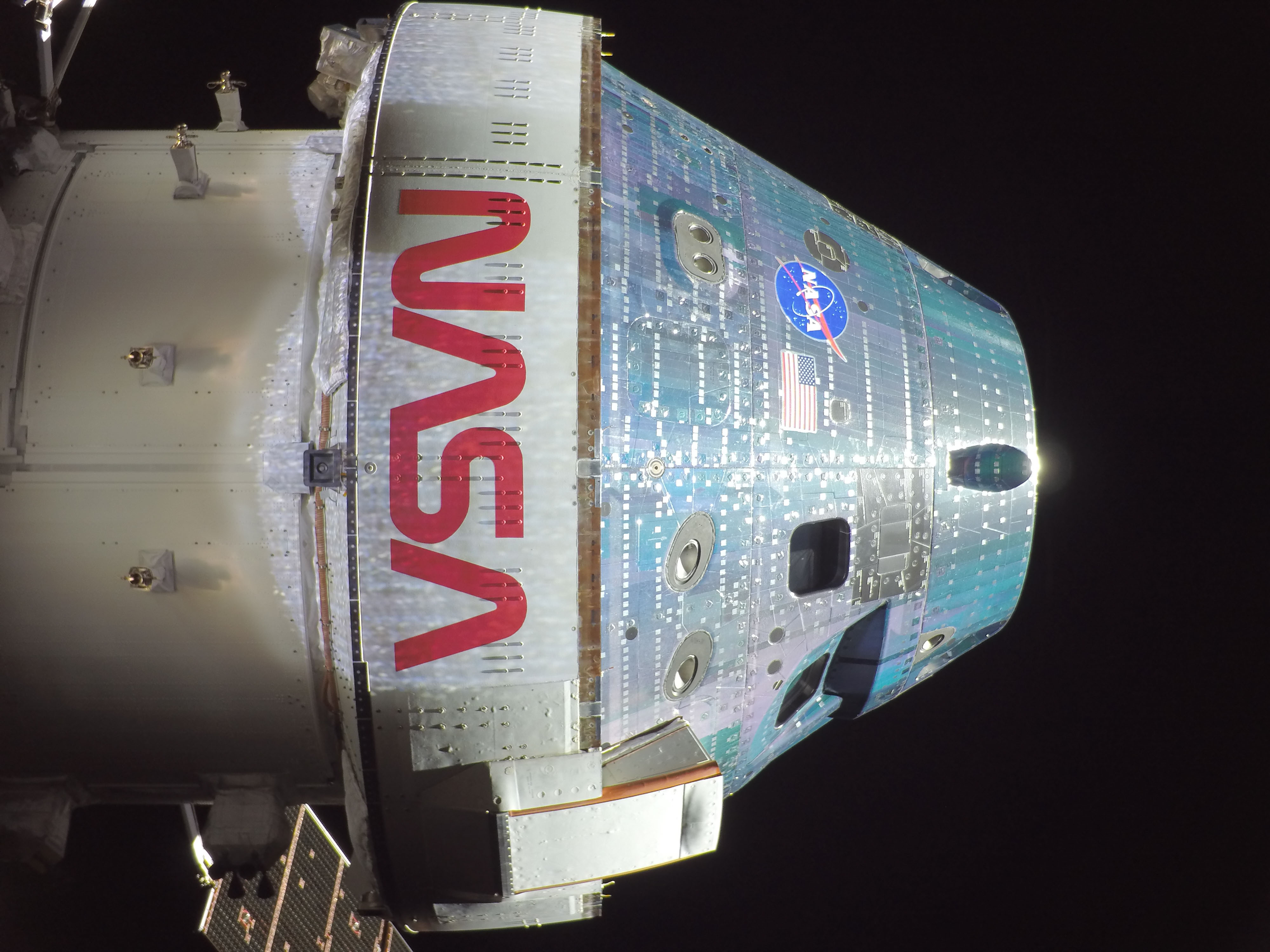
The morning opened to the beat of “Working Class Heroes (Work)” by CeeLo Green as the Artemis II crew, now flying about 65,235 miles from the Moon, began preparations for their first test objective of the day: an evaluation of the Orion Crew Survival System suit. The crew also heard a special message from Apollo astronaut Charlie Duke.
John Young and I landed on the Moon in 1972 in a lunar module we named Orion. I’m glad to see a different kind of Orion helping return humans to the Moon as America charts the course to the lunar surface. Below you on the Moon is a photo of my family. I pray it reminds you that we and America and all of the world are cheering you on.

CHARLIE DUKE
Apollo 16 Astronaut
NASA astronauts Reid Wiseman, Victor Glover, and Christina Koch, along with CSA (Canadian Space Agency) astronaut Jeremy Hansen, will conduct a full sequence of suit operations, including putting on and pressurizing their suits, performing leak checks, simulating seat entry, and assessing mobility and their ability to eat and drink.
The suits are designed to protect astronauts during dynamic phases of flight, provide life support in the event of cabin depressurization, and support survival operations after splashdown. The demonstration offers insight into how the suit performs during extended wear in microgravity and how its enhanced mobility, thermal management, and communication systems support crew operations during Artemis missions.
Later today, the crew will perform an outbound trajectory correction burn, receive their final lunar science targets, and enter the Moon’s gravitational sphere of influence. Mission managers and NASA science experts also will hold a daily mission status briefing at 5:30 p.m. on the agency’s YouTube channel.
Quelle: NASA
+++
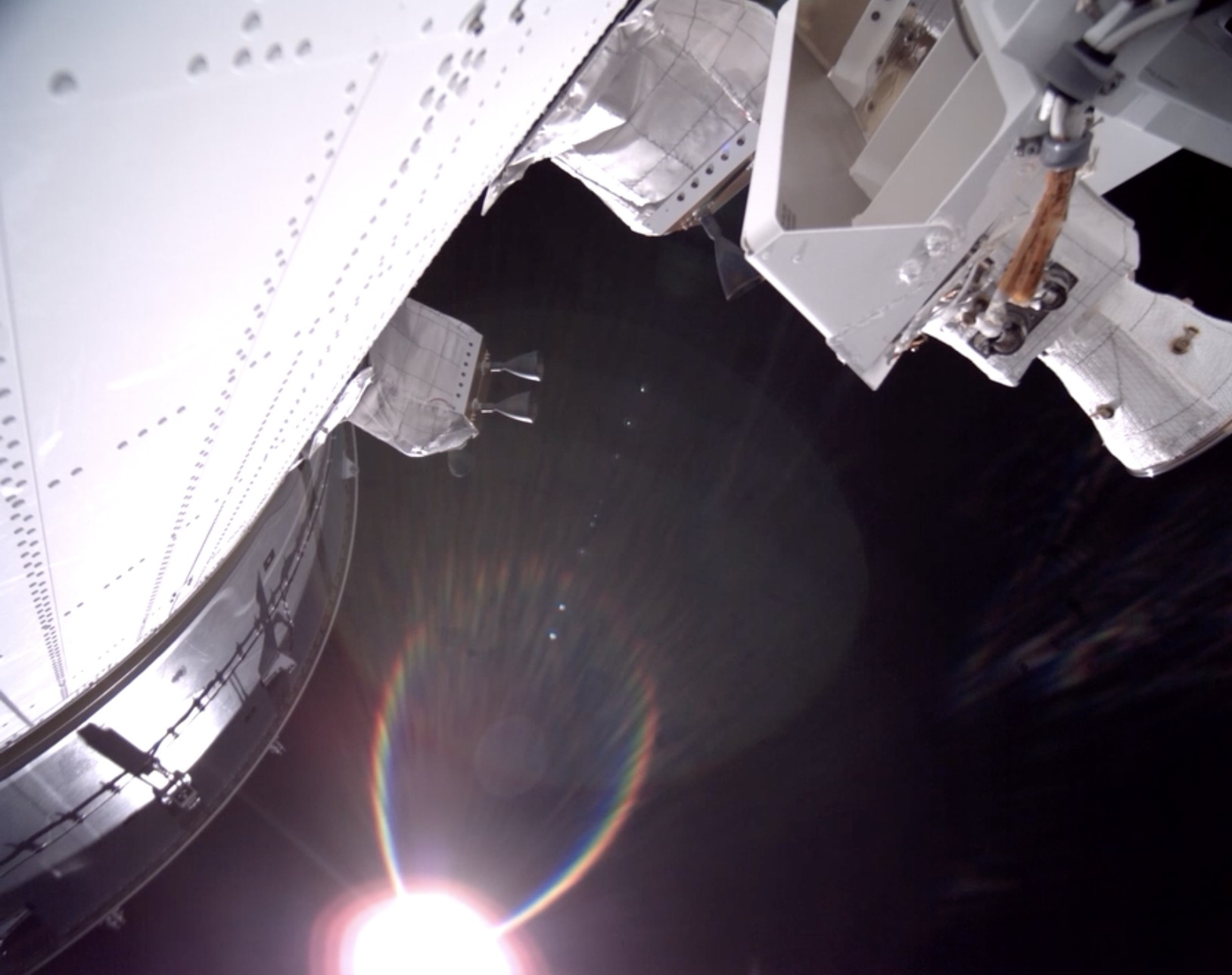
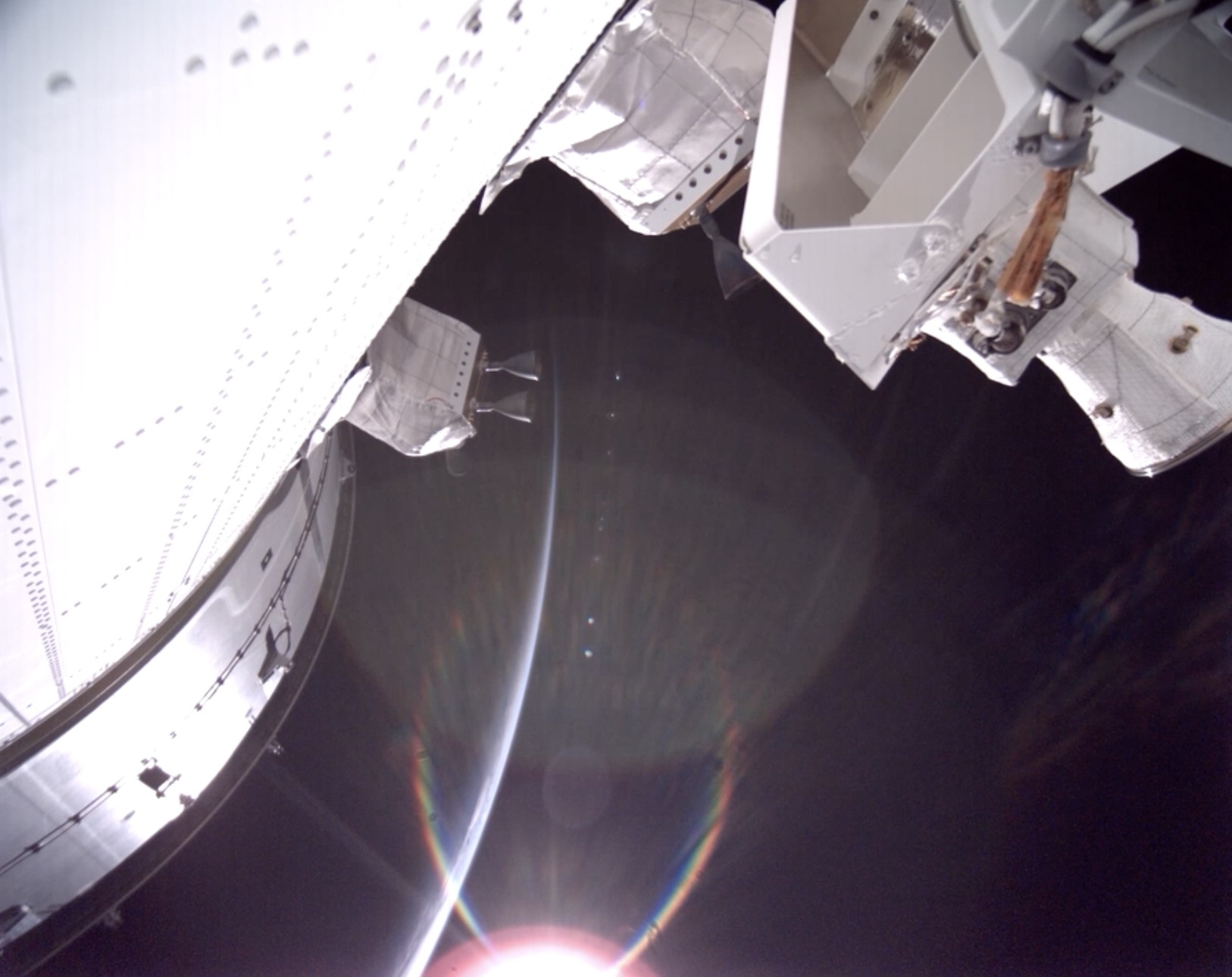
Orion Camera Views of Artemis II Apogee Raise Burn