
17.03.2026
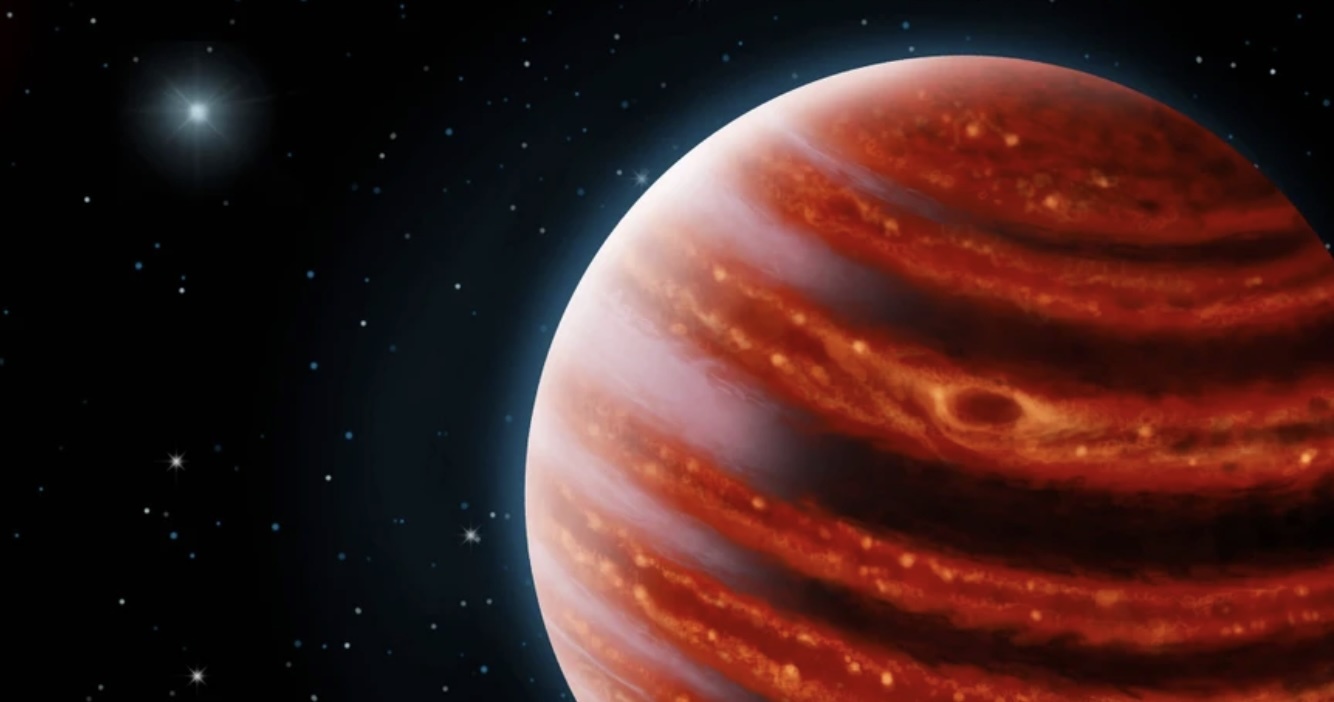
Astronomers have identified a new class of planet after spotting an exoplanet with large amounts of sulphur stored deep within a permanent ocean of magma.
Exoplanet L 98-59 d orbits a red dwarf star about 35 light-years from Earth.
New analysis of the planet’s make up and chemical signatures are published today in the journal Nature Astronomy.
The planet is about 1.6 times larger than Earth.
The examination of L 98-95 d is based on recent observations by the James Webb Space Telescope and ground-based telescopes.
Analysis indicates it has an unusual set of characteristics.
The planet has a strangely low density given its size. This trait would have previously led astronomers to suggest that the planet belongs to a familiar category of exoplanet: water worlds made up of deep oceans and ice.
Its atmosphere also has significant amounts of hydrogen sulphide. This trait alone would have previously suggested the planet is a rocky “gas-dwarf” planet with a hydrogen-rich atmosphere.
But taken together, the 2 traits don’t fit into any known category. L 98-59 d, therefore, is the first example of an entirely different class of planet which contains heavy sulphur molecules, according to computer simulations.
The team simulated the planet’s formation and 5-billion-year history to reach that conclusion.
Their results reveal that the mantle of L 98-59 d is likely molten silicate similar to lava on Earth. The planet is probably covered by a magma ocean thousands of kilometres deep.
This vast molten reservoir stores large amounts of sulphur deep within the planet and helps retain a thick hydrogen-rich atmosphere which would normally be lost to space over time due to radiation from the host star.
“What’s exciting is that we can use computer models to uncover the hidden interior of a planet we will never visit,” says co-author Raymond Pierrehumbert from the University of Oxford, UK.
“Although astronomers can only measure a planet’s size, mass and atmospheric composition from afar, this research shows that it is possible to reconstruct the deep past of these alien worlds – and discover types of planets with no equivalent in our own solar system.”
“Our computer models simulate various planetary processes, effectively enabling us to turn back the clock and understand how this unusual rocky exoplanet, L 98-59 d, evolved,” adds Richard Chatterjee from the University of Leeds and Oxford.
“Hydrogen sulphide gas, responsible for the smell of rotten eggs, appears to play a starring role there. But, as always, more observations are needed to understand this planet and others like it. Further investigation may yet show that rather pungent planets are surprisingly common.”
Quelle: CONNECTSCI