
17.03.2026
India’s satellite navigation system, NavIC, or Navigation with Indian Constellation, —often referred to as the country’s indigenous GPS—is currently functioning below its optimal capability. Only three satellites are fully operational for navigation services, and their signals may not be available continuously throughout the day, experts said.
IRNSS-1F’s Atomic Clock Fails
On March 13, 2026, the Indian Space Research Organisation (ISRO) announced in a brief statement that the IRNSS-1F satellite had completed its design mission life of 10 years on 10th March 2026. IRNSS stands for Indian Regional Navigation Satellite System, the original name of the constellation later rebranded as NavIC.
According to ISRO, the onboard atomic clock of IRNSS-1F stopped functioning on 13th March 2026. The agency stated that although the clock has failed, the satellite will continue to operate in orbit to support certain societal applications, particularly one-way broadcast messaging services.
However, what remains unstated is that NavIC is currently unable to perform its core function effectively.
Experts note that at least four satellites are required to deliver accurate Position, Navigation and Timing (PNT) signals. NavIC is designed to provide precise PNT services across India and a region extending roughly 1,500 km beyond the country’s landmass.
ISRO says NavIC offers two categories of services:
- Standard Positioning Service (SPS) for civilian users
- Restricted Service (RS) intended mainly for strategic and defence applications.
NavIC satellites plagued with issues
Out of the 11 navigation satellites launched so far, only three are presently providing PNT services.
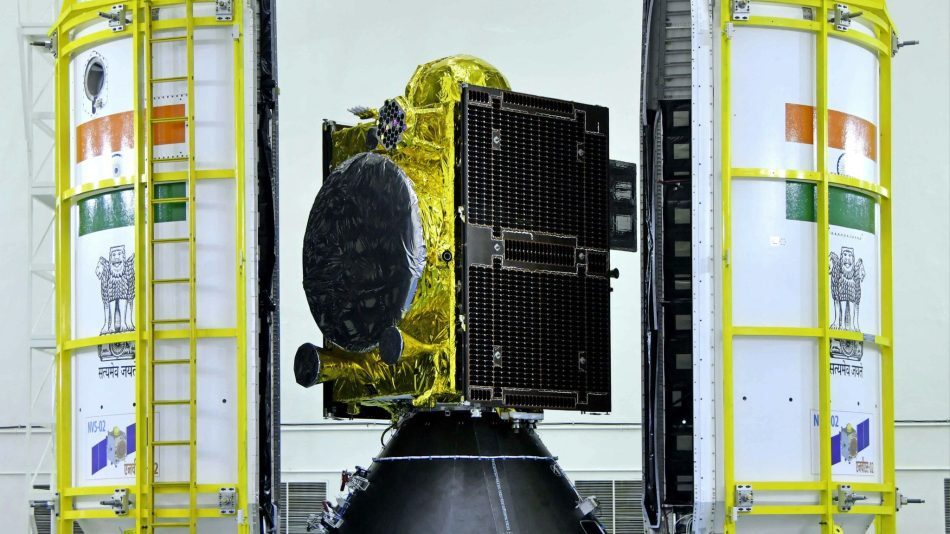
Five satellites are being used for messaging services, one has been completely lost, the mission life of IRNSS-1F has ended, and ISRO is still exploring ways to utilize the NVS-02 satellite, which became stuck in a geosynchronous transfer orbit (GTO).
Currently, IRNSS-1B, IRNSS-1I, and NVS-01 are the only satellites fully operational for navigation services.
It remains uncertain how long IRNSS-1B, launched in 2014, and IRNSS-1I, launched in 2018, will continue to function given the atomic clock reliability issues seen in the first generation of navigation satellites.
Industry experts say that for NavIC to deliver its full capabilities, India must maintain a constellation of at least seven satellites at all times. They also stress that satellites should be launched at shorter intervals rather than several years apart.
In 2025, Dr. Jitendra Singh, Minister of State in the Prime Minister’s Office, informed Parliament that a full constellation of seven satellites is expected in the coming years. However, no clear timeline has been announced.
The first satellite, IRNSS-1A, was launched in 2013, while the last in the original series, IRNSS-1I, was placed in orbit in 2018. During this period, six satellites experienced failures, yet replacement launches did not keep pace.
Many of the IRNSS satellites suffered failures in their atomic clocks, which are critical for accurate navigation signals. Following these issues, ISRO adopted a strategy of operating two clocks simultaneously while keeping a third as backup.
The next-generation navigation satellite NVS-01, intended to replace IRNSS-1G, was finally launched in 2023 and is currently operational.
ISRO had earlier stated that five second-generation satellites—NVS-01, NVS-02, NVS-03, NVS-04, and NVS-05—would strengthen NavIC’s base constellation with improved features and ensure continuity of services.
However, the launch of NVS-02 in 2025, intended as a replacement for IRNSS-1E, encountered problems.
ISRO later explained that the disengagement of at least one contact in both the main and redundant connector paths prevented signals from reaching the valves required to release oxidizer, which in turn stopped the thrusters from performing the necessary orbit-raising manoeuvres.
Industry experts believe that ISRO may have taken on more projects than it can efficiently manage, resulting in delays in core programmes. They also point out that many startups in the sector are still relatively small and currently lack the capability to build large satellites.
Quelle: Orbital Today