
19.02.2026
An annular eclipse swept over a remote corridor of Antarctica on Feb. 17.
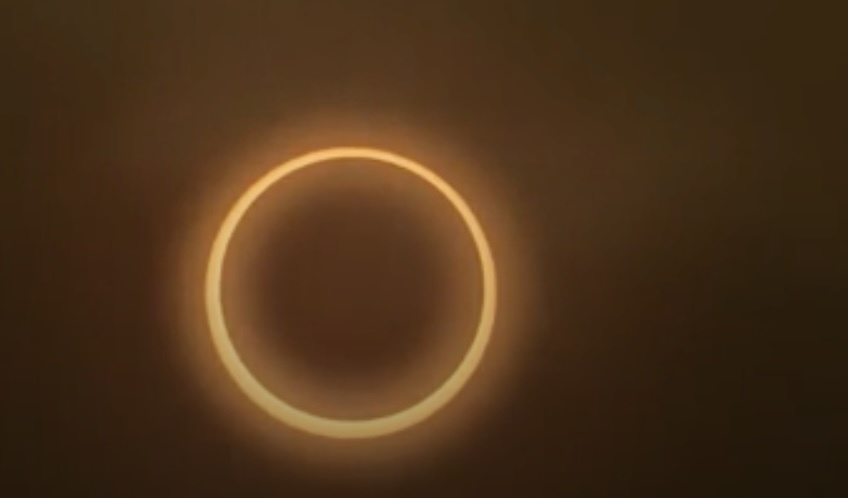
A magnificent annular solar eclipse just swept over Antarctica, putting on an impressive display of orbital mechanics as the moon passed in front of the sun at the perfect distance from Earth to create a fiery halo in a darkened sky — at least for the few souls lucky enough to be in a position to see it.
Feb. 17's annular solar eclipse occurred as the lunar disk slipped between the sun and Earth during its new moon phase. The alignment occurred as the moontravelled through a distant point in its elliptical orbit, making it appear smaller than usual in Earth's sky.
Today's eclipse got underway at 4:56 a.m. EST (0956 GMT), as the moon took an ever greater bite out of the solar disk, transforming its burning orb into a glowing crescent, before finally diving entirely within its fiery expanse. The moon — appearing fractionally smaller than usual — was unable to cover the entirety of the sun's disk, leaving a thin sliver of its outer edge visible to surround Earth's natural satellite to create a ring in the skies over Antarctica.
This phase — known as annularity — lasted a little over two minutes and was visible across a remote, 383-mile-wide (616 kilometer) corridor of the Antarctic continent containing the Concordia research station, which hosts less than a hundred scientists and visitors at any one time.
A lesser partial eclipse was estimated to have been visible to roughly 176 million people — or 2% of the world's population — spread across the southern tip of South America and southern African nations including Madagascar, according to Time and Date. The eclipse came to a global end at 9:27 a.m. EST (1427 GMT), when the moon's silhouette exited the solar disk, returning it to its former glory.
The next eclipse will be a spectacular "blood moon" total lunar eclipse, which will unfold early on March. 3, as our planet glides between the sun and its natural satellite, bathing its shadowed disk in the light of every sunrise and sunset on Earth. Over 2.5 billion people will be treated to a front-row seat to totality, including skywatchers in North America, who will witness the blood moon slip below the horizon as the sun rises.
You won't need any eye protection to gaze upon the moon but it's an absolute necessity if you're hoping to view the total solar eclipse on Aug. 12! Be sure to check out our guide to checking the safety of eclipse glasses, along with our top 10 tips for planning your 2026 solar eclipse trip.
Quelle: SC