
17.01.2026
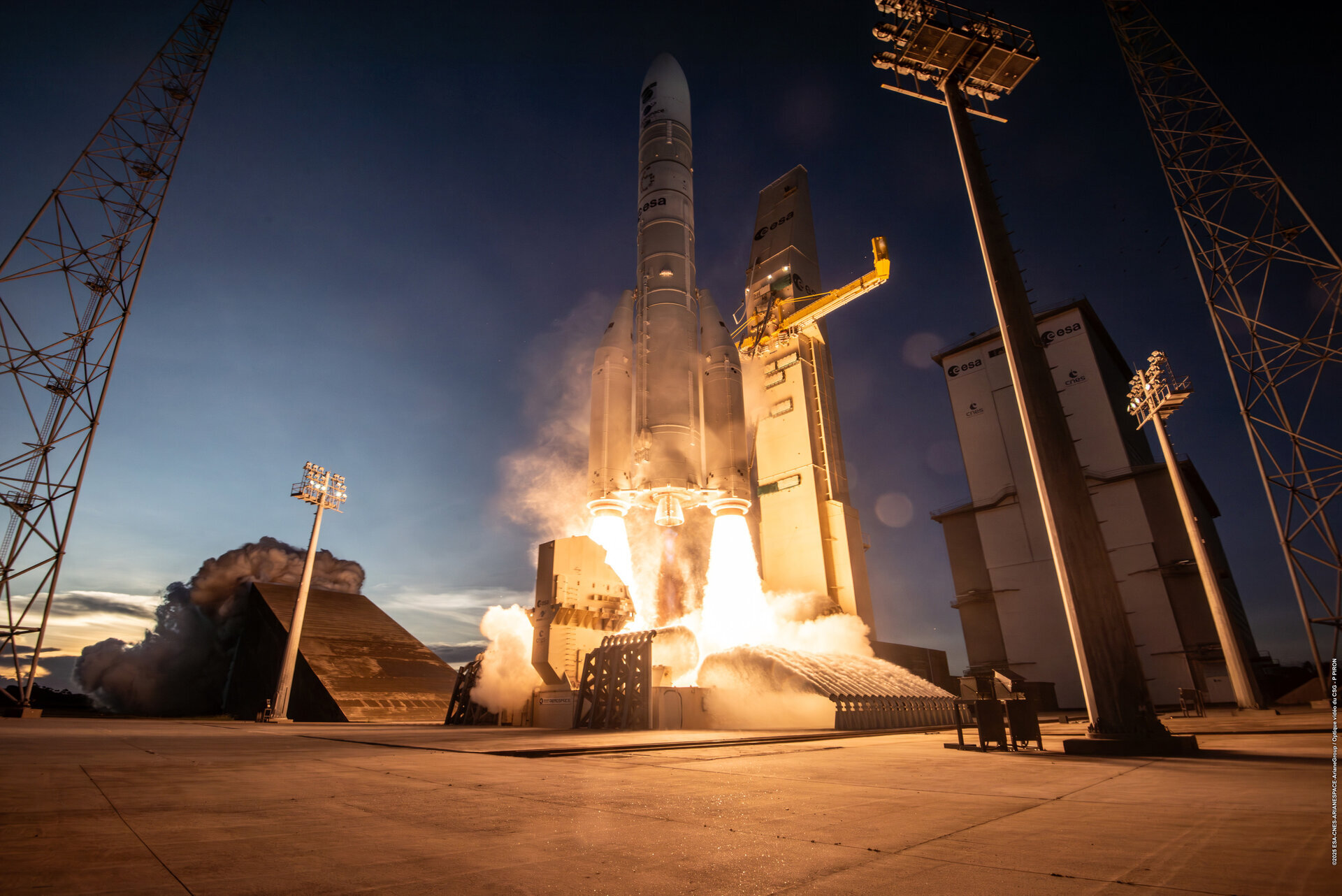
Ariane 6 consists of over 300 000 parts, all of which work seamlessly together for a safe launch. To ensure the rocket doesn’t pose a risk to people or property at any stage of its journey, safety is a part of every step of Ariane 6’s creation – from its design through the release of the last payload and safe disposal that minimises space debris.
Designed with failure in mind

Failure to launch is never a part of the plan, but to be safe, Ariane 6 was designed with worst-case scenarios in mind. A special type of engineer, called a RAMS engineer for Reliability, Availability, Maintainability and Safety, takes on the role of coming up with every possible way Ariane 6 could fail – and then finding ways to avert it.
To further ensure safety, Ariane 6 is designed with back-ups in place – many pieces of the rocket are installed in duplicate in case one would fail. Even though this makes the rocket heavier and so more propellant is needed for a launch, the trade-off is worthwhile because redundancy means the rocket can function even if systems fail.
Testing, testing, one, two, three
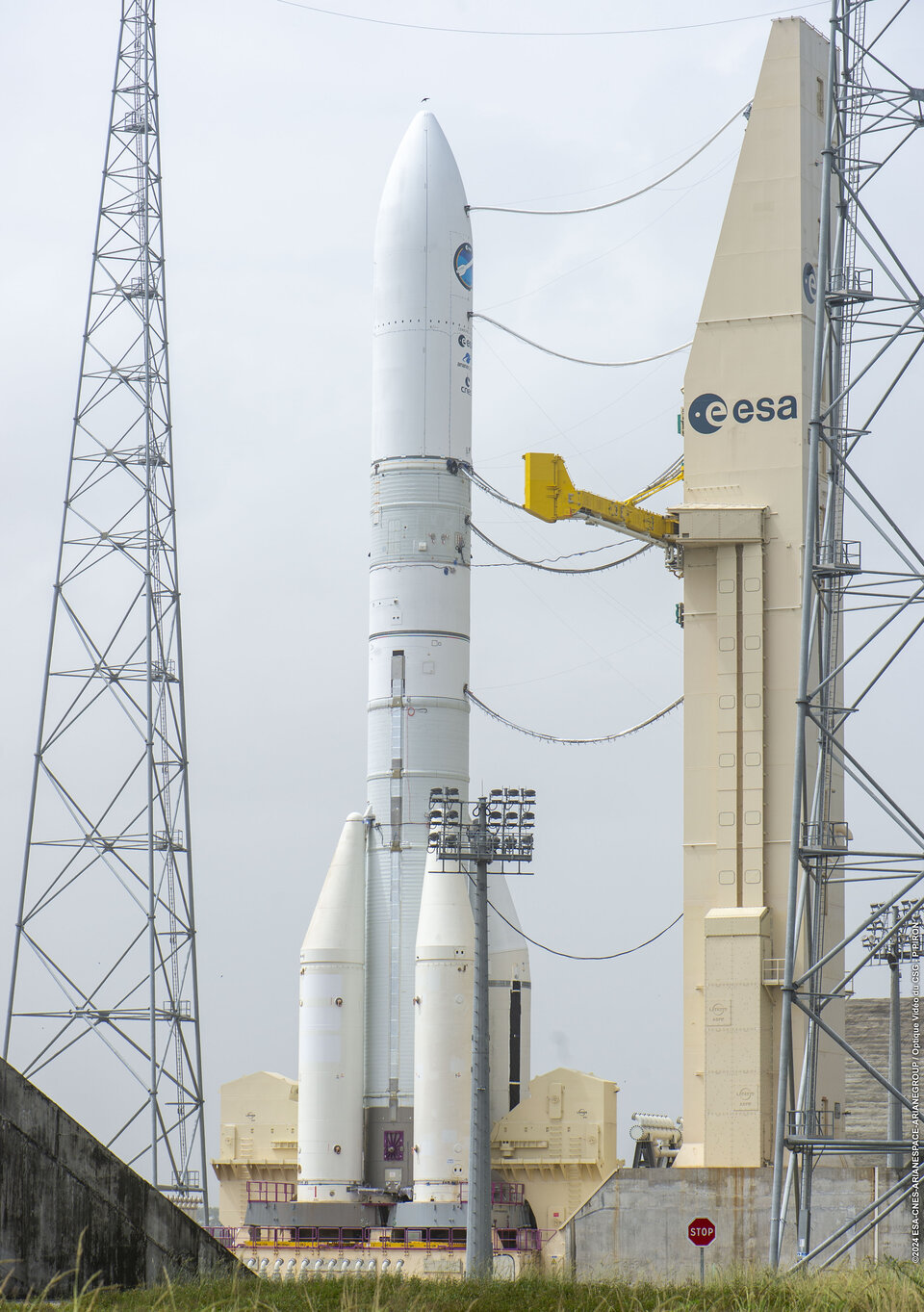
After design, comes testing. As part of the key elements in the adventure leading up to the first Ariane 6 flight, come the main tests that ensured the launcher was qualified for liftoff.
For all their size and explosive power, rocket launches are remarkably precise, with events timed down to the millisecond. Before its first launch, Ariane 6 underwent a series of tests to iron out any kinks.
At Europe’s Spaceport in French Guiana, a test model that was a near identical version of the rocket launched on 9 July 2024 was put through its paces. The test model allowed teams to practice loading the rocket with fuel, perform hot-fire tests on the Vulcain 2.1 main engine and check that all connections between the rocket and launch pad worked.
In the months leading up to the inaugural launch, the modules of the flight model of Ariane 6 were shipped to French Guiana and a ‘wet dress-rehearsal’ was performed that includes every step leading to launch, stopping just a few seconds before engine ignition. These tests allowed the ground crew to familiarise themselves with launch procedures prior to the big day.
No explosions, please

When liquid oxygen and liquid hydrogen are combined and ignited, they produce a tremendous amount of heat and water vapour, which is harnessed to propel Ariane 6 upwards – 184 tonnes is burnt to launch and navigate the rocket into orbit.
The characteristics that make liquid oxygen and liquid hydrogen ideal as rocket propellants also pose a risk for untimely fires and explosions. To prevent any potential damage, the propellants are stored in a separate area of the launch complex, kilometres away from the pad. The fuelling of Ariane 6 with liquid oxygen and liquid hydrogen is performed remotely. Long before the pipes start flowing the launch zone is evacuated so no people are present at the launch pad should an untimely explosion occur.
The closest people to the rocket on liftoff are the engineers at the rocket control centre: a bunker with metre-thick walls located about 5 km from the launch pad. This protects people from possible explosions and the deafening noise of the launch – although the rumble of the launch can still be felt.
The sky is (not) falling

Anyone who has played Kerbal Space Program knows that liftoff does not automatically mean smooth sailing for a rocket. On Ariane 6, ground safety can terminate the flight until the main stage separates. After this, on-board algorithms monitor the rocket for any sign that things are not going according to plan.
Ariane 6’s safety algorithms are designed to prevent the launcher from falling out of the sky onto populated areas. If Ariane 6 veers off course in a way the algorithm deems unsafe flight rules will either direct the rocket to fall into the ocean or keep it in orbit if it is safe to do so.

The algorithms are prescribed by the rules that govern the skies, known as space law. Because Ariane 6 launches from French Guiana, it must abide by French space laws. These laws dictate that Ariane 6 does not pose a risk to people or property, the environment and public health, meaning that the rocket’s existence does not make the world any less safe.
Even when the Ariane 6 mission ends after deploying its satellites, Europe’s rocket is designed for safe demise. The upper stage reserves enough propellant for a final manoeuvre. This either brings it into a graveyard orbit – where it can remain safely without colliding with satellites – or the more common and preferred option of deorbiting the stage to burn up harmlessly in the Earth’s atmosphere. In either case, from beginning to end of life, safety plays an important role on Ariane 6.
With up to eleven launchers a year planned, safety is key at every step of the launch campaign on ground and in flight. All of humankind benefits from the missions Ariane 6 launches, offering Earth observation, precise positioning systems, high-speed telecommunications, science, technologies and services.
