
24.12.2025
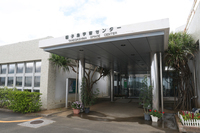
The JAXA Tanegashima Space Center in Kagoshima Prefecture
Tokyo, Dec. 23--The impact from the separation of the payload fairing was stronger than usual in Monday's failed launch of the No. 8 H3 rocket, it was learned Tuesday.
The Japan Aerospace Exploration Agency, or JAXA, reported this at a meeting of an expert panel of the science ministry on Tuesday.
On Monday, the H3 rocket blasted off from the JAXA Tanegashima Space Center in Kagoshima Prefecture, southwestern Japan, but failed to send the Michibiki No. 5 positioning satellite into orbit as its second-stage engine shut down earlier than scheduled.
According to JAXA, the payload fairing separated about 3 minutes and 50 seconds after liftoff. Data from the rocket indicated an excessive separation impact. Almost simultaneously, pressure in the second-stage fuel tank began to fall faster than usual.
The second-stage engine was designed to ignite twice. During the first burn, thrust was about 20 pct lower than planned and ended roughly 25 seconds later. The second burn stopped almost immediately.
Quelle: jiji.com
+++
JAXA: Faulty nose cone is suspected in H3 mission failure
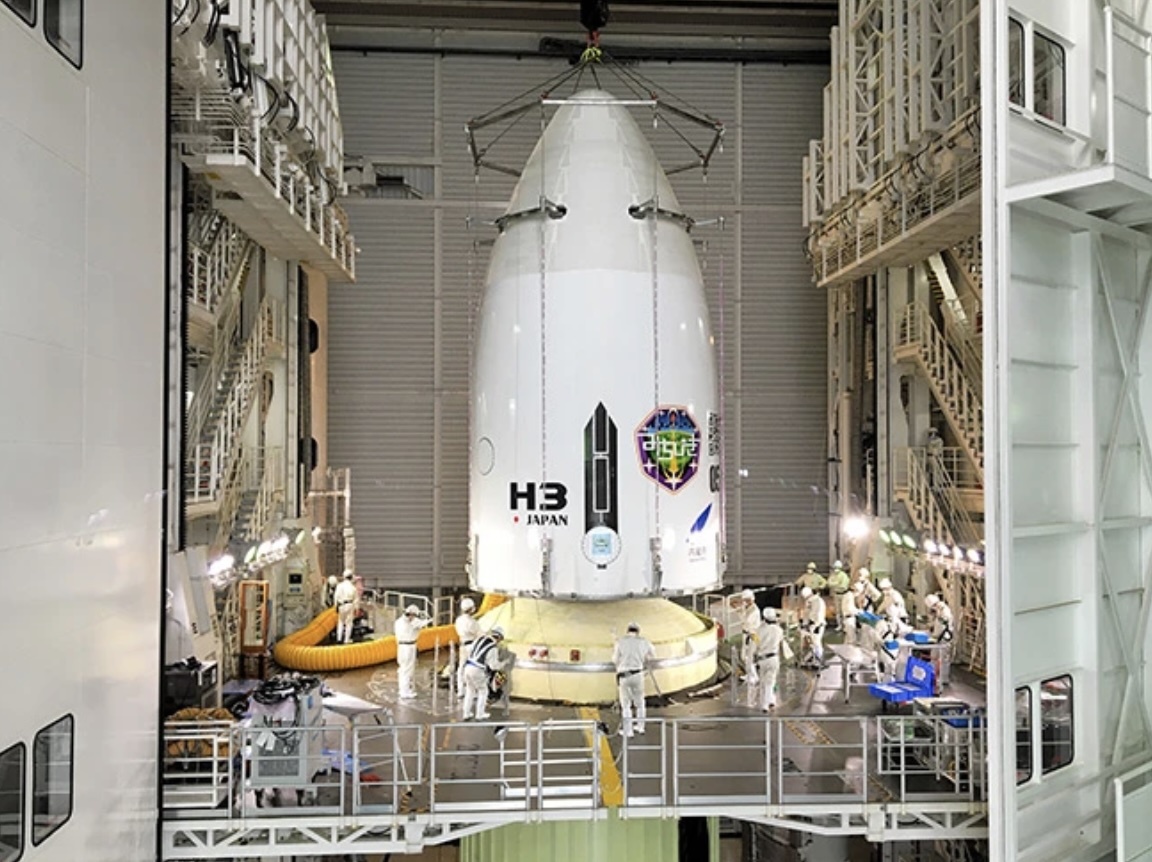
The payload fairing of the eighth H3 rocket (Provided by Japan Aerospace Exploration Agency)
A satellite's protective cover may have doomed Japan's latest H3 rocket mission, with the space agency now investigating if the shield separated abnormally and crippled the vehicle in flight.
Japan Aerospace Exploration Agency officials told a science ministry panel on Dec. 23 they suspect an abnormal separation of the rocket’s payload fairing—a protective nose cone shield—caused a critical drop in pressure in the second-stage engine’s hydrogen tank.
The eighth launch of the H3 rocket, Japan's flagship launch vehicle, lifted off from the Tanegashima Space Center in Kagoshima Prefecture on Dec. 22 seemingly without incident to the assembled spectators below.
However, the second-stage engine shut down prematurely, failing to deliver the Michibiki No. 5 satellite—part of Japan’s GPS-like Quasi-Zenith Satellite System—to its designated orbit.
According to JAXA, pressure in the second-stage engine’s hydrogen tank began to drop during the first burn, causing thrust to fall by about 20 percent below expectations.
The agency noted the pressure drop began precisely at the moment the payload fairing separated.
The fairing is a shield that protects a satellite from atmospheric pressure and heat during ascent. It is jettisoned once the rocket reaches space.
Data showed a "larger-than-usual impact" during the separation event, leading JAXA to suspect the fairing may have struck the rocket's body as it detached.
The agency added that it has not yet confirmed if the second-stage engine and the Michibiki No. 5 satellite ever separated, nor has it determined their current status.
Quelle: The Asahi Shimbun